Should You Downgrade the Chase Sapphire Reserve at $795? A No-BS Guide
Whether to downgrade the Chase Sapphire Reserve after its $795 annual fee depends on how you use it, not on the sticker price. Heavy travelers (6+ flights/year, lounge users) still net positive — the $300 travel credit, $500 Edit by Chase Travel credit, $300 StubHub credit, and Priority Pass routinely return $1,200-$1,500. Moderate travelers should downgrade to the Chase Sapphire Preferred ($95 AF) and keep Ultimate Rewards transfer access. Note the Sapphire 48-month rule before reapplying for the CSR bonus later.
On this page▾

Topic Collection
Part of the Keep or Cancel Collection
Explore all 23 articles
Quick answer
If you currently hold the Chase Sapphire Reserve and the new $795 annual fee just hit your statement, the right move depends on how you actually use the card — not on whether the AF feels expensive.
- Heavy traveler (6+ flights/year, $5K+ on dining/travel, uses lounges): keep it. The $300 annual travel credit + $500 Edit by Chase Travel + $300 StubHub/viagogo + $120 Global Entry + Priority Pass + hotel elite status routinely returns $1,200-$1,500 of usable value — the $795 AF still pencils out.
- Moderate traveler (2-4 flights/year, no lounge habit, uses maybe 2 of the credits): downgrade to Chase Sapphire Preferred. You keep UR transfer access, the $95 AF is trivial, and you stop subsidizing perks you don't use.
- Light user (rarely travels, never uses Edit/StubHub credits, no lounge visits): downgrade to a no-AF Chase Freedom and reapply for CSR later if your travel pattern changes — the 24-month CSR welcome-bonus rule resets that path.
TL;DR: The Chase Sapphire Reserve's annual fee was raised from $550 to $795 in the June 2025 refresh. The card now offers $300 automatic travel credit, $500 Edit by Chase Travel credit (split semiannually), $300 StubHub/viagogo credit (split semiannually), $120 Global Entry/TSA PreCheck credit, Priority Pass lounge access, and complimentary hotel elite status. The decision to downgrade depends on annual usage: travelers who fly 6+ times/year and use multiple credits typically still net positive at $795, while occasional travelers usually come out ahead downgrading to the Chase Sapphire Preferred ($95 AF) or a no-AF Freedom card. The Chase Sapphire 48-month rule means downgrading and reapplying for the CSR welcome bonus later requires 48 months to pass since the last Sapphire bonus posted.
The math: when $795 still wins
The CSR's post-June-2025 credit stack is engineered to look gigantic on the application page and break down fast in real life. Here's what each line item actually returns:
| Credit / perk | Headline value | Realistic capture rate | Realistic value |
|---|---|---|---|
| $300 annual travel credit | $300 | ~95% (auto-applies on any travel) | $285 |
| $500 Edit by Chase Travel credit | $500 | 60-80% (split $250 H1/H2, hotel-only) | $300-$400 |
| $300 StubHub/viagogo credit | $300 | 30-60% (split $150 H1/H2, narrow vendors) | $90-$180 |
| $120 Global Entry/TSA PreCheck | $120 / 5 years = $24/yr | 100% (once every 5 years) | $24 |
| Priority Pass lounge access | $429 (Priority Pass Prestige retail) | varies wildly | $0-$500 |
| Hotel elite status (IHG Platinum etc.) | $0-$200 (depends on stay volume) | varies | $0-$200 |
| 8x UR on Chase Travel | ~3-5cpp differential vs CSP | $5K+ travel spend = real | $150-$400 |
| Trip-cancellation/baggage insurance | ~$50/year if used | rarely triggered | $0-$50 |
| Total realistic return | $849-$2,039 |
The honest read: the credit stack alone covers the $795 AF only if you treat the Edit credit as cash, hit the StubHub credit twice a year, and actually swipe at lounges 6+ times. Miss any of those and you're closer to breakeven before earn rate.
When $795 wins decisively:
- You take 6+ flights/year through Priority Pass airports — lounge meals + drinks easily hit $50/visit × 6 = $300/year. Combined with the $300 auto travel credit + $400 of the Edit credit + 1 Global Entry renewal year, you're at $1,025 of capture before earn rate.
- You spend $5K+/year on dining or travel at 3x or 8x — the earn-rate differential vs the CSP's 3x on dining + 5x on Chase Travel is real money at scale.
- You stack the Edit credit with a hotel you'd book anyway — splitting $250 H1 + $250 H2 against Hyatt or IHG cash rates you'd pay regardless is near-100% capture.
- You actually attend events — StubHub credit is throwaway if you don't, real if you do.
If three of those four are true for you, the $795 AF beats the downgrade. Below three, the math starts pointing the other way.
When you should downgrade
Three profiles where the $795 is wasted spend, regardless of how much you like the card.
Profile #1: the "credit captures" let you down
You used to hit the old $300 travel + $795 AF math on the original Reserve, but the new $500 Edit credit + $300 StubHub credit don't fit your life. You don't book hotels through Chase Travel (because partner transfers give better cpp), and you don't buy concert tickets. Realistic credit capture: $300 travel + $24 Global Entry + maybe $150 Priority Pass = ~$475. Negative $320 before earn rate.
Profile #2: lounges are not a habit
The Edit + StubHub credits aside, the single biggest value driver of the CSR is Priority Pass for frequent flyers. If you fly twice a year and never bother queuing into a crowded SFO lounge, you're paying for $429 of access you'll use once. Downgrade signal: you went a full year without using Priority Pass.
Profile #3: you've stopped traveling for the AF cycle
Life shifted — new job, kid, cross-country move — and you're not flying 6+ times anymore. The CSR is a frequent-traveler card; if you've become a 2-3 flights/year person, the Chase Sapphire Preferred at $95 AF gives you UR transfer access, primary rental car insurance, and a $50 hotel credit through Chase Travel for $700 less per year.
Other signals it's time:
- The 12-month AF renewal arrived and you haven't planned a single use for the Edit credit
- You're paying for an authorized user ($195 since the refresh) who doesn't use the card
- You're stacking 3 premium cards (CSR + Platinum + Venture X) and the credits overlap
- Your UR earn-rate hasn't justified the $700 differential vs CSP for two years running
Downgrade targets — which Chase card to drop to
Three legitimate downgrade paths from the CSR. Each preserves your UR balance and credit history (no closure, no FICO hit).
Option 1: downgrade to Chase Sapphire Preferred ($95 AF)
Best for: moderate travelers who want to keep UR transfer access. CSP retains 1:1 transfers to all 14 Chase partners (Hyatt, United, Air Canada, etc.), earns 3x on dining and 2x on travel, and includes a $50 annual hotel credit through Chase Travel. AF saved: $700/year. Trade-off: no lounge access, no auto $300 travel credit, no 8x on Chase Travel. For the full category-by-category breakdown of what you'd be giving up, see Chase Sapphire Preferred vs Chase Sapphire Reserve.
Option 2: downgrade to Chase Freedom Unlimited ($0 AF)
Best for: light users who still want UR earn (1.5x on everything, 5x on Chase Travel, 3x on dining/drugstores). UR earned on the Freedom Unlimited stays as UR but cannot be transferred to partners unless you ALSO hold a CSP, CSR, or Ink Preferred. If you downgrade ALL your Sapphires, your UR converts to cashback at 1cpp — losing 50-80% of value. Only choose this path if you plan to reapply for CSR later, or you're keeping a CSP/Ink Preferred elsewhere in your wallet.
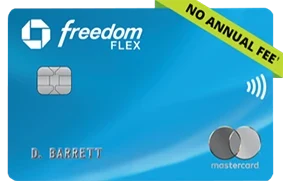
Option 3: downgrade to Chase Freedom Flex ($0 AF)
Best for: users willing to track 5% rotating quarterly categories (groceries, gas, etc.). Same UR transfer caveat as Freedom Unlimited — needs a transferable card alongside to preserve partner access. Simpler take: most readers should pick Unlimited over Flex.
The two-card combo that quietly beats CSR for moderate users: keep CSP ($95) + add Freedom Flex ($0) = $95/year for UR transfer access + 5% rotating + 1:1 to partners. You lose lounges and the Edit credit but keep the UR economy. For users who don't actually use the CSR's premium perks, this combo returns 80% of the value at 12% of the AF.
The "downgrade + reapply later" play
The Chase Sapphire 48-month rule blocks a fresh CSR welcome bonus if you've earned any Sapphire-branded welcome bonus in the past 48 months. But it does NOT block downgrading and then upgrading product-change-style — and it doesn't block a fresh CSR application once the 48-month clock expires.
The strategic play:
- Today: downgrade CSR to Chase Freedom Unlimited (preserves UR balance + credit history, AF drops to $0).
- Wait until 48 months have passed since your last Sapphire bonus posted. If you got the CSR bonus in March 2023, March 2027 is your clear date.
- Apply fresh for the CSR (or CSP) — collect the welcome bonus on a clean slate.
Why this works: the 48-month rule counts from the date the welcome bonus posted, not from today. If you got your CSR bonus 36 months ago, you only have 12 more months until you're eligible again. Downgrading now stops the AF bleed during the wait — instead of paying $795 × 1 year = $795 for benefits you don't use, you pay $0 and re-enter the cycle when the bonus is back on the table.
Important caveats:
- The 48-month rule applies across ALL Sapphire-branded cards (CSP, CSR, original Sapphire, Sapphire Business). Getting a CSP bonus 24 months ago means you're locked out of a CSR bonus for 24 more months.
- 5/24 still applies on the fresh reapplication. If you're at 5/24 when the 48-month window opens, you'll be auto-declined until you fall back under.
- Chase has been quietly tightening "churning" detection. Repeat reapplications every 48 months on the same Sapphire are watched but not blocked as of June 2026.
For the full upgrade path mechanics in the other direction (CSP → CSR), see Upgrade Chase Sapphire Preferred to Reserve or Apply Fresh?.
Common mistakes
Mistake #1: closing the CSR instead of downgrading
Closing the CSR destroys 4+ years of account history (the length-of-history FICO factor). Worse, if it's your only transferable UR card, all UR converts to cashback at 1cpp — losing 50-80% of value on every point in the balance. Always downgrade, never close. Product-change to a Freedom (no-AF, preserves history) or to CSP ($95 AF, preserves transfer access). Your UR balance moves with the account.
Mistake #2: downgrading the day after the AF posts
The CSR's AF refunds in full if you product-change or close within 30 days of the AF posting. Most people miss this window because they wait until they notice the charge mid-cycle. Set a calendar reminder for month 11 of your CSR year — make the keep-or-downgrade decision before the next AF lands. If you downgrade in month 13 (two months after the AF posted), you've paid $795 you can't recover.
Mistake #3: forgetting to use the H1 Edit credit before downgrading mid-year
The Edit by Chase Travel credit is split $250 H1 (Jan-Jun) + $250 H2 (Jul-Dec). If you downgrade in May with the H1 credit unused, that $250 evaporates. If you downgrade in July, the H1 was already use-it-or-lose-it. Burn every credit before calling Chase — book a refundable Hyatt cash rate with the Edit credit if you have nothing planned, use the StubHub credit on a friend's concert ticket, renew Global Entry if you're close to expiry.
Related content
For the inverse decision (upgrading from CSP to CSR):
- Upgrade Chase Sapphire Preferred to Reserve or Apply Fresh? — the 48-month rule + 5/24 decision tree
For ecosystem context:
- Chase Ultimate Rewards Program Guide 2026 — how UR transfer partners work, why preserving access matters
- Venture X vs CSR vs Amex Platinum — three-way premium card showdown if you're considering jumping issuers
- Best Credit Cards for Frequent Travelers 2026 — alternative premium options to compare against the CSR
Frequently asked questions
Bottom line
Downgrade the $795 Sapphire Reserve unless you genuinely capture the credit stack — fly 6+ times a year, swipe at Priority Pass lounges, and burn the $500 Edit + $300 StubHub credits on things you'd buy anyway. Heavy travelers who hit three of those four levers still net $1,000+ of real value and should keep it; moderate travelers come out $700/year ahead product-changing to the Sapphire Preferred ($95 annual fee) while keeping UR transfer access, and light users can drop to a no-AF Freedom Unlimited or Freedom Flex (keep one transferable card or your UR collapses to 1cpp). Always product-change, never close — and decide in month 11, before the next AF posts; the 48-month Sapphire rule lets you reapply for a fresh CSR bonus once 48 months pass since your last Sapphire bonus.
Get weekly card offer alerts
Sunday digest of elevated bonuses. One email, zero spam.
Cards mentioned in this guide



Frequently asked questions
Can I keep my Ultimate Rewards points after downgrading?
How long do I have to wait to reapply for CSR after downgrading?
Will downgrading hurt my credit score?
Can I downgrade and keep the Sapphire Preferred + add a Freedom Flex?
What happens to my annual travel credit if I downgrade mid-year?
Is the Chase Sapphire Reserve still worth $795 for elite-status credit chasers?
Related guides
Strategy
How to Redeem Chase Ultimate Rewards for Maximum Value (2026)
12 min
Strategy
Chase Trifecta 2026: Sapphire + 2 Freedoms (Full Math)
14 min
Strategy
Venture X vs Chase Sapphire Reserve vs Amex Platinum: Which Premium Card Earns Its Fee in 2026?
13 min
Rewards Programs
Chase Ultimate Rewards: The Complete 2026 Program Guide
12 min
Related news

chase · Jun 9, 2026
Chase Disney Inspire Visa Launch: $99 AF, $400 Welcome — Is It Worth a 5/24 Slot?

chase · Jun 2, 2026
Chase 20% Flying Blue Bonus May 2026: Retrospective

chase · Jun 2, 2026
Chase Sapphire Reserve 150K Welcome Offer 2026

chase · Jun 2, 2026
Chase Ultimate Rewards 2026: Cash-Back + Points Boost
Cards in this ecosystem



Considering switching?