Why Business Card Welcome Bonuses Are Bigger (and How to Qualify)
Business card bonuses are bigger because issuers price acquisition against expected spend, and a business account is expected to charge more over a longer life. The trade is a higher minimum spend in the same three-month window, and it usually rises by more than the bonus does, so compare bonus per dollar of required spend rather than bonus size. Qualifying is easier than most people think: any genuine revenue-generating activity counts, including freelancing, consulting, gig work, reselling, tutoring or renting something out, and you apply as a sole proprietor under your own legal name using your Social Security number. No LLC, EIN, employees or storefront is required, and approval turns mainly on your personal credit.
On this page▾

Topic Collection
Part of the Issuer Application Rules Collection
Explore all 22 articles
A business card bonus is routinely worth more than its personal twin, and the reason is not generosity. Issuers price acquisition against expected spend, and a business account spends more. That logic also explains the catch nobody mentions in the headline: the minimum spend is bigger too, and it is bigger by more than the bonus is.
Quick answer
Business card welcome bonuses run larger than personal ones because issuers expect a business account to charge more over its life, so they can pay more to acquire it. The trade is a higher minimum spend requirement, usually over the same three-month window. You qualify by having a real revenue-generating activity, which for most applicants means freelancing, consulting, gig work, tutoring, reselling or renting something out, applied for as a sole proprietor using your own name and your Social Security number. You do not need an LLC, an EIN, employees or a storefront.
- Why bigger: issuers price bonuses against expected lifetime spend
- The catch: minimum spend rises faster than the bonus does
- Who qualifies: sole proprietors with genuine income-generating activity
- What you need: your legal name and SSN; an EIN is optional
- What you do not need: an LLC, employees, revenue history or a storefront
💡 Pro tip — Compare bonus per dollar of required spend, not bonus size. A business card offering 40 percent more points for 100 percent more spend is a worse deal than the personal card next to it, and that is a common shape.
The economics behind the number
Issuers set a welcome bonus against the profit they expect from an account: interchange on the spend it will carry, annual fees, and interest where applicable. A business account typically charges more per month than a personal one and stays open longer, so the same payback maths supports a bigger upfront bonus.
| Personal card | Business card | |
|---|---|---|
| Typical monthly spend | Household expenses | Household plus business expenses |
| Expected account life | Shorter | Longer, tied to the business |
| Bonus the issuer can justify | Smaller | Larger |
| Minimum spend to earn it | Lower | Higher |
Key takeaway: the bigger bonus is not a better deal by itself; it is a bigger deal, and the spend requirement is the price.
Comparing the pairs honestly
| Card | Welcome offer | Required spend | Window |
|---|---|---|---|
| Sapphire Preferred | 75,000 points | $5,000 | 3 months |
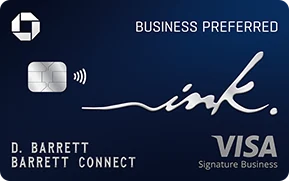
| Ink Preferred | 100,000 points | $8,000 | 3 months |
| Amex Gold | 100,000 points | $8,000 | 6 months |
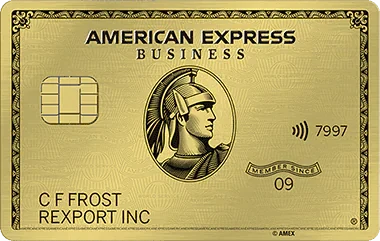
| Amex Business Gold | 200,000 points | $15,000 | 3 months |
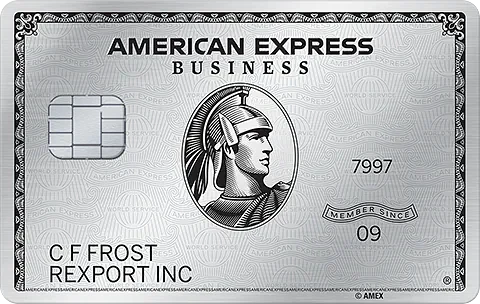
| Amex Business Platinum | 300,000 points | $20,000 | 3 months |
Run the division before you apply. Divide the bonus by the required spend and you get points per dollar of forced spending, which is the only number that lets you compare a personal offer against a business one fairly.
Who actually qualifies
This is the part that stops most people, and it stops them unnecessarily. Issuers are not asking whether you run a company. They are asking whether you have an activity that generates or intends to generate revenue.
Activities that qualify as a sole proprietorship:
- Freelance or consulting work, including a single client.
- Gig work, from rideshare and delivery to task platforms.
- Selling things, whether handmade, resold, or on a marketplace.
- Tutoring, coaching, or lessons, paid directly by the people you teach.
- Renting out a room, equipment, a vehicle, or a parking space.
- Creative work sold or licensed, including photography, writing and design.
What you do not need is equally important: no LLC, no incorporation, no employees, no business bank account, no trading history and no storefront. A sole proprietor applies under their own legal name, uses their Social Security number as the tax ID, and reports honest figures.
What the application actually asks
| Field | What to enter as a sole proprietor |
|---|---|
| Legal business name | Your own legal name |
| Business type | Sole proprietorship |
| Tax ID | Your Social Security number, or an EIN if you have one |
| Years in business | The date the activity actually started, even if recent |
| Annual business revenue | Your honest figure, including zero or a small number |
| Estimated monthly spend | A realistic estimate of what you will charge |
Two rules govern this form. Answer accurately, because these are representations to a lender. And do not inflate revenue to look more approvable, because approval is driven mostly by your personal credit profile anyway, and an inflated figure is a misstatement with no upside.
Why the approval is mostly personal
For a new sole proprietorship there is no business credit history to evaluate, so the issuer underwrites you. Your personal credit score, income and existing accounts carry the decision, and every issuer pulls a hard inquiry on your personal credit even for a business card.
This is also why business cards interact with application rules in ways people misread. At Chase, business cards are subject to the 5/24 rule as an applicant, but approved business accounts generally do not add to your 5/24 count, which is why the Ink family features so heavily in Chase strategies. The Ink and 5/24 guide covers the specifics.
Meeting the bigger minimum spend
The higher requirement is the real obstacle, and manufactured spending is not the answer. Legitimate approaches, in rough order of usefulness:
- Prepay genuine business costs. Software subscriptions, hosting, advertising and insurance can often be paid annually, and moving three $600 annual renewals forward covers $1,800 of a requirement in one afternoon.
- Move existing recurring charges onto the card. Phone, internet and tools you already pay for.
- Time the application to a known expense. A planned equipment purchase or a large invoice you will pay anyway.
- Use the full window. Most requirements run three months from account opening, not from approval.
- Check whether taxes make sense. Processor fees apply, so this only works when the bonus clearly exceeds them.
If none of those get you there, the honest conclusion is that the personal card with the smaller bonus and the smaller requirement is the better application. A bonus you do not earn is worth nothing, and the annual fee still posts.
Common mistakes
- Comparing bonus sizes instead of bonus per dollar of required spend.
- Assuming you need an LLC or an EIN. A sole proprietor can apply with their own name and SSN.
- Inflating revenue on the application. It rarely helps approval and is a misstatement to a lender.
- Forgetting the hard inquiry. Business cards pull your personal credit like any other application.
- Chasing a minimum spend you cannot reach. The fee posts whether or not the bonus does.
- Assuming business spend stays off your personal credit report. Most issuers keep it off, but not all; see do business cards affect personal credit.
Editor's take
The business card category is the most under-applied-for part of the US points landscape, and the reason is a misunderstanding rather than a barrier. People believe they need a company, when what issuers actually ask for is an activity, and a large share of readers already have one. Our view is that the bigger bonuses are real and worth pursuing, provided you do the division first: if the required spend is more than you would naturally charge in three months, the smaller personal bonus is the better card, every time.
Related reading
- Can I get a business credit card? — the eligibility question in full
- EIN vs SSN for business credit cards — which tax ID to use
- Business credit cards for sole proprietors — the cards built for one-person operations
- Do business cards affect personal credit? — what reports and what does not
- Chase Ink business cards and the 5/24 rule — why Ink cards anchor Chase strategies
- Minimum spend strategy for a welcome bonus — how to clear the requirement without waste
Get weekly card offer alerts
Sunday digest of elevated bonuses. One email, zero spam.
Cards mentioned in this guide

Frequently asked questions
Do I need an LLC to get a business credit card?
Is a bigger business bonus always the better deal?
What should I put for revenue if my business is brand new?
Does applying for a business card hurt my personal credit?
How do I meet a large business minimum spend without wasting money?
Related guides
Rules & Mechanics
Can I Get a Business Credit Card? (Complete 2026 Guide)
10 min
Rules & Mechanics
EIN vs SSN for Business Credit Cards: What Do You Actually Need?
8 min
Rules & Mechanics
Business Credit Cards for Sole Proprietors 2026
12 min
Rules & Mechanics
Do Business Credit Cards Affect Your Personal Credit Score?
7 min
Related news

chase · Jun 10, 2026
Chase Hyatt Transfer Ratio 4:3: What It Means for Sapphire Preferred and Ink Business Preferred

chase · Jun 10, 2026
Chase to Virgin Atlantic: 30% Transfer Bonus — Book Delta Business Class for 18,000 Points

chase · Jun 9, 2026
Chase Disney Inspire Visa Launch: $99 AF, $400 Welcome — Is It Worth a 5/24 Slot?

airlines · Jun 4, 2026
Alaska Atmos Members Day Launched