Amex Gold vs Amex Green (2026): Which Is Better?
Amex Gold ($325 annual fee) earns 4x Membership Rewards on dining and US supermarkets and carries ~$424/year in food and rideshare credits. Amex Green ($150 annual fee) earns 3x on a broad travel category plus 3x on restaurants, with up to $189/year in CLEAR Plus credit. Both earn the same transferable Membership Rewards. Pick Gold if you spend heavily on dining and groceries; pick Green if you want broad travel earning at a lower fee — it is the cheaper way to put Membership Rewards on travel.
On this page▾

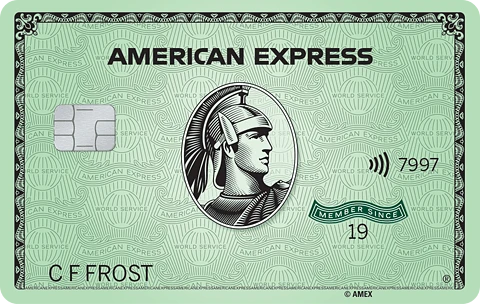
Two Membership Rewards cards, two different spenders. Amex Gold ($325 annual fee) is the food earner — 4x on dining and US groceries plus a stack of dining credits. Amex Green ($150 annual fee) is the cheaper broad-travel card — 3x on a wide travel definition and 3x on restaurants, with a CLEAR Plus credit. Which one fits depends on where your money actually goes.
If you are choosing between Amex Gold and Amex Green in 2026, the decision is cleaner than most card comparisons. Both earn the same transferable Membership Rewards, so the question is not "which points are better" — they are identical points. The question is which earn structure and which fee match your spending. Gold rewards heavy food spenders who use its credits; Green rewards broad-travel spenders who want a lower fee and simpler value. Below is the full breakdown of earn rates, the credits math, who should pick which, and why Green is the cheaper way to put Membership Rewards on your travel.
Quick answer
TL;DR: Amex Gold ($325 annual fee) earns 4x Membership Rewards on dining worldwide and 4x at US supermarkets (each up to $25,000/year), plus 3x on flights, and carries roughly $424/year in dining, Uber, Dunkin, and Resy credits. Amex Green ($150 annual fee) earns 3x Membership Rewards on a broad travel category (flights, hotels, transit, rideshare, tolls) and 3x on restaurants worldwide, plus up to $189/year in CLEAR Plus credit. Both earn the same transferable Membership Rewards and charge no foreign transaction fee. Pick Gold if you spend heavily on dining and groceries and will use its credits; pick Green if you want broad travel earning at a lower fee with simpler value. Green is the cheaper option for putting Membership Rewards on travel spend.
Amex Gold wins for dining and grocery earners. At a $325 annual fee, the 4x on restaurants worldwide and 4x at US supermarkets is the strongest food earn rate of the two, and the credits are built around food and rideshare. If your biggest spend is the supermarket and restaurants, Gold earns more per dollar there than Green ever will.
Amex Green wins for broad-travel spenders who want a lower fee. The $150 annual fee is less than half of Gold's, and the 3x travel category is unusually wide — flights, hotels, transit, rideshare, and tolls all qualify. For someone whose spending skews to travel rather than groceries, Green delivers transferable Membership Rewards at the lowest entry price in this pair.
Green is the cheaper MR-on-travel option. Both cards earn the same points, but Green puts 3x on a far broader travel definition than Gold's narrow 3x flights, at less than half the fee. If travel is your category, Green is the value pick.
At a glance
| Amex Gold | Amex Green | |
|---|---|---|
| Annual fee | $325 | $150 |
| Best for | Dining + grocery earners | Broad-travel spenders, lower fee |
| Dining / restaurants | 4x Membership Rewards worldwide | 3x Membership Rewards worldwide |
| US supermarkets | 4x (up to $25,000/yr) | 1x |
| Flights | 3x (direct or via Amex Travel) | 3x (part of broad travel) |
| Hotels | 1x | 3x (broad travel) |
| Transit / rideshare / tolls | 1x | 3x (broad travel) |
| Everything else | 1x | 1x |
| Headline credits | ~$424/yr (dining, Uber, Dunkin, Resy) | Up to $189/yr CLEAR Plus |
| Foreign transaction fee | None | None |
| Points currency | Membership Rewards (transferable) | Membership Rewards (transferable) |
How each card earns
Amex Gold — the food earner
Gold is built around food. You get 4x Membership Rewards on dining worldwide — restaurants, takeout, and delivery anywhere, with no US-only restriction — plus 4x at US supermarkets, each capped at $25,000 in purchases per calendar year before dropping to 1x. That supermarket cap alone is worth up to 100,000 Membership Rewards a year before you spend a dollar on dining.
Add 3x on flights booked directly with airlines or through amextravel.com, and 1x on everything else. Note what is missing: hotels, transit, rideshare, and tolls all earn just 1x on Gold. Its 3x travel is narrow — flights only. For a household spending $1,000/month on groceries and $600/month on dining, Gold earns roughly 76,800 Membership Rewards a year on food alone.
Amex Green — the broad-travel earner
Green earns 3x Membership Rewards on travel with one of the widest travel definitions of any card: flights, hotels, transit, rideshare, and tolls all count. It also earns 3x on restaurants worldwide, and 1x on everything else — including the supermarket, where it drops to 1x against Gold's 4x.
The structural difference is the shape of the 3x. Gold's 3x is flights only; Green's 3x covers nearly the entire travel wallet plus dining. If your spending is travel-led — booking hotels direct, taking rideshares, paying transit and tolls — Green earns 3x on all of it while Gold earns 1x on most of it. That is the core reason Green is the cheaper Membership Rewards-on-travel card.
The credits, side by side
This is where the $325 vs $150 fee gap gets interesting. Gold leans on a larger food-and-rideshare credit stack; Green carries one focused travel credit.
| Credit | Amex Gold | Amex Green |
|---|---|---|
| Dining credit | Yes (select partners) | — |
| Uber Cash | Yes | — |
| Dunkin' credit | Yes | — |
| Resy credit | Yes | — |
| CLEAR Plus | — | Up to $189/year |
| Total headline credits | ~$424/year | Up to $189/year |
| Annual fee | $325 | $150 |
Gold's credit stack is worth roughly $424/year — but only if you actually use Uber, Dunkin', Resy partners, and the dining credit. Net of those credits, Gold's effective cost is low for someone who genuinely spends in those buckets. Green's single CLEAR Plus credit, up to $189/year, can fully offset the $150 fee on its own if you fly enough to use CLEAR — making Green effectively free to carry for a frequent flyer, and roughly 126% of the fee covered if the full credit lands.
The catch is the same for both: a credit only counts if it matches real spending. Gold's $424 stack is worthless to someone who never takes an Uber or eats at a Resy restaurant. Green's CLEAR credit is worthless to someone who never uses CLEAR. Score the credits against your actual habits, not the headline totals.
Earn structure — the real dividing line
The cleanest way to choose is to map your top spending categories onto the two cards:
- Groceries — Gold earns 4x, Green earns 1x. Heavy grocery spend points hard at Gold.
- Dining — Gold earns 4x, Green earns 3x. Gold wins, but both are strong.
- Flights — both earn 3x. A tie.
- Hotels, transit, rideshare, tolls — Green earns 3x, Gold earns 1x. Broad travel points hard at Green.
So the decision reduces to a single question: is your non-flight spending mostly food, or mostly broad travel? Food-led spenders earn more on Gold despite the higher fee. Travel-led spenders earn more on Green at less than half the fee.
Who should pick Amex Gold
Pick Amex Gold if:
- Your biggest categories are dining and US groceries.
- You will actually use the ~$424/year credit stack — Uber, Dunkin', Resy, and dining.
- You want the strongest food earn rate among transferable-points cards and don't mind the $325 fee.
- Your travel is mostly flights (where both cards tie at 3x) rather than hotels and ground transport.
Gold is the better card for food-heavy households who use its credits. The 4x supermarket rate has no equivalent on Green, and the credit stack can drive Gold's effective cost well below its sticker fee for the right spender.
Who should pick Amex Green
Pick Amex Green if:
- Your spending leans toward broad travel — hotels, transit, rideshare, and tolls, not just flights.
- You want transferable Membership Rewards at the lowest annual fee in this pair ($150).
- You fly enough to use the CLEAR Plus credit (up to $189/year), which can fully cover the fee.
- You want a simpler card — one wide travel category, one dining category, one credit — without tracking a six-line credit stack.
Green is the value pick for travel-led spenders. The 3x travel definition is wide enough that most of a frequent traveler's wallet earns 3x, and at $150 with a CLEAR credit that can erase the fee, the cost of entry to Membership Rewards is hard to beat. If you're also weighing whether a non-Amex flexible-points card earns better on that same broad travel category, Amex Gold against the Chase Sapphire Preferred is the comparison worth running before you settle on Green.
Which should you pick
Choose by where your money goes, not by the card with more benefits. If your top non-flight spend is groceries and restaurants and you'll use the food credits, Gold earns and saves more despite its $325 fee. If your top non-flight spend is hotels, transit, rideshare, and tolls — broad travel — Green earns 3x on all of it for $150, and the CLEAR credit can make it effectively free. Flights are a wash; both earn 3x.
For maximizers, the two are not mutually exclusive. Because both pool into the same Membership Rewards balance, a food-and-travel-heavy spender can run groceries and dining through Gold at 4x and broad travel through Green at 3x. But for most people choosing one, the answer is set by their single largest category: food means Gold, broad travel means Green. If you later want broad non-bonus spend to keep earning transferable points, a no-annual-fee companion like Amex EveryDay (Membership Rewards on general spend) rounds out the setup.
Bottom line
Amex Gold is for dining and grocery earners; Amex Green is the cheaper broad-travel card. Gold's 4x food rates and ~$424 credit stack reward heavy food spenders who use the credits. Green's wide 3x travel category and up to $189 CLEAR credit reward broad-travel spenders who want a lower $150 fee and simpler value. Both earn the same transferable Membership Rewards, so pick on spending shape and fee tolerance — and remember the welcome bonus on each card is once per lifetime, so time your application for when you'll use the card to its full value.
For a wider shortlist, the Card Finder walks you through your spending profile, and the Annual Fee Calculator runs the realized-credit math on both fees against your actual habits.
Get weekly card offer alerts
Sunday digest of elevated bonuses. One email, zero spam.
Cards mentioned in this guide

Frequently asked questions
Is Amex Gold or Amex Green better?
Why is the Amex Green the cheaper card for travel?
Does the Amex Green earn on groceries?
Can the credits cover the annual fee on each card?
Should I get both the Amex Gold and Amex Green?
Related guides
Card Roundups
Amex Green Card Review 2026: Is the $150 Travel Card Worth It?
13 min
Card Roundups
Amex Gold Card Review 2026: Best Dining and Groceries Card?
12 min
Strategy
The Amex Quadfecta 2026: Four Cards, One Membership Rewards Engine
15 min
Strategy
How to Maximize Every Amex Gold Statement Credit in 2026
13 min
Related news

amex · Jun 9, 2026
Amex Renames Green Card to "Classic Green" August 2026 — What Changes (Spoiler: Almost Nothing)

amex · Jun 2, 2026
Amex 30% Avios Transfer Bonus: 1,000 MR = 1,300 Avios, Ends ~June 21 2026

amex · Jun 2, 2026
Amex Gold 60th Anniversary Refresh 2026: Who Wins?

industry · Jun 6, 2026
Apartment Collection by Hilton
Cards in this ecosystem


Considering switching?