Best Credit Cards for Self-Employed & Freelancers (2026)
Any 1099 income qualifies you for a business card. Here are the top picks for tax separation, high limits, and maximum rewards on freelancer spending.
On this page▾

Quick answer
The best credit card for freelancers in 2026 is the Ink Cash for most self-employed people — 5x on internet, phone, and office supplies with no annual fee. Pair it with the Ink Preferred for maximum point value. If you want dead-simple flat-rate rewards with no categories to track, the Blue Business Plus (2x everywhere, no fee) or Spark Cash Plus (2% cash back flat) are excellent alternatives.
Do freelancers qualify for business credit cards?
Yes — and this surprises a lot of people.
Any 1099 income qualifies you to apply for a business credit card as a sole proprietor. You do not need an LLC, EIN, or registered business. Banks define "business activity" broadly, and they accept sole proprietors using their Social Security Number — we walk through the full process in our guide on can I get a business credit card.
What counts as freelance "business" income:
- Writing, editing, or content creation
- Software development or IT consulting
- Graphic design, photography, or video production
- Marketing, SEO, or social media consulting
- Legal, accounting, or financial advisory services
- Tutoring, coaching, or online course creation
- Driving for Uber, Lyft, DoorDash, or Instacart
- Selling on Etsy, eBay, Amazon, or your own website
Even if you made just $500 last year from a side gig, that is enough to apply. When filling out the application, enter your own name as the "business name," select "Sole Proprietor" as the business type, and use your SSN as the Tax ID.
Why freelancers specifically benefit from business cards
Beyond the rewards, business credit cards solve two problems that haunt every self-employed person.
1. Clean expense separation for taxes
When your client payments and your Netflix subscription hit the same card statement, tax season becomes a nightmare. A dedicated business card means every line item is a business expense. Your accountant will thank you, and your Schedule C becomes a 30-minute task instead of a weekend project — our best credit cards for small business guide has context on how freelancer needs compare to other business types.
2. Higher credit limits
Business cards often carry higher limits than personal cards, which matters when you're paying quarterly estimated taxes, booking client travel, or purchasing equipment. The Spark Cash Plus is a charge card (no preset spending limit) — ideal for variable-income freelancers whose spending can spike in good months.
The best cards ranked
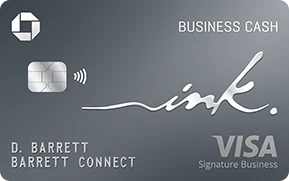
1. Ink Cash — Best overall for freelancers
Annual fee: $0 Rewards rate: 5x on internet/cable/phone and office supply stores (up to $25,000/year), 2x at gas stations and restaurants, 1x everywhere else Welcome bonus: Large sign-up bonus (check current offer)
For most freelancers, the 5x category is extremely valuable. Internet, phone, and office supply stores cover: your home broadband, your cell phone, your co-working day passes, and purchases at Staples or Office Depot. If you spend $300/month on those items, that's $180/year in cash back from one category alone.
Chase Ultimate Rewards points from this card are redeemable for 1 cent each as cash back — but they become dramatically more valuable (1.5–2.5+ cents each) if you transfer them to a Chase Sapphire card and then move them to airline or hotel partners. For the complementary Amex side of a freelancer's wallet, the full Amex Membership Rewards program guide is worth reading before you choose a currency.
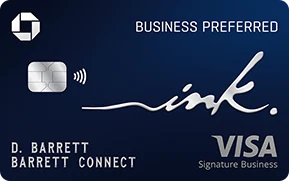
2. Ink Preferred — Best for freelancers who advertise or travel
Annual fee: $95 Rewards rate: 3x on travel, shipping, internet/phone/cable, and advertising on social media and search engines (up to $150,000/year), 1x everywhere else Welcome bonus: One of the largest in the business card space
If you run Facebook ads, Google Ads, or LinkedIn campaigns for yourself or clients, the 3x on advertising is enormous. Digital advertising is the category that sets this card apart — even $500/month on ads earns $180/year in UR points at minimum cash-back value, and far more when transferred to partners.
Also excellent for: frequent travelers (3x on all travel including trains, tolls, and parking), freelancers who ship physical products or equipment.
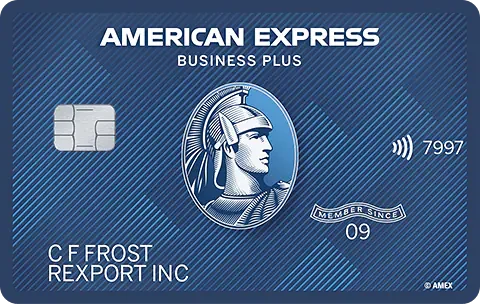
3. Blue Business Plus — Best no-fee flat-rate card
Annual fee: $0 Rewards rate: 2x Amex Membership Rewards on all purchases up to $50,000/year, then 1x Welcome bonus: Available (check current offer)
If your spending doesn't fit neatly into 5x or 3x categories — for example, you pay for Figma, Notion, Slack, and various software subscriptions — the 2x flat rate on everything is unbeatable at zero cost. Amex MR points transfer to Air Canada, British Airways, Delta, Singapore Airlines, and 16 more partners at 1:1, with some genuinely excellent sweet spots — our Amex Blue Business Plus review covers the best ways to redeem those points.
4. Spark Cash Plus — Best for variable-income freelancers
Annual fee: $150 (waived the first year) Rewards rate: 2% cash back on every purchase, no categories No preset spending limit
The charge-card structure means your spending power grows with your business. Unlike a traditional credit card with a fixed credit limit, the Spark Cash Plus flexes based on your usage and payment history. For freelancers in feast-or-famine revenue cycles, this is a meaningful advantage.
How to combine these cards
The ideal freelancer stack depends on your spending profile:
| Spend category | Best card |
|---|---|
| Internet / phone / office supplies | Ink Cash (5x) |
| Digital advertising | Ink Preferred (3x) |
| Client travel | Ink Preferred (3x) |
| Software subscriptions (SaaS) | Blue Business Plus (2x) |
| Everything else | Blue Business Plus or Spark Cash Plus (2x flat) |
A common two-card freelancer setup: Ink Business Cash + Amex Blue Business Plus. Zero total annual fee, 5x on the most common freelancer categories, and 2x on everything else. The full story on the Ink Cash is in our dedicated Chase Ink Business Cash review, including how to stack it with a Sapphire card. For a broader survey of what's available, see our best Amex business cards roundup.
Tax tip: deduct your annual fee
If you use a business card exclusively (or primarily) for business expenses, the annual fee is a deductible business expense. That means the $95 on the Ink Preferred or $150 on the Spark Cash Plus effectively costs you less after taxes.
Applying as a sole proprietor
| Field | What to enter |
|---|---|
| Business name | Your full legal name (or your freelance brand name) |
| Business structure | Sole proprietor |
| Business tax ID | Your SSN |
| Years in business | When you first earned 1099 income |
| Annual revenue | Your estimated annual freelance income |
| Employees | 0 (or 1 if counting yourself) |
Approval tip: Chase is generally the easiest for solo freelancers. Amex is also very approval-friendly and is known to approve applicants with limited US credit history. Your personal credit score is the primary approval factor — aim for 670+ (ideally 720+).
Get weekly card offer alerts
Sunday digest of elevated bonuses. One email, zero spam.
Cards mentioned in this guide

Frequently asked questions
Can I get a business credit card as a freelancer with no LLC?
Which card gives the most cash back for freelancers with internet and phone bills?
Is the annual fee on a business credit card tax deductible for freelancers?
Related guides
Related news

chase · Jun 2, 2026
Chase Ink Preferred 100K Returns: 2026 Ink Lineup

chase · Jun 10, 2026
Chase Hyatt Transfer Ratio 4:3: What It Means for Sapphire Preferred and Ink Business Preferred

chase · Jun 10, 2026
Chase to Virgin Atlantic: 30% Transfer Bonus — Book Delta Business Class for 18,000 Points

airlines · Jun 4, 2026
Alaska Atmos Members Day Launched