Chase Ink Business Unlimited Review 2026: Flat 1.5%, $0 Fee
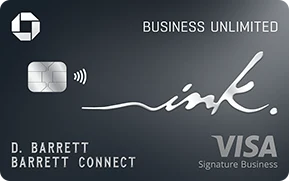
The Chase Ink Business Unlimited earns a flat 1.5% cash back on every business purchase with a $0 annual fee. Paired with a Chase Ink Business Preferred ($95) or a Sapphire card, that 1.5% converts into transferable Ultimate Rewards points worth 1.5–2+ cents each in travel.
On this page▾

Topic Collection
Part of the Card Reviews Collection
Explore all 60 articles
Quick answer
The Ink Unlimited is the best no-annual-fee business card for owners who want one flat rate and zero category tracking: 1.5% cash back on every purchase, no caps, $0 annual fee. Its hidden superpower — when you also hold a Ink Preferred or a Sapphire card, that 1.5% converts into transferable Ultimate Rewards points worth far more than cash.
TL;DR: The Chase Ink Business Unlimited earns 1.5% cash back on every business purchase with no categories and no caps, carries a $0 annual fee, and charges a 3% foreign transaction fee. On its own, rewards are cash back. Paired with a Chase Ink Business Preferred ($95 annual fee) or a Chase Sapphire card, the rewards become transferable Ultimate Rewards points redeemable through 14 airline and hotel partners. Sole proprietors and side-hustlers qualify using their SSN as the EIN. Chase business cards do not add to your personal 5/24 count, but you must be under 5/24 to be approved.
At a glance
| Feature | Chase Ink Business Unlimited |
|---|---|
| Rewards rate | 1.5% cash back on every purchase |
| Categories | None — flat rate on all spend |
| Caps | None |
| Annual fee | $0 |
| Foreign transaction fee | 3% |
| Rewards currency | Cash back (or Ultimate Rewards points when paired) |
| Best for | Small businesses, side hustles, sole proprietors |
Who this card is for
The Ink Unlimited is built for a specific kind of spender: someone who runs a business — even a very small one — and does not want to think about bonus categories. If your spend is spread across software subscriptions, contractor payments, ad buys, shipping, and the hundred miscellaneous costs that do not fit any 3x or 5x bucket, a flat 1.5% on everything beats a category card that only rewards a slice of your spend.
Three groups get the most value:
- Small businesses with mixed, unpredictable spend that does not concentrate in one category.
- Side hustles — freelancers, creators, resellers, and gig workers who want to separate business expenses from personal ones and earn on every dollar.
- Sole proprietors who do not have a registered LLC. You can apply as a sole proprietor using your Social Security number as the EIN; a formal business entity is not required.
If most of your business spend lands in travel, advertising, shipping, or internet/phone/cable, the Ink Preferred (3x on those categories up to $150,000/year) may out-earn the flat 1.5%. The Unlimited is the right pick when your spend is genuinely all over the map. For a full side-by-side breakdown, see the Chase Ink Cash vs Unlimited vs Preferred comparison.
What you earn
Every purchase earns 1.5% back. There are no rotating categories to activate, no quarterly caps, no spend thresholds, and no category to track. A $10,000/month business charging everything to the card earns $1,800/year in rewards before any sign-up bonus.
On its own, that 1.5% is cash back — useful, simple, and redeemable as a statement credit or deposit. But the real story is what happens when you pair the card.
How Ink rewards become transferable points
This is the single most important thing to understand about the Ink Unlimited. By itself, it earns cash back. But Chase treats all Ultimate Rewards-earning cards as one ecosystem — see the Chase Ultimate Rewards program guide for the full pooling mechanics. The moment you also hold a card with transfer partners — a Ink Preferred ($95 annual fee) or a Sapphire card — you can move the points earned on the Unlimited into that account and unlock full transferable value.
Once combined, those points stop being a flat 1.5 cents each and become Ultimate Rewards points that transfer 1:1 to 14 airline and hotel partners, including United, Southwest, Air Canada Aeroplan, World of Hyatt, and Marriott — the Chase Ink trifecta strategy guide shows how to combine this card with the Ink Cash and Ink Preferred for maximum business earning. Redeemed for travel, the same points can be worth 1.5 to 2+ cents each — meaning your effective return on the Unlimited can climb from 1.5% cash to 2.25–3%+ in travel value.
This is why the Unlimited is rarely held alone by points-focused users. It is the cheap, no-fee earning engine; the Ink Preferred or Sapphire is the redemption hub. You keep the $0-fee card forever and pay one annual fee elsewhere to unlock the upgrade.
For a deeper category-by-category comparison, the Ink Cash pairs the same way and adds 5% in office supply and telecom categories, if your spend leans that direction.
The 5/24 rule and business cards
Chase's unofficial 5/24 rule says Chase will generally decline you for a new card if you have opened five or more personal credit cards across all issuers in the past 24 months — the Chase 5/24 rule explained covers what counts and the optimal application sequence. Two facts matter for the Unlimited:
- Business cards from Chase generally do NOT add to your personal 5/24 count. Chase does not report most business cards to your personal credit report, so opening the Unlimited usually does not push you closer to the 5/24 limit for future applications.
- You must still be UNDER 5/24 to be approved. The card does not count against you going forward, but Chase still checks your 5/24 status at the time you apply. If you are already at five or more personal cards in 24 months, expect a decline.
The practical takeaway: business cards like the Unlimited are a way to keep earning Chase points without burning your limited 5/24 slots — but only if you get under the line first. Many points strategists open business cards specifically because they sit outside the count once approved.
How it compares
| Card | Rewards | Annual fee | Best for |
|---|---|---|---|
| Ink Unlimited | 1.5% flat on everything | $0 | Mixed, unpredictable spend |
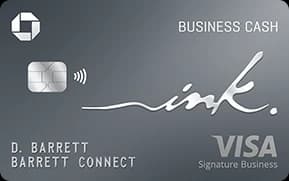
| Ink Cash | 5% office/telecom, 2% gas/dining (caps), 1% else | $0 | Office-supply-heavy spend |
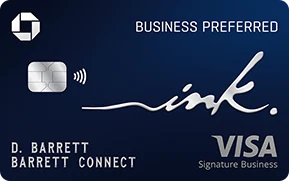
| Ink Preferred | 3x travel/ads/shipping/internet, 1x else | $95 | Travel and advertising spend |
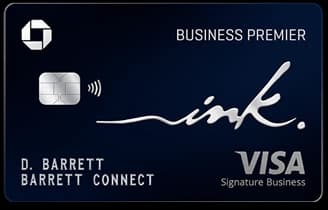
| Ink Premier | 2.5% large purchases, 2% everything | $195 | High-volume businesses |
The Ink Unlimited and Ink Cash are the two no-fee Ink cards — both can feed points into a Ink Preferred. Many owners hold all three: Cash for office/telecom at 5%, Unlimited for everything else at 1.5%, and Preferred as the transfer hub. If you are deciding which paid Ink card should be that transfer hub, the Ink Business Preferred vs Ink Business Premier comparison shows when the $95 Preferred's transfer partners beat the Premier's flat 2% earn. For a broader look at all Ink cards, see the Chase Ink business cards overview.
Pros and cons
Pros
- $0 annual fee — keep it forever at no cost.
- Flat 1.5% on all spend with no caps and no categories to track.
- Rewards become transferable when paired with a Ink Preferred or Sapphire, unlocking 1.5–2+ cents per point in travel.
- Easy to qualify as a sole proprietor or side hustle using your SSN.
- Does not add to personal 5/24, preserving your slots for future personal cards.
- Strong, frequent welcome offers (often a cash or points bonus after a spend requirement).
Cons
- 3% foreign transaction fee — not a card for spending abroad.
- Only 1.5% cash on its own — category cards out-earn it in their niches.
- Full transfer value requires a second card with an annual fee.
- Must be under 5/24 to be approved.
- Cash back is worth more only if you put in the work to pair and transfer.
Bottom line
The Ink Unlimited earns its place in almost any Chase-centric business setup. As a standalone, it is a clean, no-fee 1.5% card for owners who do not want to manage categories. Paired with a Ink Preferred or a Sapphire card, it becomes a 2.25–3%+ travel-rewards machine that costs $0 a year to keep. For small businesses, side hustles, and sole proprietors who can get under 5/24, it is one of the easiest no-fee business cards to justify — and one of the hardest to outgrow, earning its place on the best no-annual-fee business credit cards list alongside very few competitors. If you are also evaluating the Amex Blue Business Plus, see the Ink Business Unlimited vs Amex Blue Business Plus comparison for a direct alternative view.
Get weekly card offer alerts
Sunday digest of elevated bonuses. One email, zero spam.
Cards mentioned in this guide
Frequently asked questions
Does the Chase Ink Business Unlimited earn transferable points?
Can a sole proprietor or side hustle get the Ink Business Unlimited?
Does the Ink Business Unlimited count toward Chase 5/24?
Should I get the Ink Business Unlimited or the Ink Business Preferred?
Is the Ink Business Unlimited good for spending abroad?
Related guides
Card Roundups
Chase Ink Business Premier Review 2026
10 min
Card Roundups
🏆 CreditPoints Top 5 — Best Credit Cards Right Now (July 2026)
9 min
Card Roundups
Chase Ink Business Cash vs Unlimited vs Preferred (2026)
13 min
Card Roundups
The Chase Ink Trifecta: How to Stack Three Business Cards for Maximum UR
10 min
Related news

chase · Jun 2, 2026
Chase Ink Preferred 100K Returns: 2026 Ink Lineup

chase · Jun 10, 2026
Chase Hyatt Transfer Ratio 4:3: What It Means for Sapphire Preferred and Ink Business Preferred

chase · Jun 10, 2026
Chase to Virgin Atlantic: 30% Transfer Bonus — Book Delta Business Class for 18,000 Points

hyatt · Jun 3, 2026
Hyatt Added Perk for Globalists, Explorists and Cardholders
Cards in this ecosystem

Considering switching?