Citi Custom Cash vs Chase Freedom Flex (2026): Best 5% No-Fee Card?
Citi Custom Cash (auto 5% top category) vs Chase Freedom Flex (5% rotating quarters): compare mechanics, caps, dining perks, and which card fits your habits.
On this page▾

Only one side of this comparison is still open. Citi closed the Custom Cash to new applicants on May 28, 2026; its product page has read "Not Available" since (citi.com, read 2026-08-25). The Chase Freedom Flex is unaffected. If you are choosing a card today, this is not a choice — it is the Freedom Flex, and the comparison below tells you what you are not getting. If you already hold the Custom Cash, the mechanics still describe your account exactly.
Quick answer
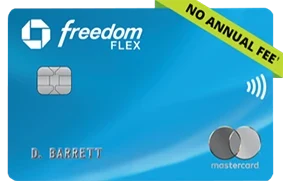
Both the Citi Custom Cash and Chase Freedom Flex earn 5% on their top categories, but the mechanics are completely different. The Custom Cash automatically applies 5% to your single highest-spend category each billing cycle (up to $500/month); the Freedom Flex rotates quarterly categories you must activate manually (up to $1,500/quarter). If your spending is consistently concentrated in one category, the Custom Cash is the effortless winner. If you actively track and rotate your spending, the Freedom Flex offers higher caps and greater flexibility.
TL;DR: The Citi Custom Cash earns 5% on the top eligible spend category each billing cycle (auto-detected, $500/month cap), then 1% on everything else — no annual fee. The Chase Freedom Flex earns 5% on rotating quarterly categories you must activate (up to $1,500/quarter), 3% on dining and drugstores, and 1% on all other purchases — no annual fee. Both cards' points gain transfer value when paired with a premium card from the same issuer.
At a glance
| Feature | Citi Custom Cash | Chase Freedom Flex |
|---|---|---|
| Annual fee | $0 | $0 |
| Top category earn | 5% (auto-detected, top category) | 5% (quarterly rotating, must activate) |
| 5% cap | $500/month (~$6,000/year) | $1,500/quarter (~$6,000/year) |
| Dining earn rate | 5% (if top category) or 1% | 3% always |
| Drugstore earn rate | 5% (if top category) or 1% | 3% always |
| Everything else | 1% | 1% |
| Category selection | Automatic | Manual quarterly activation |
| Welcome bonus | $200 after $750 in 3 months | $200 after $500 in 3 months |
| Transfer partner access | Via Citi Strata Premier | Via Chase Sapphire Preferred/Reserve |
| Foreign transaction fee | 3% | 3% |
| Credit score needed | Good–Excellent (670+) | Good–Excellent (670+) |
How the 5% categories work
Citi Custom Cash: set it and forget it
The Custom Cash automatically detects which eligible category you spent the most in during a billing cycle and applies 5% to that category — up to $500. You do not need to choose a category in advance, activate anything, or even think about it. The card calculates your spend and applies the bonus retroactively at statement close.
Eligible 5% categories include:
- Restaurants
- Gas stations
- Grocery stores
- Select travel (including airlines and hotels)
- Select transit (select streaming services count separately)
- Drug stores
- Home improvement stores
- Fitness clubs
- Live entertainment
This is ideal for someone who reliably spends the most in one category month after month. If you fill up $300 at the gas station every month, you get $15 back from just that category, plus 1% on everything else.
The trap to avoid: if your spending is split nearly equally across multiple categories (e.g., $250 dining and $240 grocery), the card detects one winner at 5% and the rest at 1% — you may not maximize the cap. In those cases, the Freedom Flex's predictable 3% on dining may actually earn more total.
Chase Freedom Flex: active management required
The Freedom Flex earns 5% on rotating quarterly categories that Chase announces each quarter. You must activate each quarter by the deadline (typically by the 14th of the first month of the quarter) or you earn only 1% on those categories.
Recent quarterly 5% categories have included:
- Q1: Grocery stores, fitness clubs, self-care
- Q2: Gas stations, EV charging, home improvement
- Q3: Restaurants, movie theaters
- Q4: Walmart, PayPal, select streaming
The quarterly cap is $1,500 ($75 maximum bonus per quarter at 5%), translating to $300/year maximum from the rotating categories alone. But the Freedom Flex also permanently earns 3% on all dining and 3% at drugstores — making it a consistently strong card even in quarters where the rotating categories do not match your spending.
The key difference: the 5% on Freedom Flex is scheduled and known in advance; the Custom Cash's 5% is automatic but unknown until the cycle closes.
Comparing annual 5% value
Annual 5% caps are similar on paper — $6,000/year on both — but behave differently:
| Scenario | Custom Cash 5% value | Freedom Flex 5% value |
|---|---|---|
| Consistent $500/month in one category | $300/year | Depends on quarter |
| Mixed spend — no clear top category | Less than $300/year | Up to $300/year (rotating) |
| High dining spend ($500+/month) | $300/year (if dining is top) | $300 rotating + $180+ at 3% dining |
| Gas heavy + dining secondary | $300/year on gas | Gas in Q2 = $300 + 3% dining year-round |
The permanent bonus categories: Freedom Flex's edge
This is where the Freedom Flex distinguishes itself from the Custom Cash:
The Freedom Flex earns 3% on dining year-round and 3% at drugstores year-round, with no activation needed and no caps. For a household spending $500/month on dining, that is an extra $15/month or $180/year on top of any rotating category bonuses — earned passively.
The Custom Cash earns only 1% on dining unless dining happens to be your top category that month. If you spend $400 at restaurants and $450 at the grocery store in the same month, the grocery store wins the 5% and dining earns 1%.
Quarterly activation: a real behavioral risk
The Chase Freedom Flex requires you to manually log in and activate each quarter's bonus categories. If you forget:
- You still earn 3% on dining and drugstores
- But you earn only 1% on the rotating categories instead of 5%
- Missing one quarter costs you up to $75 in 5% bonuses
This is not a trivial risk. Surveys consistently show that 30–40% of cardholders who intend to activate rotating categories miss at least one quarter per year. If this sounds like you, the Custom Cash's auto-detect system eliminates this failure mode entirely.
Ecosystem pairing
Custom Cash in the Citi ecosystem
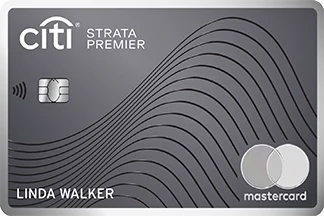
When paired with the Strata Premier, Custom Cash ThankYou points become transferable to Citi's 18 airline and hotel partners — see the Citi Trifecta strategy for the full three-card setup. The optimal Citi stack:
- Strata Premier: 3x on hotels, flights, dining, groceries, gas
- Custom Cash: 5% on your #1 category (up to $500/month)
- Double Cash: 2% on everything else
Freedom Flex in the Chase ecosystem
When paired with Sapphire Preferred or Sapphire Reserve, Freedom Flex points become transferable Ultimate Rewards — the Chase Sapphire Trifecta guide walks through that full stack. The optimal Chase stack:
- Sapphire Preferred: 3x dining, 3x online grocery, 5x Chase Travel
- Freedom Flex: 5% rotating categories, 3% dining/drugstores
- Freedom Unlimited: 1.5% catch-all
Welcome bonuses
Both cards offer $200 in welcome bonuses, but the Freedom Flex requires only $500 in spend vs $750 for the Custom Cash — a lower bar. For cardholders who might struggle to hit the spending minimum, the Freedom Flex is slightly more accessible.
Which card fits which person?
Choose Citi Custom Cash if:
- Your spending is consistently dominated by one category month over month (e.g., always gas, always restaurants, always grocery)
- You hate the idea of activating bonus categories or tracking quarterly schedules
- You want a true set-it-and-forget-it 5% earner — among the best no-annual-fee Citi cards
- You are building a Citi ecosystem and need a category card to complement the Citi Double Cash and Strata Premier
Choose Chase Freedom Flex if:
- You actively manage your credit card spending and can remember to activate quarterly
- You spend heavily on dining year-round (3% always, no activation needed)
- You want the flexibility of different 5% categories across the year (gas in Q2, restaurants in Q3, etc.)
- You are building a Chase ecosystem alongside Sapphire Preferred
Consider holding both if:
- You can meet both welcome bonus requirements
- You want to maximize both Citi ThankYou and Chase Ultimate Rewards simultaneously
- Your spending profile has a clear top category for Custom Cash AND you eat out often enough to benefit from Freedom Flex's 3% dining
Bottom line
The Custom Cash is the smarter choice for hands-off, consistent category spenders. The Freedom Flex is the smarter choice for engaged, dining-heavy cardholders who can stay on top of quarterly activation. Both cards are most powerful as components of a multi-card strategy — not as standalone earners.
Get weekly card offer alerts
Sunday digest of elevated bonuses. One email, zero spam.
Cards mentioned in this guide

Frequently asked questions
What categories does the Citi Custom Cash earn 5% on?
What happens if I forget to activate the Chase Freedom Flex quarterly categories?
Can I hold both the Citi Custom Cash and Chase Freedom Flex?
What is the 5% spending cap on the Citi Custom Cash?
Does the Chase Freedom Flex earn 3% on dining all year, or only during certain quarters?
Related guides
Related news

chase · Jun 9, 2026
Chase Disney Inspire Visa Launch: $99 AF, $400 Welcome — Is It Worth a 5/24 Slot?

chase · Jun 2, 2026
Chase 20% Flying Blue Bonus May 2026: Retrospective
chase · Jun 2, 2026
Chase Sapphire Reserve 150K Welcome Offer 2026

chase · Jun 2, 2026
Chase Ultimate Rewards 2026: Cash-Back + Points Boost
Cards in this ecosystem
Considering switching?