Citi Double Cash vs Chase Freedom Unlimited (2026): Best No-Fee Card?
Citi Double Cash (2% flat) vs Chase Freedom Unlimited (1.5%+3% dining): compare no-fee cards on earn rates, ecosystem value, and which fits your spending profile.
On this page▾
Quick answer
Both the Citi Double Cash and Chase Freedom Unlimited are $0 annual fee cards that excel as everyday earners — but they reward different spending patterns. The Double Cash earns a flat 2% on everything; the Freedom Unlimited earns 1.5% base with a 3% boost on dining and drugstores. If you want pure simplicity with no category tracking, choose Double Cash. If you spend heavily on dining, the Freedom Unlimited edges ahead — especially when paired with a premium Chase card.
TL;DR: The Citi Double Cash earns 2% cash back (1% when you buy, 1% when you pay) with no annual fee; points are transferable to Citi ThankYou partners when combined with the Citi Strata Premier. The Chase Freedom Unlimited earns 1.5% on everything, 3% on dining and drugstores, and 5% on Chase Travel purchases; points are transferable to Chase Ultimate Rewards partners when combined with the Chase Sapphire Preferred or Reserve.
At a glance
| Feature | Citi Double Cash | Chase Freedom Unlimited |
|---|---|---|
| Annual fee | $0 | $0 |
| Base earn rate | 2% everywhere (1% + 1%) | 1.5% everywhere |
| Dining earn rate | 2% | 3% |
| Drugstore earn rate | 2% | 3% |
| Chase Travel earn rate | N/A | 5% |
| Welcome bonus | None (typically) | $200 after $500 in 3 months |
| Points currency | Citi ThankYou (if paired with Strata Premier) | Chase Ultimate Rewards (if paired with Sapphire) |
| Balance transfer offer | Often 0% intro APR available | 0% intro APR on purchases |
| Foreign transaction fee | 3% | 3% |
| Recommended credit score | Good–Excellent (670+) | Good–Excellent (670+) |
Earn rates: the head-to-head
Citi Double Cash: the simplicity champion
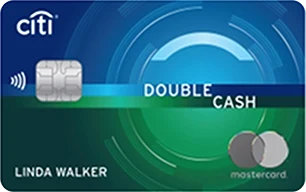
The Double Cash earns 2% cash back on every purchase — 1% at the time of purchase and 1% when you pay your statement. There are no categories to track, no rotating bonuses, no caps, and no portals to use. Every dollar you spend generates 2 cents back, period.
This simplicity is genuinely valuable. Behavioral finance research consistently shows that people who optimally categorize their spending actually earn more on paper, but real-world users often miss categories, forget rotations, or default to one card out of habit. If you are that person, the Double Cash's 2% guarantee is better than the theoretical maximum of a more complex card.
Chase Freedom Unlimited: the dining optimizer
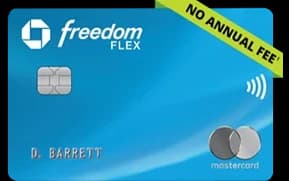
The Freedom Unlimited earns:
- 5% on travel purchased through Chase Travel
- 3% on dining at restaurants
- 3% at drugstores
- 1.5% on all other purchases
For a household spending $600/month on dining and $100 at drugstores, the CFU earns an extra $7.50/month ($90/year) compared to the Double Cash on those categories alone. That adds up meaningfully over time.
However, on the "everything else" category, the Double Cash wins by 0.5%: a $1,000/month spending baseline not in dining or drugstores earns $20/month on Double Cash vs $15/month on CFU — a $60/year difference in favor of Double Cash for non-dining spend.
The break-even analysis
At what dining spend level does the CFU overtake the Double Cash?
If dining is your only variable, CFU outperforms when dining spend exceeds the point at which the 3% dining bonus ($1.5× extra per dollar) overcomes the 0.5% deficit on other spending.
For a person with $2,000/month in total card spend and $400/month on dining:
- Double Cash earns $40/month (2% flat)
- CFU earns $33 on non-dining ($1,650 × 1.5%) + $12 on dining ($400 × 3%) = $45/month
The CFU wins when dining is roughly 20%+ of your total card spend.
The ecosystem angle: where both cards really shine
Neither card is optimally used in isolation. The real value of both emerges when they are paired with a premium card from the same issuer. For the full picture on the Double Cash, see the Citi Double Cash review.
Citi Double Cash + Citi Strata Premier
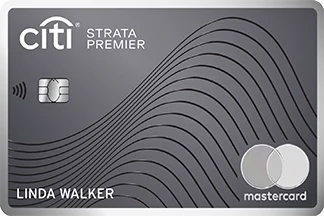
When you hold the Strata Premier ($95/year), ThankYou points from the Double Cash can be transferred to Citi's 18 airline and hotel partners — the full Citi ThankYou program guide covers every partner — including American Airlines AAdvantage and Turkish Airlines Miles&Smiles. Without the Strata Premier, Double Cash points are cash back only (no transfer capability). With it, your 2% "cash back" becomes 2x transferable ThankYou points potentially worth 1.5–2¢ each when used for premium cabin redemptions.
Citi two-card stack:
- Strata Premier: 3x on hotels, flights, restaurants, groceries, gas
- Double Cash: 2x on everything else
Chase Freedom Unlimited + Chase Sapphire Preferred/Reserve
When you hold the Sapphire Preferred ($95/year) or Sapphire Reserve ($795/year), Freedom Unlimited points transfer into the Chase Ultimate Rewards program pool, which connects to Hyatt, United, Southwest, and more. Without a premium Chase card, CFU points are 1¢/point cash back. With one, they become fully transferable Ultimate Rewards — the most valuable points currency in the U.S.
Chase two-card stack:
- Freedom Unlimited: 3x dining, 3x drugstores, 1.5x everything else
- Sapphire Preferred: 3x online grocery, 5x Chase Travel, 2x other travel
Balance transfer and intro APR offers
The Double Cash is frequently offered with a 0% intro APR on balance transfers for 18 months (with a 3% balance transfer fee), making it an excellent debt consolidation tool if you are carrying a balance on a high-APR card. This is one of the most competitive balance transfer offers in the no-annual-fee space.
The Freedom Unlimited typically offers 0% intro APR on purchases for 15 months — better for financing a large upcoming purchase over time.
Foreign transaction fees: neither card is great for travel
Both cards charge a 3% foreign transaction fee, making them poor choices for international purchases. If you travel abroad, use either card only domestically and bring a no-FTF card like the Strata Premier or Sapphire Preferred for international spending.
Welcome bonus: Freedom Unlimited wins
The Freedom Unlimited typically offers a welcome bonus (around $200 after $500 in spend within 3 months), while the Double Cash generally does not offer a traditional welcome bonus. This gives the Freedom Unlimited an upfront advantage of $200 for new cardholders who can meet the low minimum spend requirement.
Who should get the Citi Double Cash?
- Pure simplicity seekers: You want one rule — spend money, earn 2%. No apps, no portals, no rotations.
- Non-dining heavy spenders: Your spending is dominated by categories like utilities, home improvement, medical, or subscriptions where neither card has a bonus category.
- Citi ecosystem builders: You have or plan to get the Strata Premier or Custom Cash and want a 2x catch-all for all spend not covered by 3x or 5x cards — this is the backbone of the Citi Trifecta strategy.
- Balance transfer seekers: You want to consolidate high-interest debt at 0% for 18 months.
Who should get the Chase Freedom Unlimited?
- Dining-heavy households: You spend $400+/month at restaurants and get meaningful value from 3% dining.
- Chase ecosystem builders: You have the Sapphire Preferred or Sapphire Reserve and want to pool CFU points into Ultimate Rewards for transfers to Hyatt or United — see the full Chase Sapphire Trifecta guide for the optimal stack.
- New-to-travel-rewards users: The $200 welcome bonus and simple Chase Travel 5% category make this a great entry card for someone starting to build a points strategy.
- Drugstore spenders: The 3% at drugstores (CVS, Walgreens, Rite Aid) is a niche but useful category.
Can you hold both?
Yes, and many savvy cardholders do. The Double Cash and Freedom Unlimited together cover two separate ecosystems — Citi ThankYou and Chase Ultimate Rewards. There is no redundancy; you are building two separate points balances simultaneously. The total annual fee for both is still $0, so the only cost is credit utilization across two accounts and the slight complexity of managing two cards. Both also rank among the best no-annual-fee Citi cards for cash back.
Bottom line
For most people spending a fairly equal amount across all categories, the Double Cash wins on simplicity and the guaranteed 2% rate. For its full review, see the Chase Freedom Unlimited review for the CFU's complete feature breakdown. For dining-centric households or people building a Chase ecosystem, the Freedom Unlimited edges ahead. Both cards are strongest not as standalone cards but as the "catch-all" workhorse paired with a premium card from the same issuer.
Get weekly card offer alerts
Sunday digest of elevated bonuses. One email, zero spam.
Cards mentioned in this guide



Frequently asked questions
Is the Citi Double Cash actually 2% back on everything?
Can Citi Double Cash points be transferred to airlines?
Does the Chase Freedom Unlimited have a foreign transaction fee?
Which card pairs better with the Chase Sapphire Preferred?
Is the Citi Double Cash a good balance transfer card?
Related guides
Related news

chase · Jun 2, 2026
Chase 20% Flying Blue Bonus May 2026: Retrospective

chase · Jun 2, 2026
Chase Sapphire Reserve 150K Welcome Offer 2026

chase · Jun 2, 2026
Chase Ultimate Rewards 2026: Cash-Back + Points Boost

chase · Jun 10, 2026
Chase Hyatt Transfer Ratio 4:3: What It Means for Sapphire Preferred and Ink Business Preferred
Cards in this ecosystem


Considering switching?