Chase Freedom Flex 5% Calendar: How to Maximize Every Quarter in 2026
Activate the Chase Freedom Flex 5% categories every quarter through the Chase app or website, then run $1,500 of bonus-category spend to earn the full $75 cash back per quarter ($300 per year). After the $1,500 cap, those purchases drop to 1%, so switch overflow to the Chase Freedom Unlimited at 1.5%. Pair both with a Chase Sapphire card to make the rewards transferable Ultimate Rewards points.
On this page▾

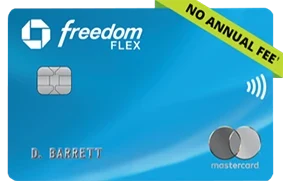
The Chase Freedom Flex pays 5% cash back on rotating quarterly categories — up to $1,500 in combined spend each quarter, which is $75 cash back per quarter and $300 per year. The catch: you have to activate every quarter, and unactivated spend earns just 1%.
This is the playbook for squeezing every dollar out of those rotating 5% categories. How activation actually works, where the $1,500 quarterly cap lives, the categories that show up year after year, the tricks that hit the cap without overspending, what card to reach for once you have maxed it, and how the Freedom Flex slots into a Chase trifecta so that 5% cash back becomes transferable travel points worth far more.
Quick answer
Activate each quarter, then run $1,500 of spend through the bonus category. Freedom Flex earns 5% on rotating categories — for 2026 that has meant dining and Norwegian Cruise Line in Q1, Amazon and Whole Foods in Q2, and gas stations/EV charging and public transit in Q3 — on the first $1,500 of combined purchases per quarter. That is $75 cash back per quarter, $300 per year, at a 5% rate. After the cap, those purchases drop to 1%. Activation is required every quarter through the Chase app or website — if you forget, the quarter earns only 1%. Once you hit the cap, switch to Freedom Unlimited for 1.5% on everything, and pair both with a Sapphire to make the rewards transferable Ultimate Rewards points.
TL;DR: The Chase Freedom Flex earns 5% cash back on rotating quarterly bonus categories that must be activated each quarter via the Chase app or website. The 5% rate applies to the first $1,500 in combined spend per calendar quarter, earning up to $75 cash back per quarter and up to $300 per year. After the $1,500 cap, those purchases earn 1%. Unactivated quarters earn only 1%. Buying gift cards or prepaying within a bonus category can help reach the cap. After maxing the cap, the Chase Freedom Unlimited (1.5% on everything) is the better card. Pairing the Freedom Flex with a Chase Sapphire card converts the cash back into Ultimate Rewards points that transfer to airline and hotel partners.
At a glance: the confirmed 2026 calendar and the cap math
Categories rotate each quarter and Chase announces them in advance. Here is the actual confirmed 2026 lineup through Q3, plus the math on what the cap is worth.
| Quarter | 2026 5% categories | Cap (combined spend) | Max 5% cash back |
|---|---|---|---|
| Q1 (Jan-Mar) — confirmed | Dining, American Heart Association donations, Norwegian Cruise Line | $1,500 | $75 |
| Q2 (Apr-Jun) — confirmed | Amazon, Whole Foods Market, Chase Travel, Feeding America donations | $1,500 | $75 |
| Q3 (Jul-Sep) — confirmed | Gas stations & EV charging, public transit, select live entertainment, United Way donations | $1,500 | $75 |
| Q4 (Oct-Dec) — not yet announced | Chase publishes these mid-September 2026; see below | $1,500 | $75 |
| Full year | — all four activated — | $6,000 | $300 |
The numbers are fixed by design: 5% of $1,500 is $75, and four quarters of $75 is $300 a year. The only variable is whether you activate and whether you actually fill the $1,500 each quarter. Miss activation and that quarter pays 1% — $15 instead of $75, a $60 swing per quarter.
Q4 2026: what we know and what we don't
As of this update, Chase has not yet announced the Q4 2026 categories. Chase typically publishes each quarter's lineup a few weeks before it opens — Q4 usually lands in mid-September, roughly two weeks before activation opens on October 1. Don't let anyone tell you the Q4 categories with certainty before that announcement.
Going by pattern only — not a confirmed fact — Q4 has leaned toward retail and travel spending in recent years: the 2025 Q4 lineup was Chase Travel, department stores, Old Navy, and PayPal. That's a reasonable guess for what Q4 2026 might look like, but Chase has swapped in different categories before, so treat it as a planning hint, not something to bank on. Check chase.com/personal/credit-cards/freedom/freedomcalendar once mid-September arrives — this guide is updated with the real Q4 2026 categories, activation deadline, and cap details as soon as Chase confirms them.
How activation works
The single rule that separates people who get $300 a year from people who leave most of it on the table: you must activate the 5% categories every quarter, and activation does not carry over.
- When: Chase opens activation a few weeks before each quarter starts and keeps it open through roughly the middle of the quarter (typically the 14th day of the third month). Spend before you activate does not retroactively earn 5% in most cases — activate first, then spend.
- Where: Log into the Chase Mobile app or chase.com, find the Freedom Flex rewards/offers area, and click the activate button for the quarter. It takes about ten seconds.
- Email and reminders: Chase emails registered cardholders, but those emails get buried. The reliable fix is a recurring calendar reminder on the 1st of January, April, July, and October.
If you forget, the entire quarter earns 1% on what would have been 5% categories. On a maxed $1,500 quarter that is the difference between $75 and $15. Across a year of forgetting, you give up most of the $300.
The $1,500 quarterly cap, explained
The 5% rate is not unlimited. It applies to the first $1,500 in combined purchases across all the listed bonus categories for that quarter. "Combined" matters: if a quarter pairs grocery stores and gas, your grocery and gas spend share one $1,500 bucket, not $1,500 each.
- First $1,500 of bonus-category spend: 5% (up to $75 cash back)
- Every dollar after $1,500 in those categories: 1%
- The cap resets at the start of each calendar quarter; unused room does not roll forward.
So the optimization target is simple: fill exactly $1,500 of bonus-category spend each quarter, then stop using the Freedom Flex for that category and move the overflow to a better everyday card.
Step-by-step: maximize each quarter
- Late in the prior quarter, read the next quarter's categories. Chase publishes them ahead of time. Note which ones you can realistically fill.
- Activate on day one. The moment activation opens, do it. Then set the calendar reminder for the next quarter so you never miss one.
- Front-load predictable spend into the bonus category. If groceries are 5% this quarter, route all grocery shopping to the Freedom Flex until you approach $1,500.
- Track your progress. The Chase app shows quarterly category spend. Check around the midpoint so you know how much cap room is left.
- Hit the cap with gift cards or prepaying (carefully). If a category is 5% but you will not organically spend $1,500, buy gift cards inside that category — a grocery store gift-card rack, an Amazon gift card during an Amazon quarter, a gas-station card during a gas quarter — to top off toward the cap. Prepaying a recurring bill billed through a bonus merchant (PayPal, for example) works the same way. Only buy gift cards for places you will genuinely spend; do not chase 5% on cards you will let expire.
- Once you hit $1,500, switch cards. Stop using the Freedom Flex for that category and move remaining spend to Freedom Unlimited at 1.5% or your other top everyday card.
What to do after you max the cap
The Freedom Flex is a precision tool, not an everyday card. After $1,500 in the bonus category, its 5% becomes 1% — worse than most flat-rate cards. The clean handoff:
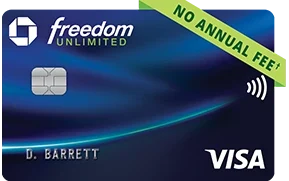
- Everyday non-bonus spend → Freedom Unlimited. It earns 1.5% on everything with no caps and no activation, so it covers the overflow and all the spend that never qualifies for a rotating category.
- Travel and dining → a Sapphire card (more below), which earns elevated rates there and, critically, makes everything transferable.
- The Freedom Flex still earns its own standing bonuses outside the rotating categories — 5% on travel booked through Chase, 3% on dining, and 3% at drugstores. Those do not require activation and do not count against the $1,500 rotating cap. If you're unsure what actually qualifies as "travel booked through Chase" versus a purchase you make directly with an airline or hotel, see what counts as travel for Chase's cards — the definition matters for this 5% rate too, not just the Sapphire's $300 credit.
Note that Freedom Flex carries a $0 annual fee — making it one of the best no-annual-fee Chase cards available — so even if you only ever max two or three quarters, it stays free to hold and keeps contributing to the Ultimate Rewards pool.
How it stacks in a Chase trifecta or quadfecta
This is where the Freedom Flex stops being a cash-back card and becomes a points engine. The "cash back" it earns is really Ultimate Rewards points — and when you hold a Chase Sapphire card, those points combine into one pool and become transferable to airline and hotel partners. The Chase trifecta strategy is the reason most serious points earners pair the Freedom Flex with a Sapphire from day one. New to Chase entirely? Our first-year Chase roadmap walks through the order to open these cards in and when to add the Freedom Flex to the mix.
The classic Chase trifecta:
| Card | Role | Earn highlight |
|---|---|---|
| Freedom Flex | Rotating 5% categories | 5% on quarterly categories ($1,500 cap) |
| Freedom Unlimited | Flat-rate everyday | 1.5% on everything, no cap |
| Sapphire Preferred | Travel hub + transfers | Higher travel/dining earn; transfer to partners |
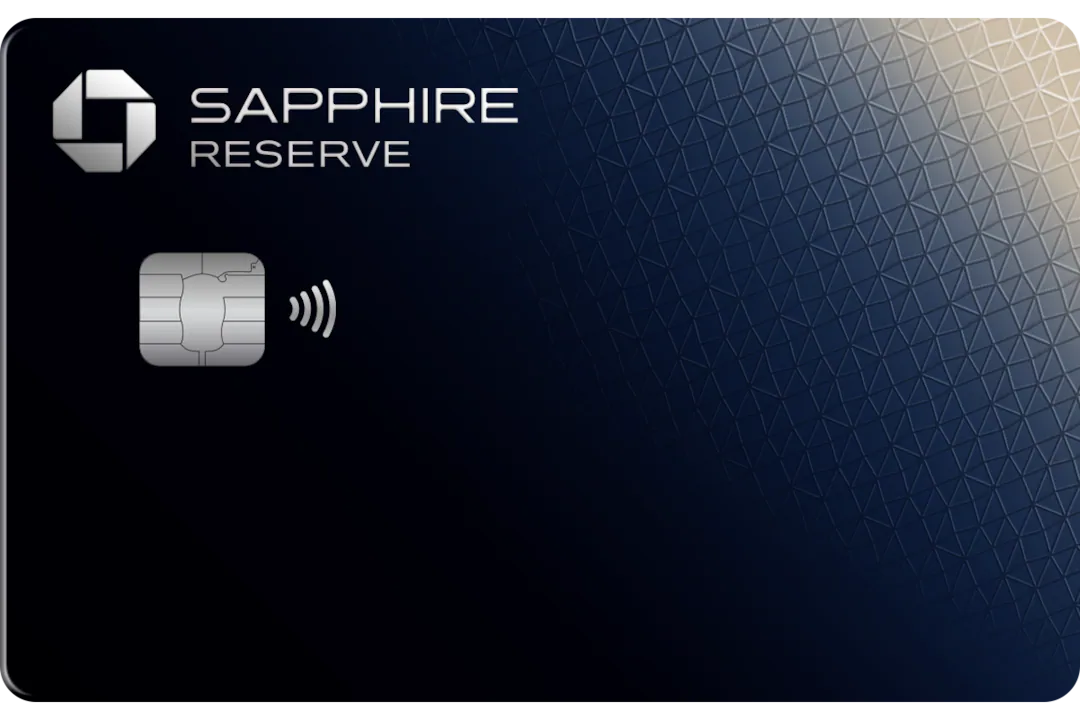
With a Sapphire Preferred (or Sapphire Reserve) open, you move the Freedom Flex and Freedom Unlimited points into the Sapphire's Ultimate Rewards account. There they can transfer 1:1 to partners like United, Hyatt, and others, where redemptions frequently exceed 2 cents per point — turning a quarter's $75 of 5% earnings into well over $150 of travel value. Not sure which Sapphire to anchor the trifecta with? See the full Sapphire Preferred vs Sapphire Reserve breakdown for the annual-fee-vs-earn-rate math. Add a fourth card such as a Chase Ink business card and you have a quadfecta, layering business-category bonuses on top of the same transferable pool — just be mindful of the Chase 5/24 rule before adding new Chase cards to your wallet.
The takeaway: the Freedom Flex's 5% is good on its own, but its real ceiling is unlocked only when its points pool with a Sapphire. Without the Sapphire, you are capped at 1 cent per point of cash-back value; with it, the same points routinely stretch to 2 cents or more through transfer partners. See the full Freedom Flex vs Freedom Unlimited comparison to understand where each card earns better.
Common mistakes
- Forgetting to activate. The most expensive error. An unactivated quarter pays 1% instead of 5% — $60 of lost value on a maxed quarter. Set a recurring calendar reminder for January 1, April 1, July 1, and October 1.
- Treating the Freedom Flex as an everyday card. After $1,500 in the bonus category it earns just 1%. Hand off overflow to the Freedom Unlimited at 1.5%.
- Misreading the combined cap. When a quarter lists two categories (say grocery and gas), they share one $1,500 cap — not $1,500 each.
- Buying gift cards you will not use. Topping off toward the cap with gift cards only works if you will actually spend them. A forgotten $200 gift card erases the 5% benefit you were chasing.
- Holding the Freedom Flex without a Sapphire and assuming you are maximizing. Cash back alone caps your points at 1 cent each. The Sapphire pairing is what turns 5% into transferable value worth 2 cents or more.
- Letting the cap expire unused. Unused $1,500 room does not roll into the next quarter. If you are well under the cap near quarter-end, that is when gift cards or prepaying make sense.
Bottom line
The Chase Freedom Flex hands you up to $300 a year in 5% cash back, but only if you do two things every quarter: activate, and fill the $1,500 cap. Q1-Q3 2026 are confirmed (dining, Amazon/Whole Foods, gas/EV charging and transit); Q4 2026 isn't announced yet as of this update and won't be until mid-September — activate the moment it is, route predictable category spend to the card, top off with gift cards or prepaying when you are short, and switch to the Freedom Unlimited the moment you hit $1,500. Then pair the whole setup with a Sapphire so those points pool and transfer — that is how a free, no-annual-fee card quietly becomes one of the best value plays in your wallet.
Get weekly card offer alerts
Sunday digest of elevated bonuses. One email, zero spam.
Cards mentioned in this guide
Frequently asked questions
How much can I earn from the Chase Freedom Flex 5% categories?
Do I have to activate the 5% categories every quarter?
What should I do after I hit the $1,500 quarterly cap?
Can buying gift cards help me hit the cap?
How does the Freedom Flex fit into a Chase trifecta?
References
Primary sources and further reading cited in this guide.
Related guides
Strategy
Your First Year with Chase: A 12-Month Beginner Roadmap
11 min
Rules & Mechanics
What Counts as "Travel" for Chase's $300 Credit and 3x Categories
10 min
Strategy
Chase Trifecta 2026: Sapphire + 2 Freedoms (Full Math)
14 min
Rewards Programs
Chase Ultimate Rewards: The Complete 2026 Program Guide
12 min
Related news

chase · Jun 9, 2026
Chase Disney Inspire Visa Launch: $99 AF, $400 Welcome — Is It Worth a 5/24 Slot?

chase · Jun 2, 2026
Chase 20% Flying Blue Bonus May 2026: Retrospective
chase · Jun 2, 2026
Chase Sapphire Reserve 150K Welcome Offer 2026
chase · Jun 2, 2026
Chase Ultimate Rewards 2026: Cash-Back + Points Boost
Cards in this ecosystem

Considering switching?