The Chase Quadfecta 2026: Four Cards to Maximize Ultimate Rewards
The Chase Quadfecta is a four-card Ultimate Rewards system: a Sapphire (Preferred $95 or Reserve ~$795) for travel and transfers, Freedom Unlimited for 1.5% everywhere, Freedom Flex for 5% rotating categories, and a Chase Ink card for 3× business spend. Route each purchase to its highest-earning card, pool all points onto the Sapphire — the only card that transfers 1:1 to partners — and build the personal cards first under 5/24, adding the Ink card last since it doesn’t count toward 5/24.
On this page▾
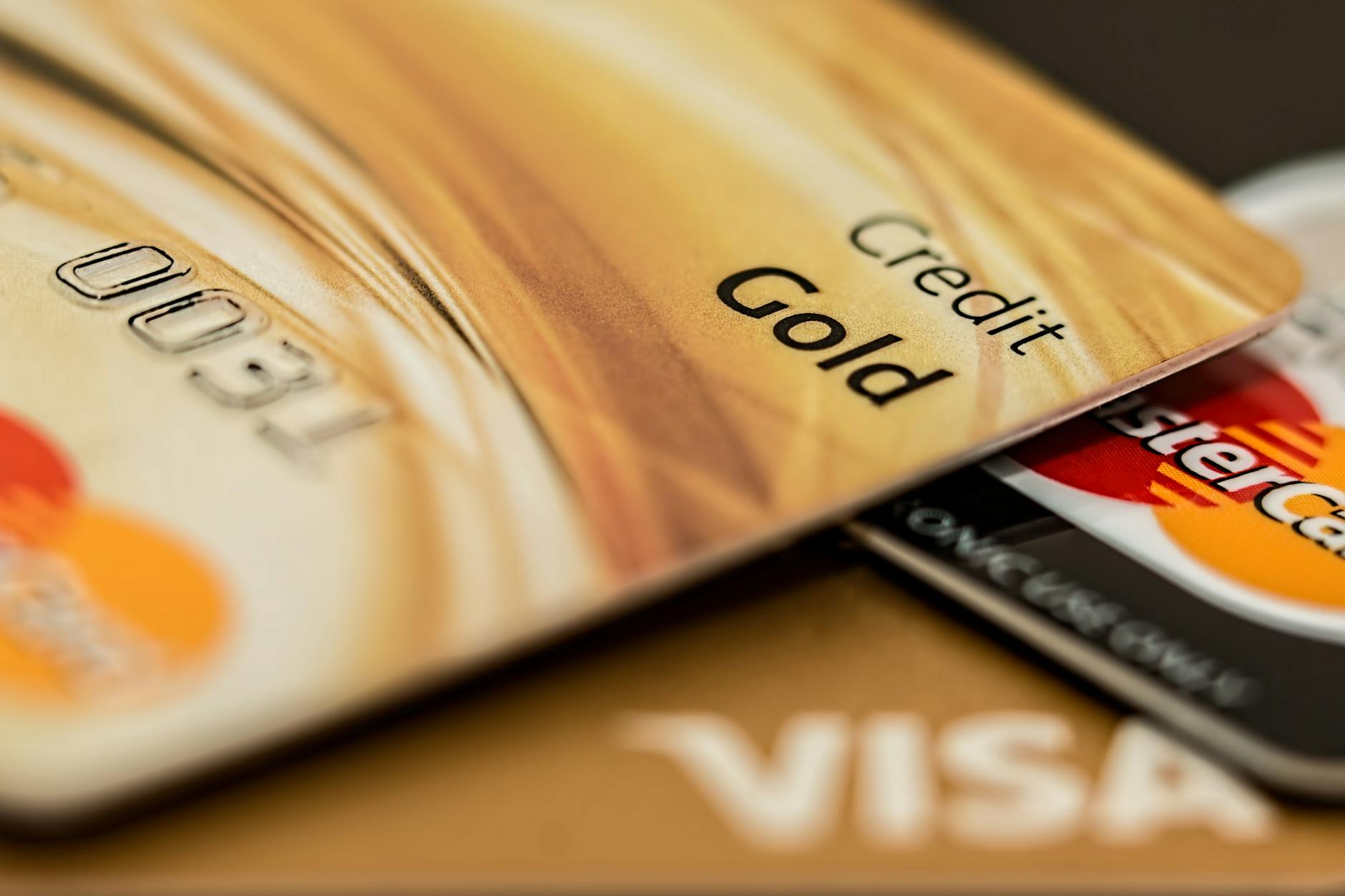
Four Chase cards, one Ultimate Rewards account. A Sapphire for transfers and travel, Freedom Unlimited for 1.5% everywhere, Freedom Flex for 5% rotating categories, and an Ink card for business spend — every dollar routed to the highest-earning card, then pooled onto the Sapphire to transfer 1:1 to partners.
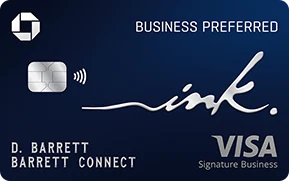
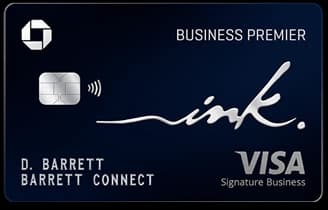
The Chase Trifecta adds a fourth card and becomes the Quadfecta. The extra card is a Ink Preferred (or another Ink), and it does two things the three-card setup can't: it captures business and bonus-category spend at 3×, and — because Chase Ink Business cards don't report to your personal credit — it lets you keep earning welcome bonuses without burning a single 5/24 slot. Done right, the Quadfecta is the most complete Ultimate Rewards earning machine a single household can assemble in 2026.
This is the full playbook: which card to reach for on every purchase, how to pool all four cards' points onto one Sapphire and transfer to partners like United and World of Hyatt, the build order that keeps you under Chase 5/24, and the annual-fee math that tells you whether the fourth card pays for itself.
Quick answer
The Quadfecta is the Trifecta plus an Ink card. Four roles, one points pool:
- Freedom Flex — your 5× rotating quarterly category (groceries, gas, PayPal, etc., up to $1,500/quarter). Also 3× dining and drugstore.
- Freedom Unlimited — your 1.5% catch-all on everything uncategorized. The workhorse.
- Ink Preferred (or another Ink) — business categories: travel, shipping, internet/cable/phone, advertising at 3× (up to $150,000/year). Both this and the Sapphire below carry a $95 fee and unlock transfers, so the Ink Business Preferred vs Sapphire Preferred comparison is worth a look if you are starting with just one of them.
- Sapphire Preferred ($95) or Sapphire Reserve (~$795) — travel and dining, plus the only card that unlocks 1:1 partner transfers.
The four cards earn raw Ultimate Rewards, but only the Sapphire can move points to airline and hotel partners. So you pool everything onto the Sapphire, then transfer. Cash-back points are worth 1 cent each; transfers to partners regularly hit 1.5–2+ cents. That gap is the entire reason the Quadfecta exists.
At a glance: which card for which purchase
| Purchase | Use this card | Earn rate |
|---|---|---|
| Rotating 5% category (this quarter) | Freedom Flex | 5× (up to $1,500/qtr) |
| Dining and drugstores | Freedom Flex | 3× |
| Travel booked directly | Sapphire | 2×–3× |
| Chase Travel portal | Sapphire | 5×–8× |
| Business travel / shipping / phone / ads | Ink Preferred | 3× (up to $150K) |
| Everything else (uncategorized) | Freedom Unlimited | 1.5× |
| Partner transfers (United, Hyatt, etc.) | Sapphire only | — |
The rule is mechanical: match each purchase to its highest multiplier, and never let an uncategorized dollar land on a 1× card when Freedom Unlimited earns 1.5× on it.
How the points actually pool
This is the step most people miss. Freedom and Ink cards earn Ultimate Rewards, but those points are stuck as 1-cent cash back unless you hold a premium Sapphire. The transfer ability lives only on Sapphire Preferred and Sapphire Reserve.
Pooling is free and instant. Inside the Chase Ultimate Rewards portal you "combine points" from any Freedom or Ink card into your Sapphire account. Once pooled, every point inherits the Sapphire's transfer ability — eligible to move 1:1 to United MileagePlus, World of Hyatt, Southwest, Air France/KLM Flying Blue, British Airways, Aer Lingus, JetBlue, Marriott Bonvoy, IHG, Aeroplan, and Virgin.
A concrete example: you earn 25,000 points on Freedom Flex, 40,000 on Freedom Unlimited, and 35,000 on Ink Business Preferred across a year — 100,000 points sitting as $1,000 of cash back. Pool all of it onto your Sapphire, transfer to World of Hyatt, and four nights at a Category 6 Park Hyatt (100,000 points) is worth roughly $2,800 of hotel. Same points, nearly 3× the value — purely because they were pooled onto a Sapphire before redeeming.
How to route each purchase: step by step
- Open the Chase app before you swipe. Check which Freedom Flex category is live this quarter. If your purchase fits it, use Freedom Flex for 5×.
- Dining or drugstore? Freedom Flex earns 3× year-round — reach for it.
- Travel? Use your Sapphire. Sapphire Reserve earns up to 8× through the Chase Travel portal and 4× on direct flights; Sapphire Preferred earns 5× portal / 2× direct.
- Business category (shipping, internet/cable/phone, advertising, business travel)? Use Ink Preferred for 3×, up to the $150,000 annual cap.
- Everything else — insurance, subscriptions, big-box stores, anything uncategorized — goes on Freedom Unlimited for 1.5×. Never let it sit on a 1× card.
- Once a quarter, pool. Combine all Freedom and Ink points onto your Sapphire inside the Ultimate Rewards portal.
- Before any redemption, check transfer math. Compare the Chase Travel cash value (1.25–1.5¢/point) against a partner transfer. For Hyatt and aspirational airline awards, transfer almost always wins.
The build order under 5/24
Chase 5/24 means Chase auto-denies you if you've opened five or more personal cards (any issuer) in the past 24 months. Personal Chase cards — Sapphire, Freedom Unlimited, Freedom Flex — all count toward 5/24. Ink Business cards do not — they don't report to your personal credit and don't add to your 5/24 count.
That asymmetry dictates the order: get the personal cards while you're under 5/24, save the Ink cards for last (or when you're already at 5/24).
| Step | Card | Why this order |
|---|---|---|
| 1 | Sapphire (Preferred or Reserve) | Largest welcome bonus, longest spend window, unlocks transfers |
| 2 | Freedom Unlimited | 1.5× workhorse; ~30–45 days after the Sapphire |
| 3 | Freedom Flex | 5× rotating; ~30–45 days after CFU |
| 4 | Ink Preferred | Apply anytime — doesn't add to 5/24, even when you're at 5/24 |
Space the three personal applications 30–45 days apart so Chase's velocity algorithms don't flag a rapid burst. After step 3 you're at 3/24 from these cards alone. The Ink card in step 4 is the elegant part: you can add it (and even a second or third Ink) while sitting at 5/24, because business cards live outside the personal-card count entirely. See the Chase 5/24 Workaround for stacking multiple Ink cards.
The annual-fee math
The two Freedoms and most Ink cards carry $0 annual fees, so the only real fee decision is which Sapphire anchors the system.
Quadfecta with Sapphire Preferred — $95 total annual fee. The Sapphire Preferred at $95 is the default. It carries the full transfer engine identical to the Reserve, plus 5× Chase Travel, 3× dining, 3× online groceries, and 3× streaming. For a household spending $40,000–$80,000/year across the four cards, the 1.5× Freedom Unlimited catch-all alone returns hundreds of dollars over a 1× card, and the $95 fee is recovered many times over.
Quadfecta with Sapphire Reserve — ~$795 total annual fee. Sapphire Reserve only makes sense if you book at least $8,000/year through Chase Travel (to exploit the 8× multiplier), and you'll actually use the $300 travel credit and the $500 Edit by CSR luxury-hotel credit. Those credits offset $800 of the fee — but only if you spend them on qualifying bookings you'd make anyway.
A quick benchmark: if your four cards pool 200,000 points in a year, that's $2,000 as cash back. Transfer those same points to partners at a realistic 1.7¢ average and they're worth roughly $3,400 — a $1,400 swing that dwarfs even the Reserve's fee. The fee question is real, but it's small relative to the transfer arbitrage the Quadfecta is built to capture.
TL;DR: The Chase Quadfecta is a four-card Ultimate Rewards strategy: a Sapphire (Preferred $95 or Reserve ~$795) for transfers and travel, Freedom Unlimited for 1.5% on everything uncategorized, Freedom Flex for 5% rotating quarterly categories, and a Chase Ink Business card for 3× business categories. Route each purchase to its highest-earning card, then pool all points onto the Sapphire — the only card that transfers 1:1 to partners like United and World of Hyatt. Build personal cards first while under Chase 5/24; add Ink cards last because they don't count toward 5/24. Cash-back points are worth 1 cent each; partner transfers regularly reach 1.5–2+ cents.
Common mistakes
Letting uncategorized spend land on the Sapphire at 1×. The Sapphire earns 1× outside its bonus categories. Freedom Unlimited earns 1.5× on the same spend. Every general-purchase dollar belongs on Freedom Unlimited.
Forgetting to activate the Freedom Flex 5× each quarter. The rotating bonus requires opt-in through the Chase app. Forget, and you drop from $75 of cash back ($1,500 × 5%) to $15 ($1,500 × 1%) for the quarter.
Treating Freedom or Ink points as transferable on their own. They're not. Without an active Sapphire to pool into, they're 1-cent cash back. Pool first, then transfer.
Redeeming through Chase Travel without checking a transfer. Chase Travel pays 1.25–1.5¢/point. Hyatt transfers routinely deliver 2–4¢ on aspirational stays. Always compare before you click.
Carrying a balance on any of the four. Chase cards carry APRs in the high 20s. One month of carried balance erases a year of the 1.5× edge.
Expanding beyond Quadfecta: the full Ink stack
The Quadfecta uses one Ink card. But many serious UR earners add all three core Ink cards to maximize both business category coverage and welcome bonuses:
The Ink Trifecta (within the Quadfecta):
| Card | Best Categories | Annual Fee |
|---|---|---|
| Ink Preferred | 3x travel, ads, shipping, internet/cable/phone (up to $150K/year) | $95 |
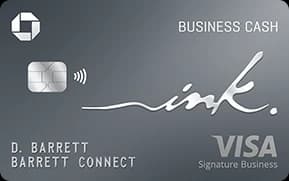
| Ink Cash | 5x office supplies, internet, cable, phone (up to $25K/year); 2x gas + restaurants | $0 |
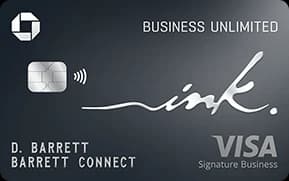
| Ink Unlimited | 1.5x flat on everything, no category tracking | $0 |
Why this matters: The Ink Preferred covers high-value business categories. The Ink Cash covers the office and telecom stack at 5x. The Ink Unlimited catches everything else at 1.5x — beating the Freedom Unlimited on any business purchase. Together they eliminate the "what card do I use?" decision for business spending. All points pool identically onto the same Sapphire.
Application cadence: Chase typically allows one new Ink card per 90 days. Apply for Ink Preferred first (largest bonus), then Ink Cash, then Ink Unlimited. Each card's welcome bonus is independent. None count toward 5/24.
With all three Ink cards plus the personal Trifecta, you have seven Chase cards earning into a single Ultimate Rewards pool — the most efficient single-issuer points strategy available in 2026.
For the Ink-specific deep dive, see Chase Ink Business Cards: Complete Guide 2026 and Ink Cash vs Ink Unlimited vs Ink Preferred.
Bottom line
The Quadfecta is the Trifecta with a fourth lane for business spend and an extra welcome bonus that costs you nothing on 5/24. Match every purchase to its highest multiplier, pool all four cards' points onto one Sapphire, and transfer to partners instead of cashing out — that's where 1-cent points become 1.5–2+ cent points. Build the personal cards first while you're under 5/24, add the Ink card last, and let the Freedom Unlimited 1.5× catch-all and the Ink 3× business categories quietly compound underneath the Sapphire's transfer engine.
For the three-card foundation, start with the Chase Sapphire Trifecta 2026. For redemption math, see How to redeem Chase Ultimate Rewards for maximum value and the Hyatt award chart 2026.
Get weekly card offer alerts
Sunday digest of elevated bonuses. One email, zero spam.
Cards mentioned in this guide



Frequently asked questions
What is the Chase Quadfecta and how is it different from the Trifecta?
How do I pool points from all four cards onto the Sapphire?
In what order should I apply for the four Quadfecta cards under 5/24?
Should I anchor the Quadfecta with Sapphire Preferred or Sapphire Reserve?
How much more are pooled points worth as transfers versus cash back?
Related guides
Related news

chase · Jun 2, 2026
Chase 20% Flying Blue Bonus May 2026: Retrospective

chase · Jun 2, 2026
Chase Ultimate Rewards 2026: Cash-Back + Points Boost

chase · Jun 10, 2026
Chase Hyatt Transfer Ratio 4:3: What It Means for Sapphire Preferred and Ink Business Preferred

chase · Jun 10, 2026
Chase to Virgin Atlantic: 30% Transfer Bonus — Book Delta Business Class for 18,000 Points
Cards in this ecosystem

Considering switching?