Should You Keep or Cancel the Amex Gold Card? (2026)
Keep the Amex Gold if you spend $500+/month on dining and US supermarkets and use the $240 in annual credits. The effective fee is just $85 after credits. Downgrade to Amex Green ($150) or Amex EveryDay if you rarely use the dining and Uber credits.
On this page▾

Topic Collection
Part of the Keep or Cancel Collection
Explore all 27 articles
The Amex Gold Card charges $325 per year. At 4x on dining and 4x on groceries, it's the strongest everyday-spending card in the Amex Membership Rewards ecosystem — but only if you actually spend enough on food to extract the value.
The Gold Card sits in an interesting position: it's not a luxury card (no lounge access, no hotel status), but it's not cheap either. At $325, it needs to deliver real value beyond the earn rates — and its $240 in annual credits are where most of the math lives.
Quick answer
Keep it if: You spend $500+/month combined on dining and groceries, you use the $120 dining credit and $120 Uber Cash, and you want the best MR-earning card for food spending. The Gold is hard to beat for foodies in the Amex ecosystem.
Cancel or downgrade if: You rarely eat out, you order groceries from non-eligible stores (Costco, Walmart, Trader Joe's are excluded from 4x), and you don't use Uber. At that point, the Amex Green at $150 or the Amex EveryDay (retired — closed to new applicants) may serve you better.
The annual fee math
| Benefit | Annual value | Notes |
|---|---|---|
| $120 dining credit | $120 | $10/month at Grubhub, The Cheesecake Factory, Goldbelly, Wine.com, Five Guys, Milk Bar |
| $120 Uber Cash | $120 | $10/month for Uber rides or Uber Eats |
| 4x on dining (worldwide) | Variable | On up to $50k/yr; at 1.8¢/pt = 7.2% return vs 2% on a flat-rate card |
| 4x on US supermarkets | Variable | On up to $25k/yr; at 1.8¢/pt = 7.2% return |
| 3x on flights (direct) | Variable | Competitive with CSR 3x, behind Platinum 5x |
| Hotel Collection booking credit | $50–$100 | $100 credit on 2-night+ stays through Amex Travel |
| Total guaranteed credits | $240 | |
| Annual fee | $325 | |
| Net fee after credits | $85 |
Break-even with credits: After using both $120 credits, you're effectively paying $85/yr for 4x on dining and groceries. At $500/month of food spend (very achievable for a household), that's 6,000 MR points/month = 72,000/year. At 1.8¢/pt value, that's $1,296/yr in MR vs. $85 effective cost. The math is compelling.
Keep it if
1. You spend $500+/month on dining and groceries. The Gold's 4x categories are dining (worldwide, any restaurant) and US supermarkets (Whole Foods, Kroger, Safeway, Publix — not Walmart, Costco, or Target). If a couple spends $800/month on food combined, they're earning 9,600 MR points/month = 115,200/year = ~$2,074 at 1.8¢/pt. That's a 215% return on the $325 fee.
2. You actually use the $10/month credits. Both the $120 dining credit and $120 Uber Cash credit come in $10/month installments — use them or lose them. If you order Grubhub or Uber Eats at least once a month and take Uber rides occasionally, using both credits is painless. If you don't use either service, those $240 in credits have zero value to you. See the full breakdown in our guide to maximizing Amex Gold credits.
3. You're building or maintaining an Amex MR balance. The Gold is the best MR-earning card for everyday spending. If you hold the Amex Platinum for lounge access (see our Amex Platinum keep-or-cancel analysis) or are building toward a business Platinum SUB, keeping the Gold active maximizes your MR earn rate on daily purchases. Points transfer 1:1 to 19+ airline and hotel partners — see the best ways to redeem MR points for the highest-value options.
4. You eat out often and travel occasionally. The Gold's dining category is global — any restaurant anywhere in the world earns 4x. For frequent diners and occasional travelers, the Gold + a no-fee 2% cashback card is often more valuable than a single premium travel card — though pairing it with the Platinum as part of an Amex trifecta strategy can push your MR earn rate even higher.
Cancel or downgrade if
1. Your grocery shopping is primarily at Costco, Walmart, or Target. The Gold's 4x on "US supermarkets" explicitly excludes warehouse clubs (Costco, BJ's), superstores (Walmart, Target), and convenience stores. If 60% of your grocery spend is at excluded merchants, your effective earn rate is much lower than 4x.
2. You're not using the monthly credits. $10 at Grubhub and $10 Uber every single month requires deliberate effort. If you forget or simply don't use these services, you're paying $325 for a card with no usable credits — and the earn rates alone rarely justify that for moderate spenders.
3. You don't use Amex MR points. MR points are worth 1.8¢+ only when transferred to airline/hotel partners. If you've never transferred points and tend to redeem for statement credits (~0.6¢/pt), the Gold's "4x" is really more like 2.4% — comparable to any good 2% cashback card, minus the $325 fee. Before canceling, it's worth calling Amex for a retention offer — targeted bonuses or statement credits can change the math entirely.
4. You're a light spender who wants a simpler setup. If your monthly dining and grocery budget is under $300/month and you prefer simplicity over optimization, a no-fee 2% cashback card (Citi Double Cash, Wells Fargo Active Cash) plus the Amex Green at $150 may be a cleaner, cheaper setup.
Downgrade option
The Gold can be product-changed to:
| Card | Annual fee | Notes |
|---|---|---|
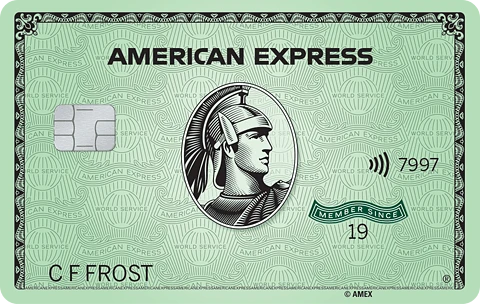
| Amex Green | $150 | 3x on travel, transit, dining; $100 LoungeBuddy; $100 CLEAR+ credit |
| Amex EveryDay Preferred | $95 | 3x at supermarkets, 2x at gas; points multiplier for 30+ monthly purchases |
| Amex EveryDay (no fee) | $0 | 2x at supermarkets; keeps MR points active |
Important: You cannot product-change to a cashback card (Blue Cash) from a points card (Gold) — they're separate product families. Downgrade must stay within MR-earning cards.
Alternatives
| Card | Annual fee | Best for |
|---|---|---|
| Amex Green | $150 | Lighter travelers who want MR points without the heavy credits |
| Sapphire Preferred | $95 | 3x on dining + 2x travel + 25% point uplift for $230 less |
| Citi Strata Premier | $95 | 3x dining + 3x grocery + 3x travel, no category caps |
If you're torn between the two ecosystems entirely, our Amex Gold vs. Chase Sapphire Preferred comparison breaks down earn rates, credits, and transfer partners side by side.
The decision checklist
- Do I spend $500+/month on dining and US supermarkets?
- Do I use Grubhub or the participating dining credit merchants monthly?
- Do I use Uber or Uber Eats at least monthly?
- Do I actively transfer MR points to airline/hotel partners?
- Is the Gold part of my larger Amex MR ecosystem (Platinum + Gold)?
3+ checked = keep. 2 or fewer = consider downgrading to the Amex Green or canceling.
Get weekly card offer alerts
Sunday digest of elevated bonuses. One email, zero spam.
Cards mentioned in this guide



Frequently asked questions
Is the Amex Gold Card worth $325 per year?
Does the Amex Gold 4x at supermarkets work at Costco or Walmart?
Can I downgrade the Amex Gold to avoid the annual fee?
Related guides
Related news

amex · Jun 2, 2026
Amex Gold 60th Anniversary Refresh 2026: Who Wins?

airlines · Jun 2, 2026
Aeroplan 2026: SQC Status and June 1 Devaluation

amex · Jun 9, 2026
Amex Renames Green Card to "Classic Green" August 2026 — What Changes (Spoiler: Almost Nothing)

amex · Jun 2, 2026
Amex 30% Avios Transfer Bonus: 1,000 MR = 1,300 Avios, Ends ~June 21 2026
Cards in this ecosystem


Considering switching?