Best Credit Cards for Beginners: Top Picks for 2026
The best credit card for beginners in 2026 is the Discover it Secured (no annual fee, 2% cashback, refundable deposit, automatic upgrade to unsecured in about 7 months) or the Capital One Platinum Secured ($49–$200 deposit and a clear upgrade path). If you have no credit history, start with either. With a thin file of 6–12 months, the Capital One QuicksilverOne (1.5% cashback, $39/year, no deposit) is the best step up. Pay in full every month and keep utilization under 10%.
On this page▾

Quick answer
The best credit card for beginners in 2026 is the Discover it® Secured Credit Card (no annual fee, 2% cashback, refundable deposit, automatic upgrade to unsecured in ~7 months) or the Capital One Platinum Secured (low $49-$200 deposit, clear upgrade path). If you have no credit history at all, start with either of these. If you have a thin file (6-12 months), the Capital One QuicksilverOne (1.5% cashback, $39/year, no deposit) is the best step up.
TL;DR: The best first credit card for beginners with no credit history in 2026 is the Discover it® Secured Credit Card — it accepts applicants with no credit file, charges no annual fee, earns 2% cashback at restaurants and gas stations, and automatically upgrades to an unsecured card at around 7-8 months. Beginners should not apply for rewards cards (Chase Sapphire Preferred, Amex Gold) without at least 12-18 months of established credit history; these require 670-700+ FICO scores and will be denied without it. The key behavior for beginners: pay the statement balance in full each month (never carry a balance), keep credit utilization below 10%, and do not apply for more than one new card every 6-12 months.
What makes a credit card "beginner-friendly"?
A good beginner credit card has three properties:
- Approves thin or no-credit files — no minimum credit score or explicitly markets to credit-builders
- Low financial risk — no or low annual fee, ideally no foreign transaction fee, and does not trap you with high APR if you accidentally carry a balance
- Clear upgrade path — gives you a route to a better card in 6-12 months without starting over
What beginner cards are not: luxury travel cards, cards with $500+ annual fees, cards that require 700+ FICO scores, and business credit cards.
The 5 best credit cards for beginners in 2026
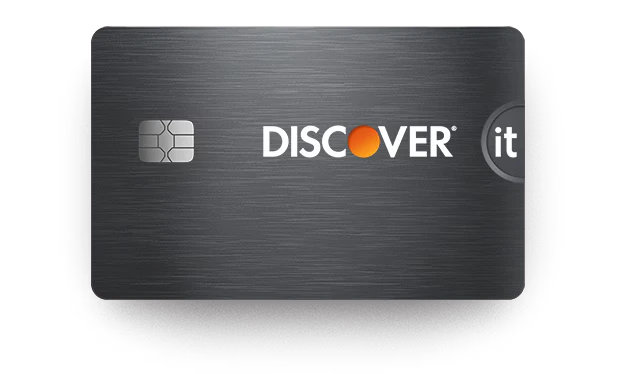
1. Discover it® Secured Credit Card — best overall for true beginners
Who it's for: Anyone starting from zero — no credit history, thin file, or rebuilding after past issues.
- Annual fee: $0
- Deposit: $200-$2,500 (returned after 7 months with on-time payments)
- Rewards: 2% cashback at restaurants and gas stations (up to $1,000/quarter), 1% on everything else
- Signup bonus: Discover matches ALL cashback earned in year one (effectively doubling it)
- Upgrade path: Automatic review at 7-8 months; most beginners with clean payment history upgrade to Discover it® Chrome (unsecured) with their deposit refunded
- Why it wins: Best combination of no annual fee + real rewards + clear upgrade path. Discover has one of the most beginner-friendly approval processes in the industry.
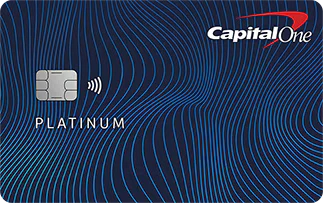
2. Capital One Platinum Secured — best for lowest initial deposit
Who it's for: Beginners who want to minimize the cash tied up in a deposit.
- Annual fee: $0
- Deposit: $49, $99, or $200 depending on creditworthiness (many true beginners qualify for $200)
- Rewards: None
- Upgrade path: Capital One Platinum (unsecured) at 6-12 months, with deposit refunded
- Why it wins: Lowest deposit tier of any major secured card. Great for beginners who want to start with the minimum outlay.
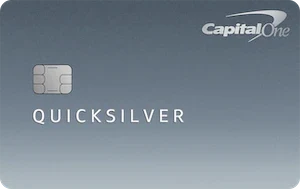
3. Capital One QuicksilverOne — best step-up card (6+ months in)
Who it's for: Beginners who've had 6-12 months of an established account and want their first real rewards card.
- Annual fee: $39
- Deposit: None (unsecured)
- Rewards: 1.5% cashback on all purchases, unlimited
- Approval: Limited/fair credit accepted — typically 580+ FICO with some payment history
- Why it wins: The best cash-back card accessible without a strong credit history. $39 annual fee pays for itself at $2,600+ in annual spending.
4. Discover it® Student Cash Back — best for college students
Who it's for: Full-time college students with no prior credit.
- Annual fee: $0
- Rewards: 5% cashback in rotating quarterly categories (up to $1,500/quarter), 1% on everything else
- Why it wins: No SSN requirement for international students in some cases, no annual fee, real cashback rewards, and Good Grades Reward ($20 statement credit for GPA of 3.0+). International students who are past the F-1 starter stage should see our best student credit cards for international students beyond F-1 guide for the J-1, M-1, and post-graduation step-up options.
5. Chase Freedom Rise℠ — best for building toward Chase ecosystem
Who it's for: Beginners who plan to eventually get a Chase Sapphire Preferred or Reserve.
- Annual fee: $0
- Rewards: 1.5% cashback on all purchases
- Approval: Chase requires SSN; recommended to have a Chase checking account to improve approval odds
- Why it wins: The newest beginner card from Chase. Earns Chase Ultimate Rewards points (as cashback that converts to points later). Positions you for the full Chase ecosystem.
The most common beginner mistakes
Mistake 1: Applying for the wrong card first. Beginners who apply for Chase Sapphire Preferred or Amex Gold with no credit history face near-certain rejection. Each application adds a hard inquiry to your file. Start with a secured card, build 12-18 months of history, then apply for rewards cards.
Mistake 2: Carrying a balance. Credit cards are not loans. A $1,000 balance at 27% APR costs you $270/year in interest. Always pay the full statement balance by the due date — not just the minimum.
Mistake 3: Using too much of your limit. Credit utilization (balance ÷ credit limit) is 30% of your FICO score. If your limit is $500 and you spend $400, your utilization is 80% — which tanks your score even if you pay on time. Keep utilization below 10% for fastest score growth.
Mistake 4: Closing your first card when you upgrade. Your credit history length matters. Keep your first card open (even with a $0 balance) after upgrading to a better card. The average age of accounts is 15% of your FICO score.
Mistake 5: Applying for multiple cards at once. Each application adds a hard inquiry and temporarily lowers your score. As a beginner, apply for at most one card per 6-12 months.
Your 18-month roadmap from beginner to rewards card
| Month | Milestone | Action |
|---|---|---|
| 0 | Open first card | Discover it® Secured or Capital One Platinum Secured |
| 1-6 | Build payment history | Pay full balance every month, keep utilization below 10% |
| 4-6 | FICO scores appear | Two scores generate for the first time |
| 7-8 | Upgrade review | Discover automatically reviews your account; many get upgraded |
| 12 | 700 target | Most disciplined beginners hit 680-720 at 12 months |
| 12-18 | First rewards card | Apply for Chase Freedom Unlimited, Capital One Venture, or Amex Blue Cash Everyday |
The credit score basics every beginner needs to know
Your FICO score is a number between 300 and 850. The five factors that determine it:
- Payment history (35%) — pay on time, every time. One 30-day late payment can drop your score 100 points.
- Credit utilization (30%) — keep balances below 10% of your limit.
- Length of credit history (15%) — keep your oldest account open.
- Credit mix (10%) — having both a credit card and a loan helps, but don't open a loan just for this.
- New credit inquiries (10%) — each application costs 5-10 points temporarily.
How Credit Scores Work: FICO Explained covers this in more depth, including the difference between FICO 8, FICO 9, and VantageScore.
More beginner guides
- Best Secured Credit Cards (2026) — full ranked list of all secured cards with detailed comparisons
- How Credit Scores Work — FICO Explained (2026) — the 300-850 system in plain terms
- Credit Utilization Explained (2026) — why 10% is the target and how to game your statement date
- How Long to Build a 700 Credit Score (2026) — realistic month-by-month milestones
- Credit Builder Loan vs. Secured Card (2026) — should you open a credit-builder loan alongside your card?
- Authorized User Strategy: Build Credit Fast (2026) — get added to a trusted person's old account to instantly gain history
- Credit Card Mistakes to Avoid in Year One (2026) — the 10 traps that stall beginners most often
Frequently asked questions
What credit score do I need to get my first credit card? None. Secured credit cards (like the Discover it® Secured) have no minimum credit score requirement. They use a cash deposit as collateral instead of your credit history. This is specifically designed for people starting from zero.
Should I get a secured card or a credit-builder loan first? For most beginners, start with a secured credit card. It builds both payment history and credit utilization history, and the cashback rewards partially offset the cost of the deposit. A credit-builder loan is a good addition at month 3-6 if you want to accelerate score growth. See Credit Builder Loan vs. Secured Card.
How many credit cards should a beginner have? Start with one card. Add a second card at 12 months (when your score is strong enough for better rewards cards). Most beginners don't need more than two cards in their first two years.
Can I get a good rewards card as a beginner? Not immediately. Good travel cards (Chase Sapphire Preferred, Capital One Venture X, Amex Platinum) require 670-720+ FICO scores. After 12-18 months of disciplined secured card use, most beginners qualify for these. The exception: the Chase Freedom Rise and Capital One QuicksilverOne are rewards cards accessible earlier.
Is a student credit card better than a secured card? For full-time students, yes. Student cards (Discover it® Student, Capital One SavorOne Student) have no deposit requirement, no annual fee, and are marketed directly to students with no credit history. They're unsecured, which means no cash tied up.
What if I'm denied for a secured card? If you're denied, ask why (the denial letter lists the reasons). Common issues: no US bank account, unverifiable income, or too many recent applications. Open a US bank account first, wait 6 months, and reapply. A credit-builder loan from a credit union can also help establish your file before a card application.
Get weekly card offer alerts
Sunday digest of elevated bonuses. One email, zero spam.
Cards mentioned in this guide
Frequently asked questions
What is the best credit card for someone with no credit history?
How long does it take to get a 700 credit score starting from zero?
What is credit utilization and why does it matter?
Should I get a secured card or a credit-builder loan?
Related guides
Card Roundups
Best Secured Credit Cards of 2026
12 min
Rules & Mechanics
How US Credit Scores Work: FICO and VantageScore Explained for Immigrants (2026)
15 min
Rules & Mechanics
Credit Utilization Explained for Newcomers (2026)
13 min
Strategy
How Long to Build a 700 Credit Score: Newcomer Timeline 2026
14 min
Related news

amex · Jun 25, 2026
Amex Platinum vs Schwab Platinum: the same $895 card, with a cash-out

chase · Jun 10, 2026
Chase Hyatt Transfer Ratio 4:3: What It Means for Sapphire Preferred and Ink Business Preferred

chase · Jun 10, 2026
Chase to Virgin Atlantic: 30% Transfer Bonus — Book Delta Business Class for 18,000 Points

ihg · Jun 10, 2026
IHG Buy Points at 0.5¢ Extended Through June 30 — Best Price for InterContinental Stays