Best Student Credit Cards for International Students (Beyond F-1) 2026
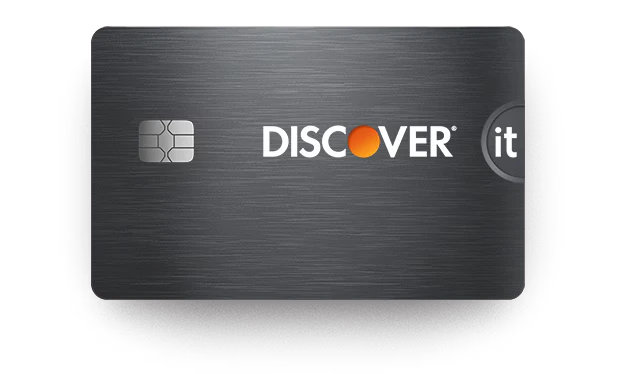
The best starter cards for international students in 2026 — across F-1, J-1, and M-1 visas — are the Discover it Secured (a $200 deposit becomes your line, $0 annual fee, no foreign transaction fee, and Discover matches all year-one cash back), the Capital One Platinum Secured (accepts an ITIN, reports to all three bureaus), and the Capital One SavorOne (3% on dining, groceries, entertainment, and streaming) once you have an SSN. Get an SSN through authorized on-campus work, CPT, or OPT; otherwise use an ITIN and target ITIN-friendly secured cards. Keep utilization under 10% and build before your authorization ends.
On this page▾

Topic Collection
Part of the New to America Collection
Explore all 37 articles
Quick answer
The best starter cards for international students in 2026 — covering F-1, J-1, and M-1 visa holders — are Discover it Secured (a $200 deposit sets your line, $0 annual fee, no foreign transaction fee, and Discover matches all cash back in year one), Capital One Platinum Secured (accepts an ITIN and reports to all three bureaus), and SavorOne (3% back on dining, groceries, entertainment, and streaming with a $0 annual fee) once you have an SSN. Get an SSN through authorized on-campus work, CPT, or OPT; if you cannot, apply for an ITIN and target ITIN-friendly secured cards.
TL;DR: International students on F-1, J-1, and M-1 visas can obtain a Social Security Number (SSN) once they have authorized employment — on-campus jobs, Curricular Practical Training (CPT), or Optional Practical Training (OPT) for F-1; academic training or program-sponsored work for J-1; and limited practical training for M-1 vocational students. Students without work authorization use an Individual Taxpayer Identification Number (ITIN, IRS Form W-7) to apply for credit cards. The Discover it Secured card requires a $200 minimum deposit that becomes the credit line, charges $0 annual fee, has no foreign transaction fee, and matches all cash back earned in the first 12 months. The Capital One SavorOne earns 3% on dining, groceries, entertainment, and streaming with no annual fee and no foreign transaction fee. Keep utilization below 10% and build credit before OPT or program authorization ends.
Best student cards at a glance
| Card | Best for |
|---|---|
| Discover it Secured | Best secured rewards card — $200 deposit, Cashback Match year one, $0 annual fee, no FTF |
| Capital One Platinum Secured | Best ITIN-friendly secured card — low deposit tiers, reports all 3 bureaus, upgrade path |
| SavorOne | Best post-SSN rewards — 3% dining/grocery/entertainment/streaming, no FTF |
| Quicksilver Secured | Best flat-rate secured — 1.5% on everything, $0 annual fee |
| Discover it Cash Back | Best step-up after upgrade — 5% rotating categories, Cashback Match |
| Quicksilver Secured | Best low-deposit ITIN starter — $49–$200 deposit tiers, reports all 3 bureaus |
SSN or ITIN: which one applies to your visa
The biggest planning question for any international student is whether you can get a Social Security Number or must use an ITIN. Your visa type and your work authorization decide this — not your nationality — and the best credit cards for international students on F-1 visas goes deeper on F-1-specific strategies if that is your status.
F-1 academic students:
- An SSN requires authorized employment: an on-campus job, CPT, or OPT. With a job offer or authorization, take your offer letter, I-20, passport, visa, and I-94 to a Social Security office.
- Without any work authorization, an F-1 student cannot get an SSN and uses an ITIN instead.
- STEM OPT (24-month extension) also qualifies you for an SSN if you did not get one earlier.
J-1 exchange visitors:
- J-1 students, researchers, and scholars are generally work-authorized through their program sponsor. That sponsorship — plus on-campus work, academic training, or sponsor-approved employment — qualifies you for an SSN.
- Bring your DS-2019, passport, visa, I-94, and a sponsor authorization letter to the Social Security office.
- J-1 students with no authorized work activity use an ITIN.
- For a card lineup tailored specifically to exchange-program participants, see our best credit cards for J-1 visa exchange visitors guide.
M-1 vocational students:
- M-1 students attend vocational or technical programs. They cannot work during studies but may receive limited practical training after completing the program.
- During studies, most M-1 students have no SSN eligibility and apply for credit using an ITIN.
- Once practical training is authorized, an SSN becomes available.
ITIN basics for all three visa types:
- File IRS Form W-7 with original or certified copies of your passport, visa, and I-20 or DS-2019.
- Most students apply when filing a first US tax return (Form 1040-NR) or through a certified IRS Acceptance Agent — many university international offices are agents.
- Processing takes 7–11 weeks. The ITIN is a 9-digit number starting with 9 and is a valid SSN substitute on Capital One and Citi applications.
- An ITIN never grants work authorization; it is purely a tax-filing number.
Which issuers accept an ITIN
| Issuer | ITIN accepted? | Notes |
|---|---|---|
| Capital One | Yes | Platinum Secured, Quicksilver Secured, SavorOne |
| Citi | Yes | Double Cash, Custom Cash, Rewards+ |
| Chase | Foreign-credit shortcut via Nova Credit | UK/Canada credit history only, for Freedom Unlimited/Freedom Flex; ITIN otherwise not accepted |
| American Express | No newcomer path | Nova Credit partnership ended in 2025; only Amex Global Transfer if you already hold an Amex from your home country |
| Discover | SSN preferred | Secured card may accept ITIN in some cases |
| Chase | SSN required | No ITIN applications |
#1 Discover it Secured — the best all-around student starter
Why it ranks first
Discover it Secured pairs a low barrier to entry with rewards almost no other secured card matches. Your $200 minimum security deposit becomes your credit line (you can deposit more, up to $2,500, for a higher line). There is no annual fee and no foreign transaction fee — valuable for students who travel home or shop on foreign websites.
What you earn
- 2% cash back at gas stations and restaurants on up to $1,000 in combined purchases each quarter, then 1%
- 1% on all other purchases
- Cashback Match: Discover automatically doubles all the cash back you earn in your first 12 months. A student who earns $150 in year one walks away with $300.
The upgrade path
Discover begins automatic monthly reviews starting at month 8. If you have paid on time and managed the account well, Discover refunds your deposit and converts the account to an unsecured Discover card — keeping your account-opening date intact. For a J-1 scholar or F-1 student on OPT, that means you could hold an unsecured rewards card before your authorization period ends — the best secured credit cards for 2026 shows how the Discover it Secured stacks up against every alternative.
#2 Capital One Platinum Secured — best for ITIN applicants
Why it ranks here
Capital One Platinum Secured is the most welcoming mainstream secured card for students without an SSN. It accepts an ITIN in the application's tax-ID field and reports to Equifax, TransUnion, and Experian from your first statement.
Deposit and limit
- A $49, $99, or $200 refundable deposit (Capital One assigns the tier) unlocks a $200 starting line.
- No annual fee and no foreign transaction fee.
- Capital One reviews your account for an automatic credit-line increase after as few as 6 months of on-time payments.
Application tips for students
- Enter your ITIN where the application asks for an SSN or tax ID.
- List acceptable income: a university stipend, scholarship or fellowship disbursement, on-campus wages, or documented parental support. Capital One accepts "other income," so employment is not required.
- If you are declined, call the reconsideration line and explain your student status and income source.
#3 Capital One SavorOne — best rewards once you have an SSN
Why it ranks here
Once you have an SSN — through on-campus work, CPT, OPT, or J-1 program authorization — SavorOne is the strongest no-annual-fee everyday card for a student lifestyle.
What you earn
- 3% cash back on dining, groceries, entertainment, and popular streaming services
- 1% on everything else
- $0 annual fee and no foreign transaction fee — the dining and grocery rate plus no FTF makes it a natural fit for students who eat out, cook at home, and travel internationally.
Who should target it
SavorOne is an unsecured card, so you need either an established US history (6–12 months of on-time secured-card payments) or a qualifying SSN-based application. It is the most common "graduation" card after a year on a Discover or Capital One secured product.
#4 Capital One Quicksilver Secured — flat-rate simplicity
Quicksilver Secured suits students who want rewards without tracking categories. A $200 deposit sets your line, you earn a flat 1.5% on every purchase, and there is no annual fee and no foreign transaction fee. It shares the same automatic upgrade reviews and bureau reporting as the Platinum Secured, so it builds credit identically while paying you back on each swipe.
#5 Discover it Cash Back — the post-upgrade reward
After your Discover it Secured upgrades to unsecured, or once your file is strong enough to apply directly, Discover it Cash Back adds 5% rotating quarterly categories (on up to $1,500 each quarter, activation required) plus the same Cashback Match in your first year. It carries a $0 annual fee, though it does charge a foreign transaction fee — keep it for US spending and pair it with a no-FTF card for travel.
#6 Capital One Quicksilver Secured — low-deposit ITIN starter
Quicksilver Secured is the fallback for a student who wants an ITIN-friendly card with the smallest possible deposit. Capital One assigns a $49, $99, or $200 refundable deposit, accepts an ITIN in the tax-ID field, and reports to all three bureaus from your first statement. (Note: Petal's credit-card program has wound down, so it is no longer a current option for thin files.)
What about Nova Credit and American Express?
If you have read older guides, you may have seen advice to "use Nova Credit to get an American Express card" using your home-country credit history. That path ended in 2025 — American Express closed its Nova Credit foreign-credit option, and there is no longer a no-US-history shortcut to any Amex card.
- Nova Credit's only live credit-card path in 2026 is Chase, and only for UK and Canada credit history right now — you can apply for the Chase Freedom Unlimited or Chase Freedom Flex using your UK or Canadian file through Nova Credit. Chase says more cards and countries may be added later. Participating issuers and countries change, so verify the current list at novacredit.com. For a broader explanation of every tool available when you are starting a US credit file from scratch, see how to build US credit as a new immigrant.
- If your credit history is from any other country (India, Mexico, Ukraine, Brazil, Nigeria, the Philippines, and so on), there is currently no Nova Credit shortcut to a US credit card. Build with the secured and starter cards above instead.
- American Express without an SSN now means Amex Global Transfer — available only if you already hold an American Express card issued in your home country, which you transfer to a US Amex card. It is not a general no-history path.
Step-by-step: build credit before your authorization ends
- Open a US bank account on arrival. Bring your passport, visa, I-20 or DS-2019, and university acceptance letter. A funded checking account is the foundation for both secured deposits and cash-flow underwriting.
- Get your SSN or ITIN. If you have authorized on-campus work, CPT, OPT, or J-1 program authorization, apply for an SSN. Otherwise file Form W-7 for an ITIN when you file taxes.
- Apply for your first secured card. With an SSN, target Discover it Secured for the Cashback Match. With only an ITIN, target Capital One Platinum Secured or Quicksilver Secured.
- Use it lightly and pay in full. Charge a recurring bill or small purchase, keep utilization below 10% of your limit, and pay the full statement balance every month — for a detailed explanation of how your US FICO score is calculated and why these two habits matter most, that guide covers every factor.
- Let the upgrade trigger. Discover reviews at month 8; Capital One reviews around month 6. Accept any upgrade or credit-line increase — it preserves your account age.
- Graduate to a rewards card. After 6–12 months of clean history, apply for SavorOne or Discover it Cash Back so you hold an established, unsecured tradeline before OPT or your program window closes — the credit card strategy for your first year as a new immigrant maps out the full sequencing approach for your second and third cards.
Common mistakes
1. Waiting until graduation to start. Credit history is built on time. A student who opens a secured card in their first semester has a 700+ score by graduation; one who waits until OPT starts from zero with months left on the clock. Start in semester one.
2. Assuming you need an SSN. F-1, J-1, and M-1 students can all apply for credit with an ITIN at Capital One and Citi. Do not delay building credit because you are waiting on work authorization.
3. Carrying a balance to "build" credit. Secured cards carry 24–28% APR. Carrying a balance costs money and does not raise your score faster — payment history and account age do. Pay in full every month.
4. Ignoring the foreign transaction fee. Students who shop on home-country sites or travel back should pick no-FTF cards like the Discover it Secured or Capital One secured cards. A 3% FTF on tuition-adjacent or travel spending adds up fast.
5. Letting an upgraded card sit unused after you leave. If you return home after OPT, keep one card open with a tiny recurring charge so it is not closed for inactivity — your US history stays valuable if you return on an H-1B or green card later. While you are still in the US and a trusted person has good credit, becoming an authorized user to build credit fast can accelerate your score in parallel with your own secured card.
Bottom line
International students on F-1, J-1, and M-1 visas should not wait on work authorization to start building credit. If you have an SSN through on-campus work, CPT, OPT, or J-1 sponsorship, open Discover it Secured for its $200 deposit, no annual fee, no foreign transaction fee, and year-one Cashback Match. If you only have an ITIN, Capital One Platinum Secured and Quicksilver Secured report to all three bureaus and build the same history. Keep utilization under 10%, pay in full, accept the automatic upgrade, and graduate to SavorOne — so you leave school with an established US credit file and a rewards card already in hand.
Get weekly card offer alerts
Sunday digest of elevated bonuses. One email, zero spam.
Cards mentioned in this guide
Frequently asked questions
Can J-1 and M-1 students get a US credit card, not just F-1 students?
How does an international student get an SSN through CPT or OPT?
Why does the no foreign transaction fee matter for international students?
How much should an international student build before OPT or their program ends?
Is the Discover it Secured or the Capital One SavorOne better for a new student?
Related guides
Related news

amex · Jun 25, 2026
Amex Platinum vs Schwab Platinum: the same $895 card, with a cash-out

chase · Jun 10, 2026
Chase Hyatt Transfer Ratio 4:3: What It Means for Sapphire Preferred and Ink Business Preferred

chase · Jun 10, 2026
Chase to Virgin Atlantic: 30% Transfer Bonus — Book Delta Business Class for 18,000 Points

ihg · Jun 10, 2026
IHG Buy Points at 0.5¢ Extended Through June 30 — Best Price for InterContinental Stays