Best Secured Credit Cards of 2026
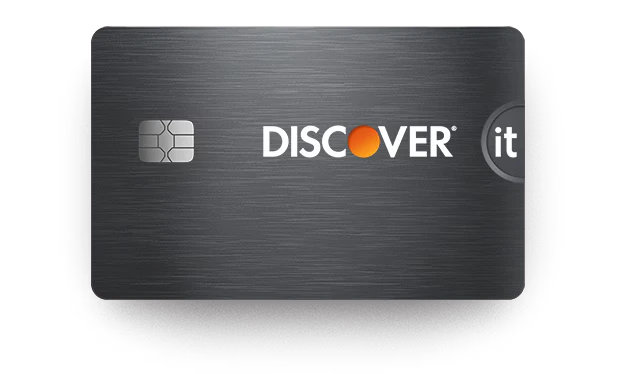
The Discover it Secured is the best secured credit card for most people in 2026: $0 annual fee, 2% cash back at gas stations and restaurants, a first-year Cashback Match, and an automatic upgrade review starting at 7 months. A secured card requires a refundable deposit (typically $200–$500) that becomes your credit limit and reports to all three bureaus. For applicants without an SSN, the Capital One Platinum Secured accepts an ITIN and offers a $49 minimum deposit for qualified applicants.
On this page▾

Quick answer
The Discover it Secured is the best secured credit card for most people in 2026 — it earns 2% cash back at gas stations and restaurants, gives you a first-year Cashback Match, and automatically reviews your account for an upgrade to an unsecured card in as little as 7 months. For immigrants without an SSN, the Capital One Platinum Secured accepts ITIN and offers a $49 minimum deposit option for qualified applicants.
TL;DR: Secured credit cards require a refundable cash deposit (typically $200–$500) that becomes your credit limit. They report to all three major credit bureaus just like regular cards. The top secured cards in 2026 are Discover it Secured (2% gas/dining, Cashback Match), Capital One Quicksilver Secured (1.5% flat cash back, no foreign transaction fee), and Capital One Platinum Secured ($49 minimum deposit for some applicants). Most secured cards graduate to unsecured status within 6–18 months of on-time payments. Immigrants can use ITIN instead of SSN at Capital One, Citi, and American Express. Note: the American Express × Nova Credit "no US credit history" path ended in 2025 — without an SSN, Amex is now reachable only via Amex Global Transfer for people who already hold an Amex card from their home country. The only live Nova Credit credit-card path in 2026 is Chase (Freedom Unlimited / Freedom Flex), and only for UK and Canada credit history.
Top picks at a glance
| Card | Best for |
|---|---|
| Discover it Secured | Best overall — 2% rewards + 7-month upgrade review |
| Quicksilver Secured | Best flat-rate cash back + no foreign transaction fee |
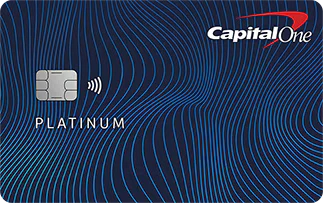
| Capital One Platinum Secured | Best low deposit — $49 minimum for qualified applicants |
| Petal 1 | Best for no-deposit option for thin-file applicants |
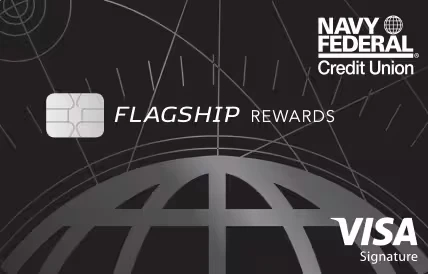
| NFCU Flagship | Best for military families and veterans |
How secured credit cards work
A secured credit card is a real credit card — issued by a bank, backed by Visa or Mastercard or Discover's network, and accepted everywhere — with one key difference: you pay a refundable security deposit upfront, which becomes your credit limit.
Here's the flow:
- You apply and get approved (secured cards have low or no minimum credit score requirements)
- You send the bank a deposit — typically $200 to $500, sometimes as low as $49
- The bank issues you a card with a credit limit equal to (or occasionally slightly higher than) your deposit
- You use the card for everyday purchases, pay your statement balance every month
- The bank reports your activity to Equifax, Experian, and TransUnion every month — building your credit file
- After 6–18 months of responsible use, most issuers either automatically upgrade you to an unsecured card OR let you apply to graduate — returning your full deposit plus any interest it earned
The deposit is the bank's collateral. If you stop paying, they keep it. But as long as you pay on time, you will get every dollar back — either when you graduate the card or when you close it.
Why secured cards matter for credit building
A secured card does exactly the same work as an unsecured card from a credit bureau's perspective. Bureaus do not distinguish between secured and unsecured accounts. A $200-limit Discover it Secured used responsibly builds the same FICO points as a $10,000-limit Chase Sapphire Preferred.
What actually builds credit:
- Payment history (35% of FICO): On-time payments reported every month
- Credit utilization (30%): Keep your balance below 10% of your limit — on a $200 card, that means charging $20 or less by statement close (see our credit utilization deep dive if you want to understand exactly how this affects your score)
- Credit age (15%): Every month your account is open, your average account age grows
- Credit mix (10%): A credit card is the single most impactful account type to add
Who needs a secured card
- New immigrants with zero US credit history (most common use case) — see the complete newcomer credit roadmap for the full path from arrival to rewards cards
- Americans rebuilding after bankruptcy, collections, or delinquencies
- Students or young adults opening their first credit account
- Anyone who was denied for an unsecured starter card
- People who've been using debit cards exclusively and want to start building credit
The top 5 secured cards reviewed
1. Discover it Secured — Best overall
The numbers that matter:
- Deposit: $200 minimum, up to $2,500
- Annual fee: $0
- Cash back: 2% at gas stations and restaurants (up to $1,000 in combined purchases per quarter), 1% on everything else
- First-year Cashback Match: Discover doubles all cash back earned in year 1 — effectively 4% on gas/dining, 2% on everything else
- Automatic upgrade review: starts at 7 months
- Foreign transaction fee: None
Why it's the best: No other secured card in 2026 offers rotating-category rewards AND a first-year doubling bonus AND automatic upgrade consideration. On $300/month in gas and dining (realistic for most households), the Cashback Match alone returns $72 in year 1.
The 7-month upgrade review is real: Discover pulls your account history, payment record, and current income, and if you qualify, automatically migrates your account to the Discover it Cash Back unsecured card and returns your deposit. You keep the same account number and credit history.
Who should get it: Anyone with an SSN who wants the best rewards while building credit. Immigrants on H1B, L1, F1 with SSN authorization, green card holders, and US citizens.
Who should skip it: ITIN-only applicants — Discover typically requires SSN, though ITIN approvals do occur. Also skip if you rarely use gas stations or restaurants and want a simpler flat-rate card.
2. Capital One Quicksilver Secured — Best flat-rate cash back
The numbers that matter:
- Deposit: $200 minimum
- Annual fee: $0
- Cash back: 1.5% on every purchase, no categories to track
- Foreign transaction fee: None (unusual for a secured card)
- Upgrade path: Regular account reviews; graduation can happen within 6–12 months
- ITIN accepted: Yes
Why it's strong: The Quicksilver Secured is the only secured card with unlimited 1.5% flat-rate cash back AND zero foreign transaction fee. For immigrants who send remittances abroad or travel back home, the no-FTF feature saves 3% on every international purchase.
Capital One also accepts ITINs, making this accessible from day one for immigrants who haven't yet obtained an SSN — including those on tourist visas or certain work visa categories.
The upgrade track: Capital One uses automatic account reviews and will either upgrade you to the unsecured Quicksilver or give you access to a higher credit limit without an additional deposit. There's no fixed timeline — Capital One reviews vary by payment history, utilization, and income — but 6–12 months is typical.
Who should get it: Immigrants using ITIN, frequent international travelers, people who want a simple 1.5% on everything without category tracking.
3. Capital One Platinum Secured — Best low-minimum deposit
The numbers that matter:
- Deposit: $49, $99, or $200 depending on creditworthiness
- Credit limit: $200 regardless of deposit tier
- Annual fee: $0
- Cash back: None (this is a credit-building card, not a rewards card)
- ITIN accepted: Yes
Why the deposit tiers matter: The Capital One Platinum Secured is the only major secured card offering a $49 or $99 minimum deposit for qualified applicants. If you're cash-constrained as a new immigrant — which is common — tying up only $49 versus $200 is meaningful.
The caveat: the $200 credit limit is the same regardless of whether you put down $49 or $200. Capital One keeps a larger margin at lower deposit tiers. But from a credit-building perspective, a $200 limit used below 10% ($20/month) reports identically whether you deposited $49 or $200.
ITIN path for immigrants: Capital One's secured cards are among the most immigrant-friendly options in 2026. ITIN is accepted at application; no SSN required. This matters for undocumented residents, TPS holders, DACA recipients, and recent arrivals on visa categories that don't qualify for an SSN.
Who should get it: Cash-constrained immigrants who want to start building credit with the lowest possible upfront commitment, or anyone rebuilding credit who needs the lowest barrier to entry.
4. Petal 1 Visa — Best no-deposit option for thin files
The numbers that matter:
- Deposit: $0 for approved applicants (no deposit required — it's technically unsecured but functions as a starter card)
- Annual fee: $0
- Cash back: 2–10% at select merchants, 1% everywhere else
- Approval model: Uses bank account cash flow analysis, not just credit score
- ITIN accepted: Yes
Why Petal is different: The Petal 1 uses a proprietary underwriting model that analyzes your bank account history (income, expenses, savings patterns) rather than relying solely on your FICO score. This means applicants with no credit history — including recent immigrants — can be approved with no deposit at all.
The catch: not everyone qualifies for the no-deposit version. Petal may still require a deposit for some applicants based on their cash-flow profile, and the credit limits on the no-deposit version are typically low ($300–$500 initially).
Note on Nova Credit: Petal is no longer a current Nova Credit credit-card partner — Petal wound down its credit-card business, so do not count on a Petal card or a Petal+Nova foreign-credit shortcut. As of 2026 the only live Nova Credit credit-card path is Chase (Freedom Unlimited / Freedom Flex), and only for UK and Canada credit history; participating issuers and countries change, so verify the current list at novacredit.com.
Who should get it: Immigrants who want to avoid tying up cash in a deposit, applicants with strong bank account cash flow but no US credit history.
5. Navy Federal nRewards Secured — Best for military families
The numbers that matter:
- Deposit: $200 minimum, up to $50,000
- Annual fee: $0
- Cash back: 1x points on all purchases (redeemable for cash, gift cards, merchandise)
- Upgrade path: Periodic reviews; Navy Federal is known for generous upgrades
- Membership required: Active/retired military, veterans, DoD employees, and their families
Why it's notable: Navy Federal Credit Union is known for approving members with limited or damaged credit histories at higher rates than traditional banks, and for generous credit limit increases during the secured card period. The large maximum deposit ($50,000) lets credit builders establish high limits quickly.
Important note: Navy Federal requires membership, which is limited to military-connected individuals and their immediate family members. If you qualify, it's one of the best institutions for credit building and eventually accessing top travel cards.
Deposit amounts and what to expect
| Card | Min Deposit | Max Deposit | Gets deposit back? | When? |
|---|---|---|---|---|
| Discover it Secured | $200 | $2,500 | Yes | At upgrade or account closure |
| Quicksilver Secured | $200 | $1,000 | Yes | At upgrade or account closure |
| Capital One Platinum Secured | $49 | $1,000 | Yes | At upgrade or account closure |
| Petal 1 | $0 | N/A | N/A | No deposit taken |
| Navy Federal nRewards | $200 | $50,000 | Yes | At upgrade or account closure |
Key facts about deposits:
- Your deposit earns no interest in most cases (it sits in a non-interest-bearing account)
- You can typically increase your deposit later to raise your credit limit
- Some issuers let you deposit via ACH bank transfer; others also accept checks
- Never put more in a deposit than you can afford to leave tied up for 12+ months
Upgrade timelines: when do you get the deposit back?
This is what most people really want to know. The short answer: most responsible cardholders graduate within 7–18 months.
Discover it Secured: 7-month automatic review
Discover starts reviewing accounts for upgrade eligibility at 7 months. The review is automatic — you don't need to request it. Discover looks at:
- Payment history (any late payments?)
- Account balance vs. limit (utilization)
- Credit bureau data (new derogatory marks?)
- Income information on file
If you qualify, Discover migrates your account automatically — same account number, same history — and returns your deposit within 2–3 statement cycles. The typical successful upgrade path: open account, use it for $50–$100/month, pay statement balance in full every month, wait 7–12 months.
Capital One: No fixed timeline, automatic reviews
Capital One reviews accounts regularly and may upgrade you to an unsecured Quicksilver or Platinum without any action on your part. They may also allow you to add to your deposit to build credit faster. Typical range: 6–18 months.
What disqualifies you from upgrading?
- Any late payment in the past 6 months
- Utilization consistently above 50%
- New derogatory marks (collections, charge-offs) on your credit report
- Requesting too many new accounts recently
Credit building strategy: the 12-month playbook
Opening a secured card is step one. What you do with it over the next 12 months determines how fast your score rises.
Month 1-3: Foundation
- Set up autopay for the statement balance in full — not the minimum, not a fixed amount, the full statement balance each cycle
- Use the card for 1-3 small recurring charges (streaming subscription, gas, groceries)
- Keep your balance at statement close below 10% of your limit — on a $200 limit, charge no more than $20 by statement date
Month 4-6: Score watch
- Your FICO score should start appearing at month 4-6 (Discover and Capital One show free FICO scores in their app/online portal)
- Expect a starting score of 580–650 if this is your first US account
- Do not apply for any other credit cards yet — wait until month 7+ when your score is established
Month 7-9: Expansion
- If Discover it Secured, watch for the upgrade review notification around month 7-8
- If you have not received an upgrade offer, consider adding a second credit account: a credit-builder loan from a credit union or Self (adds an installment account, improving credit mix)
- Keep paying in full, keep utilization low
Month 10-12: Graduation zone
- Most responsible secured cardholders either graduate or become eligible for mainstream starter unsecured cards (Freedom Unlimited, Quicksilver) by month 10-12
- Pull your free credit reports at annualcreditreport.com — verify all three bureaus show your secured card account with zero late payments
- If FICO is 670+, you can start applying for rewards-earning unsecured cards — our best cashback cards for newcomers on a budget covers the top no-annual-fee options for this stage
Target milestones:
| Month | Milestone |
|---|---|
| 1 | Account opened, first payment made |
| 4-6 | First FICO score appears (580-650 typical) |
| 7-9 | Score reaches 620-680, upgrade review period begins |
| 12 | Score reaches 650-720, eligible for starter unsecured cards |
| 18 | Score reaches 680-750, eligible for mainstream rewards cards |
Immigrant-specific guidance: ITIN, SSN, and visa requirements
This section covers what most credit card guides skip entirely. If you're an immigrant, the path to your first secured card has specific requirements worth understanding.
SSN vs. ITIN: which do you have?
SSN (Social Security Number): Required for employment authorization. Available to:
- US citizens and lawful permanent residents (green card holders)
- Visa holders with work authorization: H1B, L1, O1, E3, TN, J1 (with employment)
- F1 students with CPT or OPT authorization
ITIN (Individual Taxpayer Identification Number): For tax-filing purposes, for those who don't qualify for an SSN. Issued to: (for a complete breakdown of which issuers accept each identifier, see our SSN vs. ITIN for credit guide)
- DACA recipients
- TPS (Temporary Protected Status) holders
- Certain tourist/B visa holders who have US income
- Undocumented residents with US tax obligations
Which issuers accept ITIN for secured cards?
| Issuer | ITIN accepted? | Notes |
|---|---|---|
| Capital One | Yes | Most flexible — Platinum Secured, Quicksilver Secured |
| American Express | Yes | For certain products; Amex doesn't have a strong secured card offering. Note: the old Nova Credit "no US history" path to Amex ended in 2025 — without an SSN, Amex is now reachable only via Amex Global Transfer if you already hold an Amex card from your home country |
| Citi | Yes | Limited secured card options |
| Petal | No longer a current option | Petal wound down its credit-card business; the former ITIN + Nova Credit path is no longer available |
| Discover | Usually no (SSN preferred) | Some ITIN approvals reported, but not reliable |
| Chase | No | SSN required for all Chase products |
Nova Credit: foreign credit history translation
If you held credit in your home country, Nova Credit may be the fastest path to a first card. Nova translates foreign credit bureau data to a US-equivalent file, which participating issuers use alongside (or instead of) US credit history.
Important 2026 update: The American Express × Nova Credit partnership ended in 2025, and Amex removed the "I don't have a US credit history" foreign-credit option from its application — you can no longer use Nova Credit to get any Amex card. Petal also wound down its credit-card business, so the old Petal + Nova path is gone too.
Nova Credit's current credit-card path (2026): The only live Nova Credit credit-card shortcut now runs through Chase — a newcomer can apply for the Chase Freedom Unlimited or Chase Freedom Flex using foreign credit history via Nova Credit. Critically, this currently works only for credit history from the UK and Canada (Chase says more cards and countries may be added later). This is much narrower than Amex's old multi-country footprint.
What this means by country:
- UK or Canada newcomers: the live Nova Credit card shortcut is Chase Freedom Unlimited / Freedom Flex.
- Newcomers from any other country (India, Mexico, Ukraine, Brazil, Nigeria, Philippines, etc.): there is currently no Nova Credit credit-card shortcut. Build with a secured/starter card instead — or, if you already hold an American Express card issued in your home country, use Amex Global Transfer to open a US Amex.
Participating issuers and countries change frequently — always verify the current list at novacredit.com. Nova's underlying Credit Passport still exists for some lenders and landlords, but for credit cards specifically the live path in 2026 is Chase (UK/Canada only).
Visa type considerations
H1B/L1/O1 visa holders: Can obtain SSN. Access to the full range of secured cards including Discover it Secured and Capital One. Credit building path is identical to US citizens.
F1 students (no OPT/CPT yet): SSN may or may not be accessible depending on employment authorization. Capital One secured cards with ITIN are the primary option.
Tourist/B1/B2 visa holders: Generally cannot open credit cards in the US unless you have a US mailing address and an ITIN from prior tax filings. Some fintech lenders like Petal work with tourists who have established US banking relationships.
DACA recipients: ITIN path. Capital One is the most accessible. Petal also accepts DACA applicants.
Undocumented residents with ITIN: Capital One and Petal are the primary issuers. Establishing a US bank account first (many credit unions are ITIN-friendly) strengthens your application.
Mistakes to avoid with secured cards
These are the patterns that slow down credit building or result in wasted deposit money. For a broader list of pitfalls beyond just secured cards, our newcomer mistakes guide covers the full first-year picture.
Mistake 1: Paying only the minimum
The minimum payment keeps you out of default, but carrying a balance means paying interest (secured cards typically charge 26-28% APR). More importantly, a carried balance shows up as high utilization — directly hurting your score. Always pay the full statement balance.
Mistake 2: Maxing out the card
If your limit is $200 and you spend $180 in a month, your utilization is 90% — a score killer. The credit bureaus see this as financial stress. For a $200 limit card, charge no more than $20-40 by statement close. Pay it to zero before the statement date if necessary.
Mistake 3: Closing the card before upgrading
When you graduate to an unsecured card, the account history typically transfers to the new account number. But if you close your secured card without upgrading (for example, to switch to a different issuer), you lose that account's history from your age calculation. Keep secured cards open or ensure the upgrade path preserves your history.
Mistake 4: Applying for multiple cards simultaneously
Each credit application generates a hard inquiry (-3 to -8 FICO points temporarily). When you're starting from zero or rebuilding, hard inquiries hurt more because your score is lower. Start with ONE secured card, wait 6-12 months, then add a second account.
Mistake 5: Putting the deposit on a credit card
You can't pay the security deposit for a secured card with another credit card (issuers require bank transfers or checks). And you definitely should not take out a cash advance from a credit card to fund a secured card deposit — cash advances charge 25-30% APR immediately with no grace period.
Mistake 6: Neglecting to update your income information
Issuers use the income you report to assess upgrade eligibility. If you got a raise or changed jobs since you opened the card, update your income information through the card's online portal. Higher reported income accelerates upgrade reviews.
Bottom line
For most people — especially immigrants building US credit from scratch — the Discover it Secured is the best starting point (if you haven't read how FICO scores actually work, do that first so you know exactly what you're optimizing): zero annual fee, real cash back rewards, a 7-month automatic upgrade review, and deposit return upon graduation. Pair it with on-time payments and sub-10% utilization, and you can realistically hit 680+ FICO within 12 months and 720+ within 18.
If you have an ITIN rather than an SSN, start with the Capital One Platinum Secured ($49 minimum deposit) or Quicksilver Secured (1.5% cash back, no foreign transaction fee). Both accept ITIN, both report to all three bureaus, and both have clear upgrade paths to full unsecured Capital One cards.
The secured card is a temporary tool, not a permanent home. Use it exactly right for 12-18 months, then graduate to rewards-earning unsecured cards — and start earning instead of just building. Down the road, once your score is strong enough for a premium travel card, it's worth comparing the Chase Sapphire Preferred against the Chase Sapphire Reserve to see which fits your spending.
Get weekly card offer alerts
Sunday digest of elevated bonuses. One email, zero spam.
Cards mentioned in this guide

Frequently asked questions
How much money do I need for a secured credit card deposit?
How long does it take to graduate from a secured to unsecured credit card?
Can I get a secured credit card with an ITIN instead of SSN?
Does a secured credit card help build credit the same as a regular card?
What credit score do I need to get a secured credit card?
What happens to my deposit when I graduate to an unsecured card?
Can I use a secured credit card internationally?
Is Nova Credit useful for getting a secured credit card as a new immigrant?
Should I get one secured card or multiple?
What is the best secured credit card for someone rebuilding after bankruptcy?
Related guides
Rules & Mechanics
Secured vs Unsecured Credit Cards: A Newcomer’s Guide (2026)
13 min
Rules & Mechanics
Credit-Builder Loan vs Secured Card: A Newcomer’s Guide (2026)
13 min
Strategy
Your First US Credit Card With No Credit History: A Step-by-Step 2026 Playbook
15 min
Strategy
Best Credit Cards for People New to the US With No Credit History (2026)
12 min
Related news

amex · Jun 25, 2026
Amex Platinum vs Schwab Platinum: the same $895 card, with a cash-out

chase · Jun 10, 2026
Chase Hyatt Transfer Ratio 4:3: What It Means for Sapphire Preferred and Ink Business Preferred

chase · Jun 10, 2026
Chase to Virgin Atlantic: 30% Transfer Bonus — Book Delta Business Class for 18,000 Points

ihg · Jun 10, 2026
IHG Buy Points at 0.5¢ Extended Through June 30 — Best Price for InterContinental Stays