Secured vs Unsecured Credit Cards: Which to Get (2026)
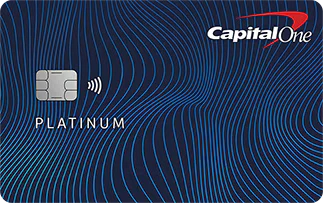
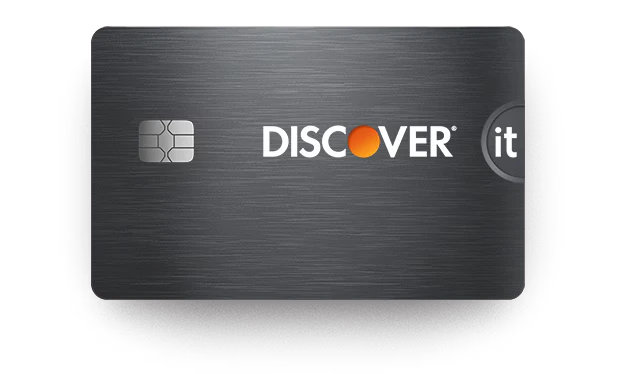
A secured card needs a refundable deposit that sets your credit line; an unsecured card needs no deposit. Both report to all three bureaus and build your score identically. Newcomers should start secured — the Capital One Platinum Secured (deposit from $49, $0 annual fee) or Discover it Secured ($200 deposit, $0 annual fee, rewards) — then graduate to unsecured around month 6–7 and get the deposit back.
On this page▾

Topic Collection
Part of the New to America Collection
Explore all 37 articles
Quick answer
A secured credit card requires a refundable cash security deposit that sets your credit line — put down $200 and you get a roughly $200 line — while an unsecured card extends credit with no deposit based on your history and income. Both report to all three bureaus, so a secured card builds your score exactly like an unsecured one. For most newcomers with no US history, start with a secured card such as the Capital One Platinum Secured or Discover it Secured, use it lightly, pay in full, and graduate to an unsecured card — getting your deposit back — in 6 to 12 months. (See the complete guide to building US credit as a newcomer for the full picture.) The deposit is not a fee; it is yours, returned when you graduate or close the account in good standing.
TL;DR: A secured credit card is a real Visa or Mastercard that requires a refundable security deposit, usually equal to your credit limit (e.g. a $200 deposit = a $200 line). The deposit reduces the issuer's risk, which is why secured cards approve applicants with no or thin credit history. Secured cards report monthly to Experian, TransUnion, and Equifax, so on-time payments build a FICO score identically to an unsecured card. An unsecured credit card requires no deposit and is granted based on credit history and income. Graduation is when an issuer upgrades a secured card to unsecured after a review (often around 6 to 7 months of on-time payments) and refunds the deposit while keeping the same account open. Capital One Platinum Secured takes a deposit of $49, $99, or $200 for a $200 line with a $0 annual fee and auto-reviews around month 6. Discover it Secured requires a $200 minimum deposit equal to the line, has a $0 annual fee, earns 2% at gas and restaurants on up to $1,000 in combined purchases per quarter plus 1% on everything else, matches all cash back at the end of year one, and can graduate from month 7. The Quicksilver (1.5% flat cash back, $0 annual fee) is a common unsecured destination. Keep utilization under 10% and expect a starter APR around 26 to 30%.
Secured vs unsecured at a glance
| Feature | Secured card | Unsecured card |
|---|---|---|
| Security deposit | Required, refundable, sets the credit line | None |
| Who gets approved | No or thin credit history welcome | Needs established history and income |
| Credit line | Usually equals your deposit | Based on issuer's risk assessment |
| Reports to bureaus | Yes — all three | Yes — all three |
| Builds credit score | Yes, identically | Yes |
| Annual fee | Often $0 (Capital One, Discover) | Varies; many $0 starter cards |
| Deposit returned | On graduation or good-standing closure | Not applicable |
| Rewards | Some, e.g. Discover it Secured cash back | Usually richer |
| Typical starter APR | High (~26–30%) | High for thin files |
| Best for | First US card, rebuilding credit | After 6–12 months of history |
What a secured credit card actually is
A secured card is a genuine credit card — a Visa or Mastercard you swipe anywhere, that shows up on your credit report as a revolving account. The single difference from an unsecured card is the refundable security deposit you place when you open it.
That deposit sits with the issuer as collateral. If you stopped paying entirely, the issuer could keep it — which is exactly why a bank will approve someone with zero US history for a secured card. The risk to the lender is covered. For a newcomer who cannot yet get approved for most unsecured cards, this is the on-ramp. If you are deciding which secured card to open, see the best secured credit cards for 2026 for a ranked comparison.
How the deposit sets your credit line
On most secured cards the deposit equals your credit limit. Put down $200 and you get a $200 line; deposit $500 and you get $500. The Discover it Secured works this way, with a $200 minimum deposit.
Capital One does it slightly differently. The Capital One Platinum Secured may ask for a deposit of $49, $99, or $200 — depending on your profile — yet still open a $200 credit line. So a strong applicant can get a $200 line for as little as a $49 deposit, which is one of the lowest barriers to entry of any secured card.
The deposit is refundable — it is not a fee
This is the point newcomers most often miss. The deposit is your money. You are not paying it to the bank; you are parking it as collateral. You get every dollar back when you either graduate to an unsecured card or close the account in good standing. An annual fee, by contrast, is gone for good — which is why a $0 annual fee secured card matters.
How secured cards report to the credit bureaus
A secured card builds credit because the issuer reports it monthly to Experian, TransUnion, and Equifax as a normal revolving tradeline. The bureaus do not flag it as "secured" in any way that hurts you, and FICO scores it identically to an unsecured card. If you want a deeper breakdown of how the FICO model weighs each factor, see how credit scores work for immigrants.
What the bureaus see each month: your credit limit, your statement balance, and whether you paid on time. That means the two habits that build a score fastest apply equally here.
| Habit | Why it matters | Target |
|---|---|---|
| Pay on time, every time | Payment history is ~35% of your FICO score | 100% on-time |
| Keep utilization low | Amounts owed is ~30% of your score | Under 10% of your limit |
| Let it age | Length of history helps over time | Never close your first card early |
On a $200 line, "under 10%" means keeping your reported balance below about $20. Charge one small recurring bill — a phone plan or a streaming subscription — set autopay for the full statement, and you build a clean file without thinking about it. The credit utilization guide for newcomers covers exactly how to calculate and manage this number across multiple cards.
How graduation to unsecured works
Graduation is when your issuer converts your secured card into an unsecured one: it refunds your deposit, keeps the same account open, and you keep your account age and history. This is the goal.
Issuers review secured accounts on a schedule. The Capital One Platinum Secured runs an automatic account review at around six months to see whether you qualify to have the deposit returned. The Discover it Secured starts reviewing from month 7 and continues monthly, automatically refunding your deposit when you transition to unsecured.
When the deposit comes back
Your deposit is returned in one of three ways:
- You graduate — the issuer upgrades the account to unsecured and refunds the deposit, usually as a statement credit or a check, while the card keeps working.
- You close in good standing — if you close the card with a $0 balance, the deposit is returned after the final statement clears.
- You move to a different card — some newcomers open a secured card, build six to twelve months of history, then get approved for a better unsecured card elsewhere and close the secured one to reclaim the deposit. For step-by-step help on what to apply for next, see the first US credit card guide for people with no history.
The first path is best because you preserve account age and avoid a new hard inquiry.
Step by step: secured -> graduate to unsecured
- Open a no-annual-fee secured card. The Capital One Platinum Secured (deposit from $49 for a $200 line, $0 annual fee) or Discover it Secured ($200 deposit, $0 annual fee, with rewards) are the cleanest starting points.
- Fund the deposit from your US checking account. This becomes your credit line.
- Put one small recurring charge on the card — under 10% of the limit — and set autopay for the full statement balance.
- Pay on time for six-plus months. Never carry a balance; the starter APR around 26 to 30% makes interest expensive.
- Wait for the automatic review. Capital One reviews around month 6; Discover from month 7. Many cardholders graduate without lifting a finger.
- Graduate and reclaim your deposit. The account converts to unsecured and your deposit is refunded, while your history and account age stay intact.
- Add an unsecured rewards card. With six to twelve months of clean history, apply for a flat-rate card like the Quicksilver (1.5% cash back, $0 annual fee) to start earning more.
Which to choose first
For nearly every newcomer with no US credit file, a secured card first is the right call. You will likely be declined for most unsecured cards until a file exists, and a denied application still costs a hard inquiry. An alternative worth knowing is the authorized user strategy, which lets you piggyback on a trusted person's account to kickstart your file before your first card.
- Want the lowest cash outlay and a clear upgrade path? The Capital One Platinum Secured — a deposit as low as $49 opens a $200 line, $0 annual fee, auto-review near month 6.
- Want to earn rewards while you build? The Discover it Secured — $200 deposit, $0 annual fee, 2% back at gas stations and restaurants on up to $1,000 combined per quarter plus 1% elsewhere, and Discover matches all the cash back you earn at the end of your first year.
- Already have a thin-but-real file or qualify unsecured? A no-deposit card like the Quicksilver or Petal 1 can skip the deposit entirely.
There is no credit-score penalty for using a secured card, so the only real cost is tying up the deposit for several months — money you get back.
Common mistakes
These pitfalls show up repeatedly — and many of them overlap with the broader newcomer mistakes to avoid in your first year with a US credit card.
- Treating the deposit like a fee. It is refundable collateral, not a charge. A $0 annual fee secured card costs you nothing but the temporarily parked deposit.
- Maxing out the small limit. A $200 line fills up fast. Keep reported utilization under 10% — roughly $20 — or your score suffers even with on-time payments.
- Carrying a balance. Starter APRs near 26 to 30% are brutal. Pay the full statement every month; the goal is history, not borrowing.
- Closing the secured card the moment you get a new one. If your secured card has graduated to unsecured with a $0 annual fee, keep it open to preserve account age.
- Applying for unsecured cards too early. With no file, you collect denials and hard inquiries. Build six-plus months first.
- Picking a secured card with an annual fee. Several major issuers charge $0. There is rarely a reason to pay.
Bottom line
A secured card is the same thing as an unsecured card with one extra step: a refundable deposit that sets your credit line and lets a bank say yes when you have no US history. It reports to all three bureaus, builds your FICO score identically, and — with cards like the Capital One Platinum Secured (deposit from $49, $0 annual fee) or the rewards-earning Discover it Secured ($200 deposit, $0 annual fee) — costs you nothing but the temporarily parked deposit. Pay on time, keep utilization under 10%, wait for the automatic review around months 6 to 7, graduate to unsecured, and get your deposit back. Then move up to a flat-rate earner like the Quicksilver. Start secured, finish unsecured, and keep every dollar you put down.
Get weekly card offer alerts
Sunday digest of elevated bonuses. One email, zero spam.
Cards mentioned in this guide

Frequently asked questions
Do secured credit cards build credit the same way unsecured cards do?
When do I get my security deposit back?
Should a newcomer start with a secured or an unsecured card?
How long until a secured card graduates to unsecured?
Does a secured card have an annual fee, and does it earn rewards?
Related guides
Card Roundups
Best Secured Credit Cards of 2026
12 min
Rules & Mechanics
Credit-Builder Loan vs Secured Card: A Newcomer’s Guide (2026)
13 min
Strategy
Your First US Credit Card With No Credit History: A Step-by-Step 2026 Playbook
15 min
Strategy
Newcomer's First 90 Days: A Financial Setup Checklist (2026)
15 min
Related news

amex · Jun 25, 2026
Amex Platinum vs Schwab Platinum: the same $895 card, with a cash-out

chase · Jun 10, 2026
Chase Hyatt Transfer Ratio 4:3: What It Means for Sapphire Preferred and Ink Business Preferred

chase · Jun 10, 2026
Chase to Virgin Atlantic: 30% Transfer Bonus — Book Delta Business Class for 18,000 Points

ihg · Jun 10, 2026
IHG Buy Points at 0.5¢ Extended Through June 30 — Best Price for InterContinental Stays