Best Credit Cards for J-1 Visa Exchange Visitors (2026)
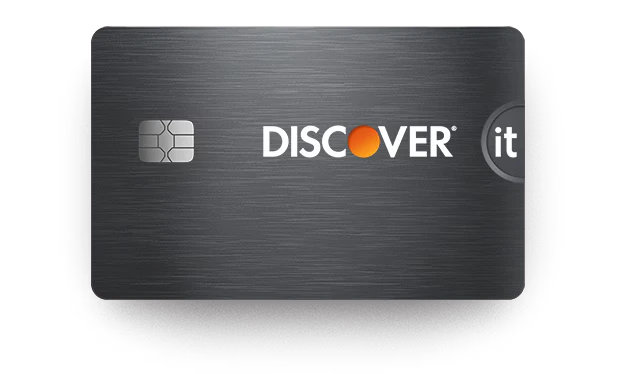
For most J-1 exchange visitors, the best first card is the Discover it Secured: a $200 refundable deposit sets your credit line, with $0 annual fee, no foreign transaction fee, and a year-one Cashback Match. Get an SSN with your DS-2019 and work authorization (or an ITIN via Form W-7 if not work-authorized), then apply in your first month.
On this page▾

Topic Collection
Part of the New to America Collection
Explore all 37 articles
Quick answer
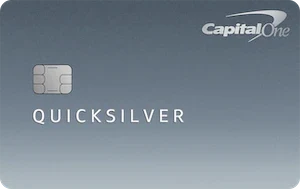
The best first card for most J-1 exchange visitors is Discover it Secured — a $200 refundable deposit becomes your credit line, there is no annual fee, no foreign transaction fee, and the Cashback Match doubles your first-year rewards. If you want a no-deposit option once you have a short U.S. credit file, Quicksilver pays a flat 1.5% with no annual fee and no foreign transaction fee. The single most important step is getting a Social Security Number with your DS-2019 and work authorization (or an ITIN if your program is not work-authorized), then applying in your first month.
TL;DR: In 2026, J-1 exchange visitors (research scholars, professors, interns, trainees, au pairs, and summer work-travel participants) who are authorized to work can obtain a Social Security Number (SSN) from the Social Security Administration (SSA) using their DS-2019 and proof of work authorization or a job offer; J-1 holders not authorized to work use an ITIN from the IRS via Form W-7. With an SSN or ITIN, the strongest starter cards are the Discover it Secured ($200 minimum refundable deposit sets the credit line, $0 annual fee, no foreign transaction fee, Cashback Match in year one, graduation review starting month 7) and the Capital One Quicksilver (1.5% flat cash back, $0 annual fee, no foreign transaction fee). Because a J-1 stay is short and fixed, keep the account open and in good standing, pay the statement in full, keep utilization under 10%, and a secured-card deposit is refunded when the account is closed in good standing or the card graduates to unsecured.
Top picks at a glance
| Card | Best for | Annual fee | Foreign txn fee |
|---|---|---|---|
| Discover it Secured | Building credit from zero, no SSN-only barrier, year-one Cashback Match | $0 | None |
| Quicksilver | First no-deposit rewards card, 1.5% flat | $0 | None |
| Capital One Platinum Secured | Low or $0 deposit secured option, fast upgrade path | $0 | None |
| Quicksilver Secured | Secured card that still earns 1.5% cash back | $0 | None |
| Petal 1 | Thin-file applicants underwritten on bank cash flow | $0 | None |
| Discover it Cash Back | Unsecured upgrade target with 5% rotating categories | $0 | None |
J-1 basics: SSN, ITIN, and your short stay
A J-1 visa covers a wide group of exchange visitors — research scholars, professors, short-term scholars, specialists, college and summer work-travel students, interns, trainees, au pairs, and camp counselors. What unites them for credit purposes is that the program is short and date-bound: your DS-2019 lists a fixed start and end date, and your stay may run anywhere from a few months (summer work-travel) to several years (research scholars).
Are you authorized to work?
Most J-1 categories include work authorization tied to your program — au pairs, summer work-travel students, interns, trainees, and most research scholars are authorized to work for their sponsor. If you are authorized to work, you can get an SSN. Some J-1 visitors are not in a paid role and are not work-authorized; those visitors use an ITIN for tax and credit purposes instead.
| You are... | Identifier you use | Where to apply |
|---|---|---|
| J-1 authorized to work (au pair, work-travel, intern, trainee, paid scholar) | SSN | Social Security Administration (SSA) |
| J-1 not authorized to work | ITIN | IRS, Form W-7 |
Getting an SSN with a DS-2019
If you are work-authorized, the SSN is the fastest unlock for U.S. credit. SSA generally wants you to be in the U.S. about 10 days before applying so your arrival and SIEVIS records update. Bring your passport, J-1 visa, most recent I-94 (download it from the CBP website), your DS-2019, and proof of work authorization or a job/program offer letter from your sponsor. There is no fee. Your SSN card typically arrives by mail in 1–3 weeks. The SSN vs. ITIN for credit guide lays out exactly what each identifier unlocks and which issuers accept which.
Getting an ITIN if you are not work-authorized
If your J-1 program does not authorize employment, file IRS Form W-7 for an ITIN, usually alongside your first tax return. ITIN processing takes roughly 7–11 weeks. Several issuers — including Capital One and Discover for some products — let you apply with an ITIN, so a missing SSN does not lock you out of building credit.
Why no foreign transaction fee matters for J-1 visitors
A typical foreign transaction fee is 3% of every purchase made outside the U.S. or in a foreign currency. J-1 visitors travel home mid-program, take weekend trips across borders, and buy from non-U.S. online merchants — so a 3% surcharge adds up fast. On $4,000 of foreign spending in a year, a 3% fee costs $120. Both Discover it Secured and Quicksilver charge no foreign transaction fee, which makes them genuinely useful the moment you leave the country, not just inside the U.S.
Step by step: from DS-2019 to your first card
Step 1 — Confirm your work authorization and identifier. If your J-1 category lets you work, you are eligible for an SSN. If not, plan for an ITIN. Do not guess — check your DS-2019 and your sponsor's onboarding paperwork.
Step 2 — Get your SSN (or ITIN). Wait about 10 days after arrival, then visit SSA with your passport, J-1 visa, I-94, DS-2019, and proof of work authorization. The card arrives in 1–3 weeks. If you are not work-authorized, file Form W-7 for an ITIN.
Step 3 — Open a U.S. checking account. You need a U.S. bank account to fund a deposit and pay bills. Most large banks open accounts for J-1 visitors with a passport, visa, and U.S. address.
Step 4 — Apply for your first card. With an SSN or ITIN and no U.S. history, apply for Discover it Secured. Fund the $200 minimum deposit (you can deposit more, up to your approved limit, to raise the line). No annual fee, no foreign transaction fee. If you prefer a Capital One product, Capital One Platinum Secured or Quicksilver Secured are strong secured alternatives, and Petal 1 can approve thin-file applicants on bank cash flow with no deposit.
Step 5 — Set autopay to the full statement balance. On-time payment history is the largest factor in your score. Never carry a balance — pay in full, automatically, every month.
Step 6 — Keep utilization under 10%. Put 1–3 small recurring charges on the card (phone, a streaming service, groceries) and let autopay clear them. If your limit is $200, keep the reported balance under $20. The credit utilization guide for newcomers explains exactly how this ratio is calculated and the optimal time in your billing cycle to pay.
Step 7 — Watch for graduation. Discover it Secured begins automatic account reviews from month 7. When it graduates, your deposit is refunded and the account converts to an unsecured card — often Discover it Cash Back — with your history intact.
What the cards actually give you
Discover it Secured — the default starter
- Deposit: $200 minimum, refundable; the deposit equals your credit line.
- Annual fee: $0. Foreign transaction fee: none.
- Rewards: 2% at gas stations and restaurants (on up to $1,000 in combined quarterly spend), 1% everywhere else, plus Cashback Match — Discover matches all the cash back you earn in your first year. Earn $180 in year one and Discover makes it $360.
- Graduation: automatic reviews from month 7; deposit returned when it converts to unsecured.
- Why J-1 visitors pick it: no annual fee to waste on a short stay, no foreign fee for trips home, and a clear path to an unsecured card.
Quicksilver — first no-deposit rewards card
- Rewards: flat 1.5% cash back on every purchase, no categories to track.
- Annual fee: $0. Foreign transaction fee: none.
- Best timing: once you have a few months of U.S. history (or via a secured Capital One card that upgrades). Simple, travel-friendly, and rewarding from the first swipe.
Secured alternatives
- Capital One Platinum Secured — low or even $0 deposit for some applicants, no rewards but a fast upgrade path and ITIN-friendly.
- Quicksilver Secured — a secured card that still earns 1.5% cash back, ideal if you want rewards while building.
- Petal 1 — no deposit, underwrites thin files on bank-account cash flow, $0 annual fee.
When your program ends: what to do with the account
Your DS-2019 ends, but your credit account does not have to. A U.S. credit history is an asset you may want again — for a future visa, a return on a different program, or graduate study. If you transition into a degree program, our best student credit cards for international students beyond F-1 guide covers the step-up cards worth targeting next.
- Keep the account open and in good standing. Issuers do not close accounts because your visa expired. Leaving the card open preserves your history and average account age. The how long it takes to build a 700 credit score as a newcomer guide gives a realistic timeline for what your score will look like when you return to the U.S.
- Pay the balance in full before you leave, and keep autopay running from a funded U.S. account so a small recurring charge keeps the card active.
- Maintain a U.S. mailing address (a friend, host family, or program contact) for statements and replacement cards.
- If you close a secured card, do it in good standing — your $200 deposit is refunded in full once the balance is paid. If the card already graduated to unsecured, the deposit was returned at graduation.
- Keep utilization under 10% even on a dormant card, so any reported balance stays tiny.
Common mistakes
Waiting too long to apply. A summer work-travel J-1 may only be in the U.S. for 3–4 months. Get the SSN and apply in week 2, not week 10 — every month of history counts. Use the newcomer first 90 days financial checklist to make sure you hit every step in the right order during your first weeks.
Paying a card with a foreign transaction fee for trips home. A 3% fee on $4,000 of foreign spend is $120 wasted. Discover it Secured and Quicksilver charge nothing.
Closing the secured card the day the program ends. That can shorten your history right when you might reuse it later. Keep it open in good standing, or let it graduate so the deposit returns automatically.
Carrying a balance to "build credit faster." Carrying a balance does not help your score — it just costs interest. Pay in full; on-time history and low utilization are what build the file. The how credit scores work guide for immigrants explains exactly how the five FICO factors are weighted.
Maxing out a $200 limit. A $200 deposit means a $200 line. Spending $180 reports 90% utilization and drags your score. Keep the reported balance under $20.
Assuming you need an SSN to start. If you are not work-authorized, an ITIN still opens doors at Capital One and Discover for several products.
Bottom line
J-1 exchange visitors can build real U.S. credit in a short, fixed stay. Get your SSN with your DS-2019 and work authorization (or an ITIN via Form W-7 if you are not work-authorized), then open Discover it Secured in your first month — $200 refundable deposit, $0 annual fee, no foreign transaction fee, and a year-one Cashback Match. Add Quicksilver for a flat 1.5% once you have a short file. Pay in full, keep utilization under 10%, and when the program ends, keep the account open and in good standing so the credit history — and any secured deposit — works for you the next time you come back. For a broader view of the entire first-year strategy, your first US credit card with no credit history: a step-by-step guide walks through every decision from application to long-term positioning.
Get weekly card offer alerts
Sunday digest of elevated bonuses. One email, zero spam.
Cards mentioned in this guide
Frequently asked questions
Can a J-1 exchange visitor get a credit card without an SSN?
How do I get an SSN with a DS-2019 as a J-1 holder?
Why does a no-foreign-transaction-fee card matter for J-1 visitors?
What should I do with my credit card when my J-1 program ends?
When does the Discover it Secured graduate to an unsecured card?
Related guides
Related news

amex · Jun 25, 2026
Amex Platinum vs Schwab Platinum: the same $895 card, with a cash-out

chase · Jun 10, 2026
Chase Hyatt Transfer Ratio 4:3: What It Means for Sapphire Preferred and Ink Business Preferred

chase · Jun 10, 2026
Chase to Virgin Atlantic: 30% Transfer Bonus — Book Delta Business Class for 18,000 Points

ihg · Jun 10, 2026
IHG Buy Points at 0.5¢ Extended Through June 30 — Best Price for InterContinental Stays