Building US Credit for Newcomers From India: Secured Cards, Amex Global Transfer, and the Real 2026 Options
As of 2026, Nova Credit no longer works for newcomers from India — the Amex partnership ended in 2025 and India (CIBIL) is not supported in the current Nova/Chase program. Your options: (1) a secured or newcomer-friendly card such as the Capital One Quicksilver ($0 annual fee, 1.5%, no foreign transaction fee, ITIN accepted), or (2) Amex Global Transfer if you already hold an Amex card issued in India. Use an ITIN or SSN, pay every statement in full, and reach ~700 FICO in 12-18 months.
On this page▾

Topic Collection
Part of the New to America Collection
Explore all 37 articles
Quick answer
If you arrived from India on an H-1B, F-1, or L-1 visa, your fastest paths to a US credit card are: (a) a secured card to start building history immediately, or (b) Amex Global Transfer — only if you already hold an American Express card issued in India. Nova Credit no longer partners with American Express (that partnership ended in 2025), and Nova Credit does not support India through its current Chase path either. Your practical starter setup: a secured card such as the Quicksilver (or a secured version) to establish your US file, with an ITIN or SSN required to apply. Pay every statement in full, keep utilization under 10%, and a ~700 FICO score is realistic in 12–18 months.
TL;DR: As of 2026, newcomers to the United States from India cannot use Nova Credit to fast-track a credit card application. The American Express × Nova Credit partnership ended in 2025, and Nova Credit's current program (working only with Chase Freedom Unlimited and Chase Freedom Flex) is limited to UK and Canada credit history — India (CIBIL) is not supported. Recent arrivals from India on H-1B, F-1, or L-1 visas have two practical routes: (1) secured cards, which require a deposit but are approved without a US credit history, or (2) Amex Global Transfer, which lets someone who already holds an American Express card issued in India apply for a US Amex card using that existing relationship — this is not a general newcomer program and requires a pre-existing Amex account from India. An ITIN or SSN is required for any US card application. After getting a card, the applicant should pay each statement balance in full, keep credit utilization below 10%, and space hard inquiries 3–6 months apart; a US FICO score near 700 is reachable in 12–18 months. A no-foreign-transaction-fee card such as the Capital One Quicksilver (1.5% cashback) is a strong companion for everyday spend and for sending remittances to India.
What newcomers from India actually need to know in 2026
Most people who land in the US with no SSN-linked file start from zero — no score, no history, and a six-month wait before any FICO number even exists. You may have heard that Nova Credit can import your CIBIL history into a US Credit Passport — but that path is no longer available for newcomers from India. For a broader overview of the process, the main guide on how to build US credit as a new immigrant covers all visa types and starting points.
The American Express × Nova Credit partnership ended in 2025. Nova Credit now works only with Chase (Chase Freedom Unlimited and Chase Freedom Flex), and only for credit history from the UK and Canada — India (CIBIL) is not a supported country in the current Nova/Chase program.
The practical paths for India arrivals in 2026 are: (1) secured cards, which require a refundable deposit but approve applicants without any US credit history, or (2) Amex Global Transfer, which is only available to people who already hold an American Express card issued in India — it is not a general newcomer program. There is no shortcut that bypasses the standard file-building period for most newcomers from India.
At a glance: your starter options
| Card | Route | Key earn | Annual fee | Foreign transaction fee |
|---|---|---|---|---|
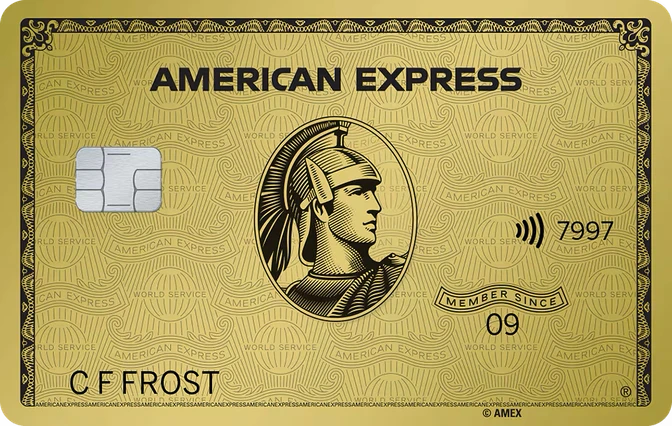
| Amex Gold | Amex Global Transfer only (requires existing India Amex) | 4x dining, 4x US groceries (to $25,000/yr) | $325 | Yes |
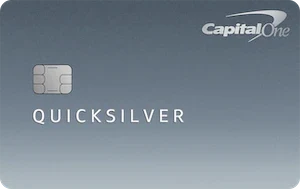
| Quicksilver | Open to newcomers; ITIN accepted | 1.5% flat on everything | $0 | $0 |
The Amex Gold is only accessible early if you already hold an Amex card issued in India and use Amex Global Transfer — it is not available via Nova Credit. The Quicksilver is the workhorse for most newcomers: $0 annual fee, no foreign transaction fee, and a flat 1.5% on every purchase — Capital One is newcomer- and ITIN-friendly, making this the most accessible starting card for recent India arrivals.
How to get your first US card as an India newcomer
Nova Credit no longer offers a path for India (CIBIL) newcomers — the Amex × Nova Credit partnership ended in 2025, and Nova Credit's Chase program covers only UK and Canada history. Here are the two real options in 2026.
Option A: Secured card (available to everyone)
A secured card requires a refundable deposit (typically $200–$500) that becomes your credit limit. No US credit history is needed. See our roundup of the best secured credit cards to find the right fit for your situation.
What you need before you start
- A US visa status — H-1B, F-1, L-1, and similar are all fine.
- An ITIN or SSN. If you arrived on H-1B or L-1, you likely have (or will soon get) an SSN through work authorization. F-1 students without work authorization can apply for an ITIN (format 9XX-XX-XXXX) to file taxes and apply for credit.
- A US residential address, an income figure, and a US bank account for the security deposit.
Step-by-step (secured card path)
- Get your ITIN or SSN sorted first. No US credit application works without one. H-1B/L-1 holders use the SSN from their work authorization; F-1 students without on-campus income file IRS Form W-7 for an ITIN.
- Apply for Capital One Quicksilver or another newcomer-friendly card. Capital One accepts ITINs and is known for approving thin-file applicants.
- Once approved, set autopay to the full statement balance immediately. This single setting prevents almost every beginner mistake at the ~26–30% APR.
- Put predictable spend on the card and let it report to Experian, TransUnion, and Equifax every month.
Option B: Amex Global Transfer (only if you have an existing India Amex card)
If you currently hold an American Express card issued in India, Amex Global Transfer lets you apply for a US Amex card using your existing Amex relationship — no US credit history required. This is not a general newcomer program; you must already be an Amex cardholder in India. Contact Amex directly to initiate a Global Transfer application.
ITIN vs SSN: which do you need?
You need one or the other to apply — never neither. The SSN vs ITIN guide for newcomers explains both in depth.
- SSN: If you're on H-1B or L-1 with work authorization, you get an SSN, and every issuer accepts it. This is the cleanest path.
- ITIN: F-1 students and dependents without work authorization can obtain an ITIN by filing IRS Form W-7. Capital One accepts an ITIN on the Quicksilver. If you are pursuing Amex Global Transfer (requires an existing India Amex card), Amex also accepts an ITIN on that path.
- Switching later: If you start on an ITIN and later receive an SSN, ask each issuer to merge your history onto the SSN so you keep every month of built-up record.
Month-by-month plan
| Months | What's happening | Your job |
|---|---|---|
| 0–1 | ITIN/SSN secured; secured or newcomer card approved (e.g., Capital One Quicksilver); if you hold India Amex, initiate Global Transfer | Set card to autopay full balance; start using it |
| 2–4 | First US tradelines reporting to all 3 bureaus; thin file forming | Keep utilization under 10%; never miss a due date |
| ~6 | First US FICO score generates (needs ~6 months of US activity) | Do nothing risky; let the history compound |
| 7–9 | Score climbing; issuer may offer a credit-line increase | Request a soft-pull CLI on the Quicksilver to lower utilization |
| 10–12 | Solid mid-600s to 700; remittance routine established | Consider a second card only if 3–6 months past last inquiry |
| 12–18 | ~700 FICO realistic; full US credit profile in place | Apply for premium travel or cashback cards as you wish |
Remittances to India
Sending money home is a near-universal need for newcomers, and your card choice matters.
- Use the Quicksilver for transfer-service fees and any spend that earns its 1.5% flat cashback — and because it charges no foreign transaction fee, you avoid the 3% surcharge many cards add on currency-linked transactions.
- Most remittance apps (Wise, Remitly, Western Union) prefer ACH bank transfers or debit for the lowest fees; funding a remittance with a credit card often triggers a cash-advance fee, so confirm the funding method before you send.
- Keep remittance charges off your Amex Gold unless they code as a normal purchase — a surprise cash-advance fee plus cash-advance APR wipes out any rewards.
- A typical newcomer sending $500–$1,000 a month to family will save the most by paying transfer fees on a no-foreign-transaction-fee card and funding the transfer itself from a checking account.
Common mistakes
- Assuming Nova Credit works for India. As of 2026, it does not. The Amex × Nova Credit partnership ended in 2025, and Nova Credit's current Chase program covers only UK and Canada history. Do not apply expecting this path to work.
- Confusing Amex Global Transfer with a general newcomer program. Global Transfer requires you to already hold an Amex card issued in India. If you don't have one, this option is not available to you.
- Carrying a balance to "build credit." A myth. The card reports your activity whether or not you carry debt, and the ~26–30% APR makes carried balances brutally expensive. Pay in full. To understand exactly how US FICO scores work, the dedicated guide covers all the scoring factors newcomers need to know.
- Funding remittances with a credit card. That can trigger a cash-advance fee and immediate interest. Fund transfers from a bank account; use the card only where it codes as a purchase.
- Maxing the limit early. A new card with a modest limit hits high utilization fast. Keep reported balances under 10%.
- Applying for three cards in one week. Each is a hard inquiry. Space applications 3–6 months apart.
Bottom line
Newcomers from India cannot use Nova Credit to fast-track a US card application — that Amex partnership ended in 2025, and Nova Credit's current Chase program covers only UK and Canada credit history. Your real options: start with a newcomer-friendly card like the $0-annual-fee, no-foreign-transaction-fee Quicksilver (1.5% flat, ITIN accepted), or use Amex Global Transfer if you already hold an American Express card issued in India. Get your ITIN or SSN sorted first, pay every statement in full, keep utilization under 10%, and a ~700 FICO score is realistic in 12–18 months — with a rewards card already in your wallet the whole way. Once your score is established, see our first-year credit card strategy for new immigrants and the guide on best credit cards for H-1B visa holders to optimize your next move.
Get weekly card offer alerts
Sunday digest of elevated bonuses. One email, zero spam.
Cards mentioned in this guide
Frequently asked questions
Can newcomers from India still use Nova Credit to get an American Express card in 2026?
Do I need an SSN, or can I apply with an ITIN on an F-1 visa?
How fast can I reach a ~700 US FICO score after importing my CIBIL history?
Which card is best for sending remittances to India?
Related guides
Related news

amex · Jun 9, 2026
Amex Renames Green Card to "Classic Green" August 2026 — What Changes (Spoiler: Almost Nothing)

industry · Jun 6, 2026
Apartment Collection by Hilton

amex · Jun 2, 2026
Amex 30% Avios Transfer Bonus: 1,000 MR = 1,300 Avios, Ends ~June 21 2026

airlines · Jun 2, 2026
Aeroplan 2026: SQC Status and June 1 Devaluation
Cards in this ecosystem
Considering switching?