Building US Credit: Newcomers from Ukraine (U4U) 2026
Newcomers from Ukraine cannot import their home-country credit because Ukraine is not supported by Nova Credit, so they start a fresh US file with a $0-annual-fee secured card — the Discover it Secured or Capital One Platinum Secured — after getting an EAD, an SSN, and a US bank account, reaching a FICO near 700 in 12 to 14 months.
On this page▾

Topic Collection
Part of the New to America Collection
Explore all 37 articles
Quick answer
Newcomers from Ukraine — including Uniting for Ukraine (U4U) humanitarian parolees — build US credit by starting a fresh file with a $0-annual-fee secured card. Ukraine is not supported by Nova Credit, so your home-country credit history cannot be imported; you begin with a blank US file. The path is straightforward: file Form I-765 for your EAD, request a Social Security Number (SSN), open a US checking account, fund a refundable deposit, and open one secured card — the Discover it Secured (Cashback Match, deposit becomes your line, graduation from month 7) or the Capital One Platinum Secured (deposit as low as $49 for a $200 line, auto-review around month 6). Pay in full, keep utilization under 10%, and a FICO score near 700 is realistic in 12 to 14 months.
TL;DR: People who arrived from Ukraine under Uniting for Ukraine (U4U) or other humanitarian parole are work-authorized in the United States. They receive an EAD (Employment Authorization Document, Form I-766) from USCIS and are eligible for a Social Security Number (SSN) from the Social Security Administration (SSA). Ukraine is NOT on the Nova Credit supported-country list, so a Ukrainian credit history cannot be imported — newcomers from Ukraine must start a fresh US credit file with a secured card. The standard $0-annual-fee starter is the Discover it Secured ($200 minimum deposit equal to the credit line, Cashback Match for year one, graduation review from month 7) or the Capital One Platinum Secured ($49/$99/$200 deposit for a $200 line, automatic review around 6 months). Open a US checking account first to fund the deposit. Keep utilization under 10% and pay in full; a FICO score near 700 is reachable in 12 to 14 months. Resettlement support exists through USCIS Uniting for Ukraine, sponsors, and refugee agencies.
This guide is for Ukrainians rebuilding their financial life in the United States. You may have had an excellent credit reputation in Ukraine — a mortgage paid on time, years with PrivatBank or monobank — but none of it follows you here. The US credit system does not read your Ukrainian history, and there is no service that imports it. That sounds harsh, but it is also clean: you start with zero marks against you, and a year of small, steady payments builds a real US score. For context on every tool available to newcomers across all countries, see the complete guide to building US credit as a new immigrant.
Why Ukrainians start from zero (Nova Credit does not cover Ukraine)
Nova Credit is the service that lets some newcomers import a foreign credit history into a US application. As of 2026 the live Nova path for credit cards is narrow: it works only with the Chase Freedom Unlimited and Chase Freedom Flex, and only for credit history from the UK and Canada (Chase may add more cards and countries later). The older, wider partnerships — including the American Express route that once covered roughly nine countries — have ended. The participating issuers and countries change often, so always verify the current list at novacredit.com. Ukraine is not on the Nova Credit supported list, and there is no equivalent bridge for Ukrainian bureaus. That means:
- Your Ukrainian credit score does not transfer.
- A US issuer cannot pull your PrivatBank, monobank, or Ukrainian Bureau of Credit Histories record.
- You are treated as a person with no US credit file — which is exactly what a secured card is designed for.
Do not waste time hunting for a way to import your history. The fastest route is to accept the blank file and start building.
Your status, documents, and the path to a card
Uniting for Ukraine parolees and most Ukrainians admitted on humanitarian grounds are authorized to work, which makes you eligible for an SSN. The SSN is the single most useful number for US credit, because it ties your payments to a file at the three bureaus — Experian, TransUnion, and Equifax. See the SSN vs. ITIN guide for newcomers if your situation is not covered by a work visa.
| Stage | Document you hold | What it unlocks |
|---|---|---|
| Arrival / parole | I-94 record, Ukrainian passport, parole stamp | Identity verification at a bank; some accounts |
| Work authorization | EAD (Form I-766) from USCIS | Legal employment; eligibility to apply for an SSN |
| Social Security | SSN card from SSA | Credit applications at virtually every issuer |
| First credit account | Secured card approval | A reporting tradeline; your US credit file begins |
How an EAD leads to an SSN
- File Form I-765 with USCIS to receive your EAD (Form I-766). Many Uniting for Ukraine parolees file fee-exempt — check the current USCIS instructions for your category.
- Request your SSN through the I-765 itself (questions 14–17) so SSA issues the card automatically, or apply in person at a Social Security office with your EAD, Ukrainian passport, and I-94.
- Wait for the cards. EAD processing varies; many categories see the card within 1 to 3 months, and the SSN card usually arrives about two weeks after SSA processes your request.
Once your SSN card is in hand, you can apply for a secured card using your SSN, your US address, and your income — a part-time job, stipend, or sponsor support can count.
Opening a US bank account
You generally need a US checking account before a secured card, both to fund the deposit and to pay the bill. To open one you typically bring your Ukrainian passport, I-94, EAD, and a US address (a sponsor's or shelter's address is fine for most banks).
- Community credit unions are often the easiest place to open a first account; many accept an EAD or passport plus I-94 for identity, and some offer secured cards or credit-builder loans for members with no US history.
- Large national banks (Chase, Bank of America, Capital One) open accounts for newcomers with the documents above, though some branches are more newcomer-friendly than others — call ahead.
- Avoid check-cashing storefronts and fee-loaded prepaid cards. They do not build credit and they drain money you need.
Ask your sponsor or local Ukrainian community organization which nearby bank or credit union has the smoothest process for U4U arrivals.
Why a secured card first
A secured card requires a refundable security deposit that usually sets your credit line. You use it like a normal card — pay, earn rewards — and the issuer reports your on-time payments to the bureaus. The deposit protects the bank while you have no track record, and you get it back when you upgrade to an unsecured card or close the account in good standing. See the best secured credit cards for 2026 for a full side-by-side comparison.
Discover it Secured — the strongest starter
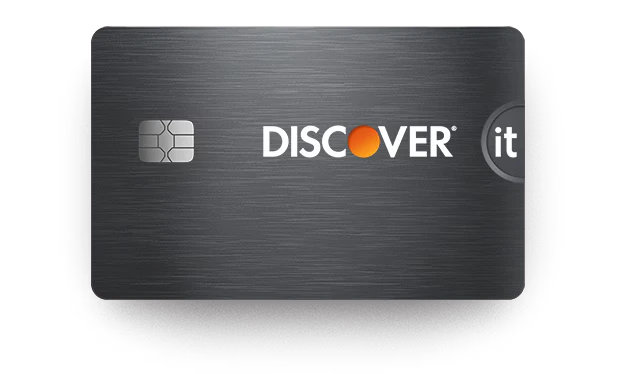
The Discover it Secured asks for a $200 minimum deposit, which becomes your credit line. It charges $0 annual fee and earns real rewards: 2% at gas stations and restaurants on up to $1,000 in combined quarterly spend, then 1% on everything else. The standout feature is Cashback Match — Discover automatically matches all the cash back you earn in your first year, dollar for dollar, with no cap. Spend $4,000 in year one earning roughly $60–$80, and Discover doubles it. Discover begins reviewing your account for graduation starting around month 7, refunding your deposit and converting you to an unsecured card.
Capital One Platinum Secured — lowest cash up front
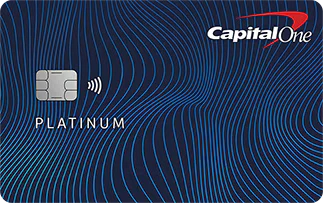
The Capital One Platinum Secured is built for tight budgets. Depending on your profile, you may be approved to put down just $49 or $99 to receive a $200 credit line — one of the only cards where your deposit can be smaller than your line. It charges $0 annual fee and automatically reviews your account around the 6-month mark for an upgrade to a higher, unsecured line. It earns no rewards, so its job is pure credit-building.
Month-by-month plan
| Months | What to do | Why |
|---|---|---|
| 0–1 | Open a US checking account; set up direct deposit for any income | You need it to fund the deposit and pay the bill |
| 1 | File Form I-765; request SSN through the same form | The SSN unlocks credit applications |
| 1–2 | Apply for one secured card; fund the deposit ($49–$200) | One tradeline starts your US file |
| 2–6 | Use it lightly, pay in full, keep balance under 10% of the limit | On-time payment + low utilization build score |
| 3 | Check free reports at annualcreditreport.com | Confirm the card reports and your details are correct |
| 6–7 | Watch for graduation | Capital One reviews around month 6; Discover from month 7 |
| 12–14 | Add a second $0-annual-fee card | Raises total credit, lowers utilization further |
Your first-year credit plan, step by step
- Months 0–1 — Open a checking account. Use your Ukrainian passport, I-94, EAD, and US address. Set up direct deposit.
- Month 1 — Get your SSN. Request it through Form I-765 (questions 14–17) so SSA issues it automatically.
- Months 1–2 — Apply for one secured card. Pick the Discover it Secured for the Cashback Match, or the Capital One Platinum Secured for the lowest deposit. Fund the deposit ($49 to $200).
- Months 2–12 — Use it lightly and pay in full. Put one small recurring bill on the card (a phone plan, a streaming service). Keep your reported balance under 10% of the limit — on a $200 line, stay under $20 on the statement. Never carry interest.
- Month 3 — Check your free credit reports at annualcreditreport.com to confirm the card is reporting and your name and address are correct.
- Months 6–7 — Watch for graduation. Accept the unsecured upgrade when offered and your deposit comes back.
- Months 12–14 — Add a second card. With ~12 months of perfect history, apply for the unsecured Quicksilver (1.5% flat, no foreign transaction fee) to add a tradeline and lower utilization — see the credit card strategy for your first year as a new immigrant for a full timeline and card sequencing guide.
Stay disciplined and a FICO score near 700 is realistic within 12 to 14 months, opening the door to apartments, car loans, and unsecured cards. For a detailed breakdown of how US FICO scores are calculated for immigrants, that guide covers every scoring factor.
Resettlement resources
- USCIS Uniting for Ukraine is the official program page for parole status, EAD filing, and re-parole information. If you are specifically interested in cards designed for U4U parolees and refugees, see best credit cards for refugees and parolees (U4U) 2026.
- Your sponsor is your first practical resource — many sponsors help newcomers open a bank account and understand bills.
- Refugee resettlement agencies (the International Rescue Committee, USCRI, Church World Service) run financial-coaching and matched-savings programs in many cities and can connect you with newcomer-friendly banks.
- Local Ukrainian community organizations and churches often know exactly which bank branch and credit union work smoothly for recent arrivals.
Common mistakes
- Trying to import your Ukrainian credit history. It does not transfer, and Nova Credit does not cover Ukraine. Start fresh — it is faster.
- Carrying a balance to "build credit." A myth. Paying interest does not help your score; paying on time and keeping utilization under 10% does. Always pay in full.
- Maxing out a small limit. On a $200 secured line, a $180 balance reads as 90% utilization and hurts your score even if you pay it off later. Keep the statement balance under $20.
- Applying for many cards at once. Each application is a hard inquiry. Open one secured card, build six to twelve months of history, then add a second.
- Missing a single payment. One 30-day-late mark can drop a young score by 60 to 100 points. Set autopay for at least the minimum, then pay the rest manually. The newcomer's first 90-day financial checklist walks through every action to take in your first three months, in order.
- Paying monthly fees on prepaid products that do not report. Confirm any product reports to all three bureaus before you pay for it.
Bottom line
As a newcomer from Ukraine, you start your US credit file at zero — there is no shortcut, because Nova Credit does not import Ukrainian history. That is fine. Get your EAD, request your SSN through Form I-765, open a checking account, and pick one $0 annual fee secured card — the Discover it Secured or Capital One Platinum Secured. Put one small bill on it, pay in full, keep utilization under 10%, and let the months do the work. A year of quiet, steady payments turns a blank file into a score near 700 — a real foundation for your new life in the United States.
Get weekly card offer alerts
Sunday digest of elevated bonuses. One email, zero spam.
Cards mentioned in this guide
Frequently asked questions
Can I import my Ukrainian credit history into a US credit card application?
I am here under Uniting for Ukraine (U4U). What is my fastest path to a credit card?
How much deposit do I need, and do I get it back?
How long until I reach a good credit score from a blank file?
What documents do I need to open a US bank account as a Ukrainian newcomer?
Related guides
Card Roundups
Best Credit Cards for Refugees, Asylees & Parolees (U4U) 2026
14 min
Rules & Mechanics
How to Open a US Bank Account as a Newcomer Without an SSN (2026)
15 min
Rules & Mechanics
Secured vs Unsecured Credit Cards: Which to Get (2026)
13 min
Strategy
How to Build US Credit as Immigrant: The 18-Month Roadmap
17 min
Related news

amex · Jun 25, 2026
Amex Platinum vs Schwab Platinum: the same $895 card, with a cash-out

chase · Jun 10, 2026
Chase Hyatt Transfer Ratio 4:3: What It Means for Sapphire Preferred and Ink Business Preferred

chase · Jun 10, 2026
Chase to Virgin Atlantic: 30% Transfer Bonus — Book Delta Business Class for 18,000 Points

ihg · Jun 10, 2026
IHG Buy Points at 0.5¢ Extended Through June 30 — Best Price for InterContinental Stays