Credit Cards for L-1 and O-1 Visa Holders Without an SSN (2026)
L-1 and O-1 visa holders are work-authorized and can open a U.S. credit card with an ITIN before their SSN posts. Start with Capital One Quicksilver (1.5% flat, $0 annual fee). If you are from the UK or Canada, apply for Chase Freedom Unlimited or Chase Freedom Flex via Nova Credit on arrival — the Amex × Nova Credit partnership ended in 2025.
On this page▾

Topic Collection
Part of the New to America Collection
Explore all 37 articles
Quick answer
L-1 and O-1 visa holders are work-authorized and can get a U.S. credit card before their Social Security Number arrives — apply with an ITIN today, then add premium cards once the SSN posts. Start with Quicksilver (1.5% flat, $0 annual fee, ITIN accepted) or Discover it Secured to build a U.S. file. If you come from the UK or Canada, Nova Credit can transfer your credit history to apply for Freedom Unlimited or Freedom Flex on arrival — no U.S. history required.
TL;DR: In 2026, L-1 (intracompany transferee) and O-1 (extraordinary ability) visa holders are work-authorized and eligible for a Social Security Number (SSN) through the Social Security Administration using their petition and visa. Before the SSN posts, they can open a U.S. credit card using an Individual Taxpayer Identification Number (ITIN). Issuers that accept ITIN include Capital One, American Express, Citi, and Discover. As of 2026, Nova Credit works only with Chase (Chase Freedom Unlimited and Chase Freedom Flex) and only for UK and Canada credit history — the Amex × Nova Credit partnership ended in 2025. Newcomers from other countries can consider secured cards or Amex Global Transfer if they already hold an international Amex card from their home country. L-1/O-1 holders are typically higher earners and qualify for premium cards faster. A FICO score near 700 is reachable in 12–14 months with on-time payments and utilization under 10%.
Top picks at a glance
| Card | Best for |
|---|---|
| Quicksilver | Day one: 1.5% flat cash back, $0 annual fee, ITIN accepted |
| Discover it Secured | No U.S. history: secured starter that graduates to unsecured |
| Freedom Unlimited | UK/Canada newcomers: Nova Credit path to rewards with no U.S. history |
| SavorOne | Dining and entertainment spenders, $0 annual fee |
| Bilt Blue | Renters who want points on rent with no fee |
| Double Cash | Simple 2% on everything once you have an SSN |
L-1 and O-1 basics: SSN, ITIN, and why you qualify fast
You are work-authorized — get the SSN
Both L-1 (intracompany transferee) and O-1 (extraordinary ability) are employment-based nonimmigrant visas. You are authorized to work in the U.S. for your sponsoring employer the moment you are admitted, and you are eligible for a Social Security Number. Apply at a Social Security Administration (SSA) field office with your passport, I-94 admission record, and your approval notice (Form I-797). SSN processing usually takes 2–4 weeks after you are physically present and your records are validated.
Many L-1 and O-1 holders apply for the SSN in their first week. But there is a gap: you may want a credit card before the card in the mail, and the SSN can lag your start date. That gap is where the ITIN bridge matters.
The ITIN bridge
An Individual Taxpayer Identification Number (ITIN) is issued by the IRS to people who must file U.S. taxes but cannot yet get an SSN. You apply with IRS Form W-7, and processing takes roughly 7–11 weeks. Several major issuers — Capital One, American Express, Citi, and Discover — accept an ITIN in place of an SSN on credit card applications. That means you can open your first U.S. card on an ITIN and start building history months before a Chase-only profile would be possible.
When your SSN arrives, give it to your issuers. They merge it onto the same account, and your credit file consolidates under the SSN. The history you built on the ITIN carries forward — you do not start over.
Why L-1 and O-1 holders qualify for premium cards faster
L-1 transferees are usually mid-to-senior employees moving within a multinational, and O-1 holders are, by definition, individuals with extraordinary ability — often well-compensated researchers, founders, athletes, and artists. Higher reported income strengthens applications. UK and Canada newcomers in this group can use Nova Credit to skip the slow starter phase entirely and land a Chase Freedom Unlimited or Chase Freedom Flex in their first month without any U.S. history.
The ITIN-to-SSN timeline at a glance
| Stage | What you have | Cards you can target |
|---|---|---|
| Week 1 | Passport, I-94, I-797; SSN/ITIN pending | Apply for SSN; if from UK or Canada, apply Freedom Unlimited via Nova Credit |
| Week 2–8 | ITIN issued (or SSN early) | Quicksilver, Discover it Secured |
| Month 2–3 | SSN posted, file merged | Double Cash, Bilt Blue |
| Month 6–9 | ~6 months on-time history | Upgrade secured to Discover it Cash Back; add SavorOne |
| Month 12–14 | FICO near 700 | Full unsecured rewards stack; consider Amex if not already added |
Ranked roundup: starter to premium
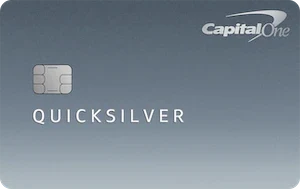
1. Quicksilver — best first rewards card
- Annual fee: $0
- Rewards: 1.5% flat cash back on every purchase
- Foreign transaction fee: none — useful for L-1/O-1 holders who still travel home
- ITIN: accepted
Quicksilver is the cleanest day-one card for an L-1 or O-1 holder. Flat 1.5% on everything, no annual fee, no foreign transaction fee, and Capital One accepts an ITIN. There is nothing to optimize and nothing to lose. Capital One also reports to all three bureaus, so every on-time payment builds your Experian, TransUnion, and Equifax files at once.
2. Discover it Secured — best secured starter
- Annual fee: $0
- Deposit: refundable, sets your limit (commonly $200 and up)
- Rewards: cash-back categories even while secured
- Graduation: automatic reviews to convert to unsecured
If your application is declined for thin history, Discover it Secured is the safest fallback. You put down a refundable deposit, use the card normally, and Discover begins reviewing your account for graduation to an unsecured line — at which point your deposit is returned. Discover reports to all three bureaus and accepts an ITIN.
3. Discover it Cash Back — the graduation target
- Annual fee: $0
- Rewards: rotating 5% bonus categories (on activation, up to the quarterly cap) plus 1% elsewhere
Once your secured card graduates — or once you have a few months of history — Discover it Cash Back adds rotating 5% categories. It is a natural next step that keeps you inside the no-annual-fee zone while your score climbs toward 700.
4. SavorOne — for dining and going out
- Annual fee: $0
- Rewards: elevated cash back on dining and entertainment
L-1 and O-1 holders relocating to a new city tend to spend on restaurants while settling in. SavorOne pays elevated cash back on dining and entertainment with no annual fee, and it shares Capital One's ITIN-friendly underwriting.
5. Bilt Blue — points on rent
- Annual fee: $0
- Rewards: earn points on rent payments with no transaction fee
Rent is the largest line item for most newcomers. Bilt Blue lets you earn points on rent without the usual processing fee. If you pay $2,500 a month, that is a meaningful pile of points each year on money you were already sending to your landlord.
6. Double Cash — simple 2% once you have an SSN
- Annual fee: $0
- Rewards: 1% when you buy, 1% when you pay — effectively 2% on everything
Double Cash is the long-term flat-rate workhorse. Citi accepts an ITIN, but the card shines once your file is mature: a clean 2% on all spend with no categories to track.
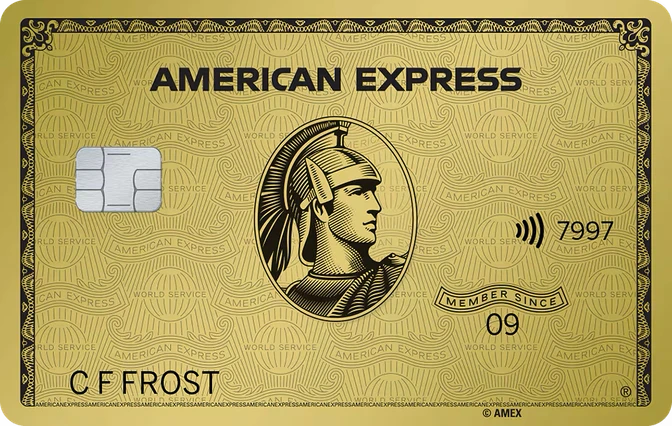
7. Amex Gold — premium pick once your U.S. file is established
- Annual fee: $325
- Rewards: 4x at restaurants worldwide, 4x at U.S. supermarkets (up to $25,000 per year, then 1x), plus elevated earning on flights
- Note: The Amex × Nova Credit partnership ended in 2025. Nova Credit no longer works with Amex.
Amex Gold remains a top premium card for L-1 and O-1 holders once their U.S. credit file is established. It is no longer available via Nova Credit — the partnership ended in 2025. If you already hold an international Amex card from your home country, you may qualify through Amex Global Transfer. Otherwise, target this card at month 12+ once your FICO is near 700. At a $325 annual fee, it is built for higher earners who spend on food and travel, which describes most of this cohort.
Nova Credit: which countries qualify
As of 2026, Nova Credit works only with Chase — specifically Freedom Unlimited and Freedom Flex — and only for UK and Canada credit history. The American Express × Nova Credit partnership ended in 2025.
If you are from the UK or Canada, you can apply for Chase Freedom Unlimited or Chase Freedom Flex using your foreign credit history through Nova Credit, even with zero U.S. history.
If you are from any other country (India, Mexico, Brazil, Philippines, etc.), Nova Credit is not available to you. Your options are: (a) secured cards such as Discover it Secured, or (b) Amex Global Transfer — but only if you already hold an international American Express card from your home country. Amex Global Transfer is not a general newcomer program.
Your foreign credit history is most valuable in your first one to two years in the U.S. — use it early, before your U.S. file is strong enough to stand on its own.
Step-by-step: from arrival to a premium card
- Week 1 — file for your SSN. Bring your passport, I-94, and I-797 to an SSA field office. If you are from the UK or Canada, apply for Freedom Unlimited or Freedom Flex the same week via Nova Credit.
- If the SSN lags — get an ITIN. Submit IRS Form W-7 so you have a taxpayer ID to apply with. Do not wait idle for the SSN.
- Open a U.S. bank account. Most issuers verify against a U.S. account. Bring your passport and visa.
- Apply for your first card. Quicksilver on an ITIN if you can; Discover it Secured if you are declined for thin history.
- Set autopay for the full statement balance. Never carry a balance. On-time payment history is the single biggest driver of a fast-rising score.
- Keep utilization under 10%. Use the card for a few regular purchases and let the statement close low.
- Add your SSN when it arrives. Call each issuer; your ITIN history merges onto the SSN automatically.
- At month 12–14, expand. With on-time payments and low utilization, expect a FICO near 700. Add Double Cash, graduate Discover to Discover it Cash Back, and consider Amex Gold — target it once your U.S. file is mature, or via Amex Global Transfer if you hold an international Amex from your home country.
Build-to-premium path
Think of it in three layers. Layer one (months 0–3) is one no-fee card on an ITIN — Quicksilver — plus Bilt Blue for rent. UK and Canada newcomers can also add Freedom Unlimited or Freedom Flex via Nova Credit from day one. Layer two (months 3–12) adds a second no-fee card once the SSN posts, like Double Cash, and converts any secured card to Discover it Cash Back. Layer three (month 12+) is the premium tier — Amex Gold for its 4x dining and 4x grocery earn, once your U.S. file supports it, or via Amex Global Transfer if you already hold an international Amex from your home country. Note: Nova Credit no longer connects to Amex — that partnership ended in 2025. Higher reported income from an L-1 or O-1 role means you reach this layer faster than most newcomers.
Common mistakes
- Waiting for the SSN before applying. The ITIN bridge exists precisely so you do not have to. Every month you wait is a month of history you do not build.
- Skipping Nova Credit if you are from the UK or Canada. Nova Credit now works only with Chase Freedom Unlimited and Chase Freedom Flex, and only for UK and Canada credit history. If that describes you, applying via Nova Credit on arrival is the highest-leverage move available. Newcomers from other countries should use secured cards instead — the Amex × Nova Credit partnership ended in 2025.
- Underreporting income. Report your full gross annual salary. O-1 and senior L-1 compensation is strong; do not prorate it or shave it down.
- Carrying a balance. Interest does nothing for your score. Pay in full, every month, on autopay.
- Closing your first card later. Keep your oldest no-fee card open to preserve average account age once your file matures.
Bottom line
L-1 and O-1 visa holders have two advantages most newcomers lack: they are work-authorized from day one, and they tend to earn enough to qualify for premium cards quickly. Use the ITIN bridge to open Quicksilver or Discover it Secured before your SSN posts, layer in Bilt Blue for rent and Double Cash once the SSN merges. If you are from the UK or Canada, apply for Freedom Unlimited or Freedom Flex via Nova Credit on arrival. If you already hold an international Amex from your home country, consider Amex Global Transfer for Amex Gold. Otherwise, target Amex Gold once your U.S. file matures at month 12+. With on-time autopay and utilization under 10%, a FICO near 700 is realistic in 12–14 months, and a full premium setup follows naturally.
Get weekly card offer alerts
Sunday digest of elevated bonuses. One email, zero spam.