Best Credit Cards for H-4 EAD Spouses 2026
As an H-4 spouse, the fastest credit you can build is being added as an authorized user on your H-1B spouse’s oldest, lowest-utilization card — that can put a usable score on file in about 1–2 months. Before your H-4 EAD, an ITIN works at Capital One, Amex, Citi, and Discover; once the EAD is approved you get an SSN and qualify for cards in your own name. Start with Capital One Quicksilver (1.5% flat, $0 fee); if you are a newcomer from the UK or Canada, use Nova Credit to apply for the Chase Freedom Unlimited or Freedom Flex from day one, and if you already hold a home-country Amex you can use Amex Global Transfer for a U.S. Amex. Keep utilization under 10%.
On this page▾

Topic Collection
Part of the New to America Collection
Explore all 37 articles
Quick answer
As an H-4 spouse, the fastest credit you can build is not a card in your own name — it is a spot as an authorized user on your H-1B spouse's oldest, lowest-balance card. That single move can put a usable score on file in roughly one to two months. Once you have an approved H-4 EAD, you get an SSN and qualify for cards in your own name; before the EAD, an ITIN already opens the door at issuers like Capital One. The all-around starter pick is Quicksilver — 1.5% flat cash back, $0 annual fee, no foreign transaction fee. And if you are a newcomer from the UK or Canada, you can use your home-country file through Nova Credit to apply for the Chase Freedom Unlimited or Freedom Flex from day one.
TL;DR: In 2026, H-4 spouses (dependents of H-1B workers) build U.S. credit through three paths. (1) Authorized-user: being added to the H-1B spouse's well-aged, low-utilization card reports that account's full history to the H-4 spouse and can produce a score in about 1–2 months. (2) Own-name cards: an approved H-4 EAD makes the spouse work-authorized and SSN-eligible; before the EAD, an ITIN is accepted by Capital One, American Express, Citi, and Discover for many products. (3) Nova Credit: the American Express × Nova Credit partnership ended in 2025, so Nova can no longer be used to get an Amex card. As of 2026, Nova Credit's live credit-card path is Chase — newcomers from the UK or Canada can use their foreign credit history via Nova Credit to apply for the Chase Freedom Unlimited or Chase Freedom Flex with no U.S. history required (Chase may add more cards and countries later; verify the current list at novacredit.com). Newcomers from other countries (India, Mexico, and elsewhere) currently have no Nova credit-card shortcut and build via secured/starter cards; if they already hold an American Express card from their home country, Amex Global Transfer can move that relationship to a U.S. Amex without U.S. history. Keep statement utilization under 10% and pay in full each month.
Best cards for H-4 spouses at a glance
| Card | Best for | Annual fee |
|---|---|---|
| Discover it Secured | Build from zero with a refundable deposit | $0 |
| Quicksilver Secured | Secured card with a clear path to graduate | $0 |
| Quicksilver | First unsecured card, flat 1.5% cash back | $0 |
| SavorOne | Dining + groceries once approved | $0 |
| Discover it Cash Back | 5% rotating categories, first-year match | $0 |
| Double Cash | Simple 2% on everything | $0 |
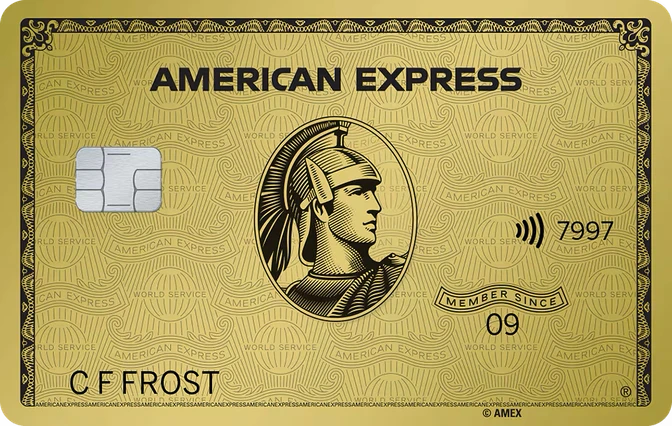
| Amex Gold | Premium dining/groceries (via Amex Global Transfer if you hold a home-country Amex) | $325 |
Status to card access
| Your status | What you can use | Best first move |
|---|---|---|
| H-4, no EAD yet, no SSN/ITIN | Authorized user on spouse's card; ITIN-friendly applications | Get added to spouse's oldest card |
| H-4 with ITIN (no EAD) | Capital One, Amex, Citi, Discover ITIN products | Quicksilver Secured or Discover it Secured |
| H-4 EAD approved (SSN issued) | Any U.S. card you qualify for | Quicksilver, then premium |
| Newcomer from UK or Canada | Chase via Nova Credit foreign credit file | Chase Freedom Unlimited / Freedom Flex from day one |
| Already hold a home-country Amex | U.S. Amex via Amex Global Transfer | Transfer to Amex Gold |
H-4 basics: what changes when the EAD arrives
An H-4 visa is the dependent status for the spouse and children of an H-1B worker. On its own, H-4 does not grant work authorization. What unlocks employment — and the document that matters most for your finances — is the H-4 EAD (Employment Authorization Document). Once your H-4 EAD is approved, you are work-authorized, and that makes you eligible for a Social Security Number (SSN) through the SSA. The SSN is the cleanest identifier for credit card applications; every issuer accepts it.
Before the EAD comes through, you are not stuck. You can request an ITIN (Individual Taxpayer Identification Number) from the IRS via Form W-7, usually filed alongside a joint tax return with your H-1B spouse. An ITIN is a tax ID, not a work permit, but several major issuers — Capital One, American Express, Citi, and Discover — accept an ITIN in place of an SSN for many of their cards. So the practical sequence is: ITIN now, SSN once the EAD lands, and you migrate your applications to the SSN as soon as you have it.
The authorized-user route — your single best move
Here is the lever most H-4 spouses underuse. Your H-1B spouse has almost certainly been in the U.S. longer than you and likely holds at least one credit card with a multi-year history. Ask to be added as an authorized user on their oldest card with the lowest balance. The authorized user strategy for newcomers explains exactly how to maximize this shortcut. When the issuer reports that account, it reports the entire history of the card to your credit file — the age, the on-time payments, the low utilization — even though the account was opened before you arrived.
The effect is fast. Because credit-file age and payment history are the two heaviest factors in a FICO score, inheriting a well-aged, never-late account can produce a usable score for you in roughly one to two months — far faster than the six-plus months a brand-new secured card needs to establish a score from scratch. Confirm three things before doing this: the card reports authorized users to all three bureaus (most major issuers do), the primary account has a spotless payment record, and the balance stays low. Which brings us to the one rule that governs everything below.
The 10% utilization rule
Keep the reported balance on any card you are on — as an authorized user or a primary — under 10% of its limit. Utilization is the second-largest scoring factor after payment history, and it resets every statement. The credit utilization guide for newcomers walks through how to time your payments to keep that number low. A $10,000-limit card should show under $1,000 when the statement closes. The cleanest habit: pay the balance in full, and if you tend to run it up mid-cycle, make a payment a few days before the statement date so the reported number is low. This single discipline does more for an H-4 spouse's score than chasing any particular card.
The ranked roundup: starter to premium
Starter — build from zero with a deposit
If you have no U.S. history and want a card purely in your own name, a secured card is the honest starting point. You put down a refundable deposit that becomes your limit, use the card lightly, and pay in full.
Discover it Secured is the strongest first secured card. There is no annual fee, it reports to all three bureaus, Discover automatically reviews your account for graduation to an unsecured card, and first-year cash back is matched dollar-for-dollar. Quicksilver Secured is the alternative if you prefer the Capital One ecosystem — $0 annual fee, ITIN-friendly, and a clear graduation path to the unsecured Quicksilver.
Core — your first real rewards card
Once you have an SSN (or a few months of ITIN-based history) and a thin-but-clean file, the unsecured Quicksilver is the default recommendation: a flat 1.5% cash back on everything, $0 annual fee, and no foreign transaction fee — which matters when you are sending money home or buying flights back to family. There is nothing to optimize and nothing to forget; it is the card you keep forever as your credit-history anchor.
If you spend meaningfully on food, SavorOne earns elevated cash back on dining, groceries, streaming, and entertainment at no annual fee. For category chasers, Discover it Cash Back runs 5% rotating quarterly categories (on activation, up to the cap) with the same first-year match. And if you want one number to remember, Double Cash pays an effective 2% on everything — 1% when you buy, 1% when you pay.
Premium — the day-one shortcut with Nova Credit (or Amex Global Transfer)
You do not always have to wait years for a premium card. The American Express × Nova Credit partnership ended in 2025, so Nova Credit can no longer be used to apply for an Amex card. As of 2026, Nova Credit's live credit-card path is Chase: if you are a newcomer from the United Kingdom or Canada, Chase can read your foreign credit file through Nova Credit and approve you with no U.S. history at all for the Chase Freedom Unlimited or Chase Freedom Flex. This is narrower than Amex's old footprint — for now Chase only accepts UK and Canada credit history, though it may add more cards and countries later, so verify the current list at novacredit.com.
If your goal is a premium Amex such as Amex Gold and you already hold an American Express card issued in your home country, the path now is Amex Global Transfer: you transfer that existing Amex relationship to a U.S. Amex card without U.S. credit history. The Amex Gold earns 4x at restaurants worldwide and 4x at U.S. supermarkets (on capped spend) and carries a $325 annual fee offset by dining and dining-credit perks. Note this is only for people who already hold a home-country Amex — it is not a general no-history path for everyone.
Step-by-step: your first 90 days
- Week 1 — get added as an authorized user. Have your H-1B spouse add you to their oldest, lowest-utilization card that reports AU activity to all three bureaus. This is the fastest score you will get. Use the newcomer first 90 days financial checklist alongside this step to make sure nothing slips through.
- Week 1–2 — secure your tax ID. If your H-4 EAD is approved, apply for your SSN at the SSA with your EAD, passport, and I-94. If not yet, file Form W-7 for an ITIN with your next joint return.
- Week 2–4 — open a U.S. bank account. Most issuers want one for verification and autopay. A passport and visa are enough at major banks.
- Month 1 — Nova Credit check. If you are a newcomer from the UK or Canada, apply for the Chase Freedom Unlimited or Freedom Flex through the Nova Credit flow before your foreign file ages out of usefulness. If you already hold a home-country Amex, look at Amex Global Transfer instead. Verify the current participating issuers and countries at novacredit.com.
- Month 1–2 — your own starter card. If Nova Credit and Amex Global Transfer are not options (which is the case for most countries), open Discover it Secured or Quicksilver Secured with a small deposit.
- Month 2 onward — guard utilization. Pay in full, keep every reported balance under 10%, and let the authorized-user history do its work.
- Month 6–12 — graduate and upgrade. Convert your secured card or apply for Quicksilver as your permanent core card once your file is established.
Common mistakes
- Waiting for the EAD before doing anything. The authorized-user route works the day you arrive — it does not require an SSN, an ITIN, or work authorization. Skipping it wastes your fastest months. The how credit scores work guide for immigrants explains what factors actually matter so you can prioritize correctly.
- Being added to the wrong card. A newly opened card, or one carrying a high balance, can drag your file down instead of lifting it. Choose the spouse's oldest, lowest-utilization account.
- Letting utilization spike. Even paying in full every month, a high reported balance hurts. Pay before the statement closes so the bureaus see a number under 10%.
- Underreporting income. On your own applications you may report your own employment income once you have the EAD, and household income where the issuer permits. Do not undersell yourself.
- Skipping Nova Credit because you "have no U.S. history." If you are a newcomer from the UK or Canada, that is exactly the situation Nova Credit's Chase path solves — your foreign file is the asset. (From other countries there is no Nova card shortcut today, so build via secured credit cards instead.)
- Closing the secured card the moment you graduate. If it has no fee, keeping it preserves your account age. Closing it shortens your history.
Bottom line
For an H-4 spouse, the order of operations beats the choice of card. Get added as an authorized user on your H-1B spouse's oldest, cleanest card on day one — that is your fastest path to a real score. Secure an ITIN now and an SSN when the EAD arrives. If you are a newcomer from the UK or Canada, use Nova Credit to reach the Chase Freedom Unlimited or Freedom Flex from day one; if you already hold a home-country Amex, Amex Global Transfer can move it to a U.S. Amex. Otherwise build with Discover it Secured or a secured Capital One card, then settle into Quicksilver as your no-fee, no-foreign-fee anchor. Keep every balance under 10% and pay in full, and within a year you will hold cards that took most newcomers far longer to earn. For a full timeline of what to expect, the how long it takes to build a 700 credit score as a newcomer guide gives a realistic picture.
Get weekly card offer alerts
Sunday digest of elevated bonuses. One email, zero spam.