Best Credit Cards for People New to the US With No Credit History (2026)
If you are new to the US with zero credit history, start with the Discover it Secured (best overall secured card — $200 deposit, 2% cash back on dining and gas, automatic upgrade review at 7 months) or TomoCredit (no deposit, approval based on your bank account and income, no SSN needed at application). This is a thin-file problem, not bad credit. Newcomers from the UK or Canada can use Nova Credit to apply for the Chase Freedom Unlimited or Freedom Flex with their home-country credit report and skip the secured stage. Expect 12–18 months of on-time payments to reach unsecured premium cards.
On this page▾

Topic Collection
Part of the New to America Collection
Explore all 37 articles
Quick answer
If you are new to the US with zero credit history, start with Discover it Secured (best overall secured card — $200 deposit, 2% cash back on dining/gas, automatic upgrade review at 7 months) or TomoCredit (no deposit required, approval based on bank account and income, no SSN required at application). If you are coming from the UK or Canada, Nova Credit lets you apply for the Chase Freedom Unlimited or Chase Freedom Flex using your home-country credit report, which can skip the secured-card stage. Newcomers from all other countries no longer have a Nova credit-card shortcut and should build with a secured or starter card.
TL;DR: People new to the US face a "thin file" problem — no US credit history at all, which is different from bad credit. Best first cards in 2026: Discover it Secured (best secured overall), Capital One Platinum Secured ($200 deposit, easy approval), Capital One Quicksilver Secured (secured with 1.5% cash back), TomoCredit (income-based, no credit history required, no SSN). The American Express × Nova Credit path ended in 2025; as of 2026 Nova Credit's only credit-card shortcut is Chase Freedom Unlimited / Freedom Flex, and only for credit history from the UK and Canada. Newcomers from other countries build via secured/starter cards, or use Amex Global Transfer only if they already hold an American Express card from their home country. Timeline to unsecured premium cards: 12–18 months with on-time payments and low utilization. Always verify the current participating issuers and countries at novacredit.com.
Top picks at a glance
| Card | Best for |
|---|---|
| Discover it Secured | Best overall secured — 2% back dining/gas, automatic upgrade review, $200 deposit |
| TomoCredit Mastercard | Best no-deposit — bank account underwriting, no SSN required at apply |
| Capital One Platinum Secured | Easiest secured approval — $49/$99/$200 deposit, Capital One ecosystem |
| Quicksilver Secured | Secured with cash back — 1.5% on all purchases, $200 deposit |
| Chase Freedom Unlimited / Flex | Nova Credit shortcut — UK & Canada newcomers only, apply with home-country credit report |
Thin file vs. bad credit: a crucial distinction
These two situations look the same to a lender's algorithm but require entirely different strategies.
Thin file (no US credit history): You have never had a US credit card, loan, or utility in your name. Your FICO score may literally not exist yet, or may show as "N/A" or "00." This is the situation facing virtually every immigrant, international student, and visa holder arriving in the US. It is NOT a reflection of poor financial management — it is simply a data absence. The how credit scores work guide for immigrants explains exactly how FICO is built from scratch and what happens in the first 3–6 months.
Bad credit: You have a US credit history, but it contains negative marks — late payments, collections, charge-offs, or bankruptcy. These require different repair strategies and a different set of products.
Why it matters: Thin-file applicants can often get approved for no-deposit cards with good income documentation, because lenders like TomoCredit have built underwriting models that look at bank account cashflows instead of FICO scores. Bad-credit applicants typically cannot access these products regardless of income.
What you need to open most US credit cards:
- Social Security Number (SSN) — issued to US citizens, permanent residents (green card holders), and certain visa categories (H-1B, L-1, F-1 with employment authorization, etc.)
- Individual Taxpayer Identification Number (ITIN) — issued by the IRS to anyone who needs to file US taxes but is not eligible for an SSN. ITINs start with "9" (e.g., 9XX-XX-XXXX). Self, some credit unions, and a growing number of issuers explicitly accept ITINs.
- Neither required in some cases — TomoCredit does not require SSN or ITIN at application. It links to your bank account instead.
If you are a green card holder, your SSN unlocks a wider set of starter cards than most visa holders — our guide to the best credit cards for green card holders and new residents covers which cards to open first.
If you have an F-1 student visa, check with your university's International Student Office — many have partnerships with local credit unions that offer starter credit cards specifically for international students.
The Nova Credit shortcut (Chase, UK & Canada only)
Nova Credit is a credit bureau that translates your home-country credit report into a US-equivalent "Credit Passport" that American lenders can read. Important update: the American Express × Nova Credit partnership ended in 2025, and Amex removed the "I don't have a US credit history" foreign-credit option from its application. You can no longer use Nova Credit to apply for any American Express card.
As of 2026, Nova Credit's only live credit-card path is with Chase, and only for newcomers whose credit history is from the United Kingdom or Canada. Chase says more cards and countries may be added later, so this footprint is narrower than the old Amex one.
Supported cards and countries (2026): Chase Freedom Unlimited and Chase Freedom Flex, for credit history from the United Kingdom and Canada only.
How it works:
- Apply for the Chase Freedom Unlimited or Chase Freedom Flex online.
- During the application, indicate you are new to the US and choose the option to use your foreign (UK or Canadian) credit history via Nova Credit.
- Chase routes you to a Nova Credit verification flow — you authorize Nova Credit to pull your home-country bureau report.
- Nova Credit translates it in real time and Chase makes a decision based on your actual credit history from home.
Who this works best for:
- Newcomers arriving from the UK or Canada with 2+ years of clean home-country credit history — our building US credit for newcomers from Canada, the UK, and Australia guide walks through the Nova path country by country
- H-1B, L-1, O-1, TN visa holders relocating from the UK or Canada
Important Nova Credit caveats:
- This works only for the Chase Freedom Unlimited and Freedom Flex, and only for UK and Canadian credit history. There is no longer any Nova path to American Express.
- If you are from any other country (India, Mexico, Ukraine, Brazil, Nigeria, the Philippines, etc.), there is currently no Nova credit-card shortcut — build with a secured or starter card instead. Newcomers from Ukraine can follow our dedicated building US credit for newcomers from Ukraine playbook for the secured-card sequence and parole-status specifics.
- Nova Credit does not eliminate income requirements. Chase will still verify income.
- The list of participating issuers and countries changes over time — always confirm the current list at novacredit.com before applying.
Already hold an American Express card from your home country? You may be able to use Amex Global Transfer to open a US Amex card by transferring your existing international Amex relationship. This is only available to people who already have an Amex card issued abroad — it is not a general no-credit-history path.
Best no-deposit cards (thin file, no SSN required)
TomoCredit Mastercard
TomoCredit uses a real-time cash flow model — it links to your bank account and looks at income, savings, and spending patterns. No FICO, no SSN, no deposit required.
Key facts:
- No annual fee
- No security deposit
- Weekly auto-pay from linked bank account (designed to prevent debt accumulation)
- No foreign transaction fees
- Credit limits typically $100–$10,000 based on bank data
- Reports to all 3 major bureaus
Important limitation: TomoCredit requires you to pay your full statement balance weekly via automatic debit from your linked bank account. This is by design — TomoCredit is structured as a charge-card-like product to avoid credit risk. If you have irregular income, this weekly auto-pay can cause overdrafts.
Best for: Early-stage immigrants or international students with steady income deposited to a US bank account (e.g., H-1B employees, F-1 students on stipend or fellowship).
Best secured cards
A secured credit card requires a refundable cash deposit that becomes your credit limit. It functions exactly like a regular credit card — you make purchases, get a monthly statement, pay the balance, and the activity is reported to the credit bureaus. After 6–12 months of on-time payments, most issuers will upgrade you to an unsecured card and return your deposit. The secured vs. unsecured credit cards for newcomers guide explains the differences and tells you exactly when you are ready to make the switch.
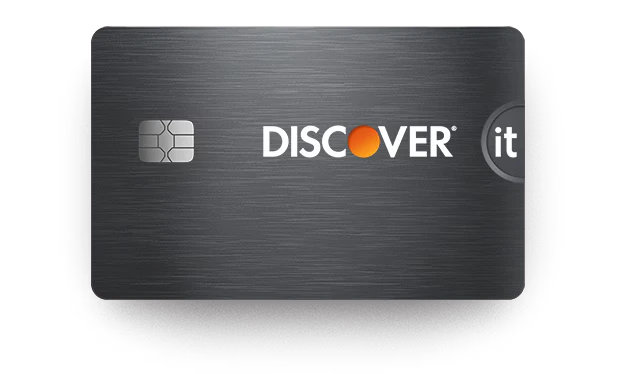
Discover it Secured — best overall secured card
Key facts:
- $200 minimum deposit (maximum $2,500)
- No annual fee
- 2% cash back at restaurants and gas stations (up to $1,000 in combined purchases per quarter)
- 1% cash back on everything else
- Cashback Match at end of first year — Discover doubles all cash back earned in year 1
- Automatic account review starting at 7 months for upgrade to unsecured
- No foreign transaction fees
- FICO score included free on monthly statement
The Cashback Match is a major differentiator. In your first year, if you earn $150 in cash back, Discover matches it — effectively $300 total. No other secured card offers a first-year match.
Application requirement: SSN required. ITIN is not accepted by Discover.
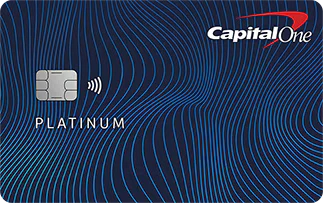
Capital One Platinum Secured — easiest approval, lowest deposit options
Key facts:
- Deposit options: $49, $99, or $200 depending on creditworthiness assessment (even with no history, most new applicants get the $200 option)
- No annual fee
- No rewards
- Automatic credit line review after 6 months
- Upgrade path to Capital One Platinum (unsecured) available
- Reports to all 3 bureaus
Why Capital One for beginners: Capital One explicitly markets to people with "limited" or "no" credit history. The application pre-qualification tool on their website does a soft pull, so you can check your odds without hurting your (future) score.
Quicksilver Secured — secured with cash back
Key facts:
- $200 minimum deposit
- No annual fee
- 1.5% cash back on all purchases (same rate as the unsecured version)
- No foreign transaction fees
- Automatic upgrade review after 6 months
- Reports to all 3 bureaus
Slightly harder to get approved than the Platinum Secured but offers flat-rate rewards — worth applying for first before falling back to the no-rewards Platinum Secured.
Income documentation that helps your application
Most issuers ask for self-reported annual income. For most applicants, this is just a number you type. But if an issuer requests verification (more common with thin-file applicants), useful documents include:
| Document | Who provides it | Useful for |
|---|---|---|
| Recent pay stubs (last 2–3 months) | Your US employer | H-1B, L-1, OPT workers |
| Offer letter with salary | Your US employer | Newly arrived before first paycheck |
| Scholarship/fellowship award letter | University financial aid office | F-1 students on scholarship |
| I-20 + bank statement showing tuition funds | University + your bank | F-1 students without US income |
| Savings/investment account statements | Your bank or brokerage | Anyone with substantial assets |
| ITIN confirmation letter (CP-565) | IRS | Confirms tax ID status |
Income you can include: For most issuers (Amex, Capital One, Chase), you can include household income (spouse's income if you have shared access), scholarship stipends, fellowship payments, and regular transfers from family. Read the application carefully — "annual income" often has a broad definition.
What you should NOT include: Do not include income from a country you have left if you have no access to it. Do not inflate income — Amex in particular may request income verification for high credit limits, and discrepancies can result in card closure.
Cards to avoid as a first card
Sapphire Preferred and any Chase card
Chase requires established US credit history for almost all of their products. The Chase 5/24 rule (no approval if you have opened 5+ accounts in 24 months) does count foreign credit cards at Chase's discretion, but the bigger issue is that Chase's algorithms are strongly biased toward applicants with 2+ years of US credit history. Applying for Sapphire Preferred with a thin file will almost certainly result in denial — and the hard inquiry will appear on your report with no benefit.
Rule of thumb: Do not apply for any Chase product until you have at least 2 years of clean US credit history and at least 2 US credit accounts in good standing. The newcomer credit card mistakes to avoid in your first year guide catalogues the most costly application-timing errors newcomers make.
Premium travel cards
Amex Gold, Amex Platinum, Sapphire Reserve, Venture X — these are excellent cards for experienced US credit holders, but applying with a thin file will result in denial and a wasted hard inquiry. There is no longer a Nova Credit shortcut to American Express — that partnership ended in 2025. The only foreign-credit shortcut left is Nova Credit for the Chase Freedom Unlimited / Freedom Flex, and only for UK and Canadian credit history.
Store credit cards
Target RedCard, Amazon Store Card, Gap, etc. — while easy to get approved for, store cards typically have very high APRs (25–30%) and report to bureaus identically to regular cards. They are not better than a secured Discover or Capital One card, and they lock your credit line to one retailer. If you are going to build credit, use a card you can use everywhere.
12-month credit-building roadmap
Month 1–2: Open your first account
- If you have a US bank account and need no deposit: Apply for TomoCredit
- If you prefer a bank-backed product: Apply for Discover it Secured ($200 deposit) or Capital One Platinum Secured
- If you are a UK or Canada newcomer with strong home credit: Apply for the Chase Freedom Unlimited or Freedom Flex via Nova Credit
Month 3–6: Use it correctly
- Use your card for 1–3 small, regular purchases per month (groceries, gas, Netflix)
- Pay the full statement balance by the due date every month — not the minimum, the full balance
- Keep your utilization below 30% (ideally below 10%). If your limit is $500, keep your balance below $50–$150 — credit utilization explained for newcomers shows the optimal payment timing to hit that target
- Set up autopay for the full statement balance to never miss a payment
Month 7: Check your credit score
- Your FICO 8 score should now exist and should be in the 650–720 range if you have had no negative marks
- Discover provides your FICO score free on your monthly statement
- Capital One provides free CreditWise (VantageScore 3.0, not FICO — useful but different)
Month 8–10: Consider a second account
- A second card increases your total available credit (lowering utilization) and adds another on-time payment history
- Apply for a second secured or starter card: Quicksilver Secured if you started with Discover, or vice versa
- Or apply for TomoCredit if you have not yet — no deposit, adds credit diversity
Month 11–12: Upgrade or graduate
- At 7 months, Discover reviews automatically for upgrade to Discover it (unsecured) and returns your deposit
- At 6 months, Capital One reviews for credit line increases and upgrade eligibility
- At 12 months with clean history, consider applying for Quicksilver (unsecured, 1.5% unlimited) or Discover it Cash Back (unsecured)
Month 13–18: First rewards card
- With 12–18 months of US credit history, 2 open accounts in good standing, and a score of 700+, you are now a competitive applicant
- Apply for SavorOne (no-AF, 3% dining + groceries + streaming) or Venture ($95 AF, 2x miles on everything)
- At 24 months with strong history: Sapphire Preferred becomes accessible — once you are there, it is worth comparing Capital One Venture against Chase Sapphire Preferred to decide which travel card fits your spending better
The authorized user shortcut
If you have a US friend, family member, or spouse with an established credit card account in good standing, ask them to add you as an authorized user on their card.
How it works:
- The primary cardholder calls their issuer or goes online and adds you as an authorized user
- The account history (age of account, credit limit, payment history) gets added to YOUR credit report
- You receive a card with your name on it (you do not have to use it)
- The primary cardholder remains 100% responsible for the balance
Impact on your score: Being added as an authorized user on a card with a long, clean history and high limit can add 20–50+ points to your credit score within 30–60 days of being added. This is one of the fastest legal credit-building shortcuts available. The authorized user strategy for newcomers covers how to find the right account to be added to and what to watch out for.
Caveats:
- If the primary cardholder ever misses a payment or maxes out the card, it will hurt your score too
- Choose someone with a card that is: at least 2 years old, always paid on time, and has low utilization
- All major issuers (Amex, Chase, Capital One, Discover, Citi) report authorized user status to bureaus
- You can be removed from the account at any time — the history typically stays on your report for 10 years after removal
Bottom line
Start with Discover it Secured (SSN holders) or TomoCredit (no SSN required) and use it for 12 months with full, on-time payments. If you are a newcomer from the UK or Canada, you can skip the secured stage by applying for the Chase Freedom Unlimited or Freedom Flex via Nova Credit; from any other country there is no Nova shortcut, so build with a secured or starter card. After 12–18 months of clean US history, you will qualify for competitive unsecured rewards cards and eventually the premium travel cards that most points travelers use. For the full step-by-step sequence from first card to premium rewards, the credit card strategy for your first year as a new immigrant guide lays out the complete playbook in one place.
Get weekly card offer alerts
Sunday digest of elevated bonuses. One email, zero spam.