How to Read and Dispute Your US Credit Report as a Newcomer (2026)
Get all three US credit reports free at annualcreditreport.com (the only federally authorized source, now weekly), then read the personal, accounts, inquiries, and public-records sections. Dispute any error with the bureau online or by mail; under the FCRA it must investigate within about 30 days and delete what it cannot verify. Newcomers should watch for mixed files and name/transliteration mismatches.
On this page▾

Topic Collection
Part of the New to America Collection
Explore all 37 articles
Quick answer
Get all three of your US credit reports free at annualcreditreport.com — the only federally authorized source — then read each one section by section (personal info, accounts/tradelines, inquiries, public records) and dispute any error under the FCRA online or by mail. The bureau must investigate within about 30 days and delete or correct anything it cannot verify, at no cost to you. For newcomers, the errors that matter most are mixed or merged files (someone else's data on your report) and name or transliteration mismatches, both of which you can fix with a written dispute and a copy of your ID.
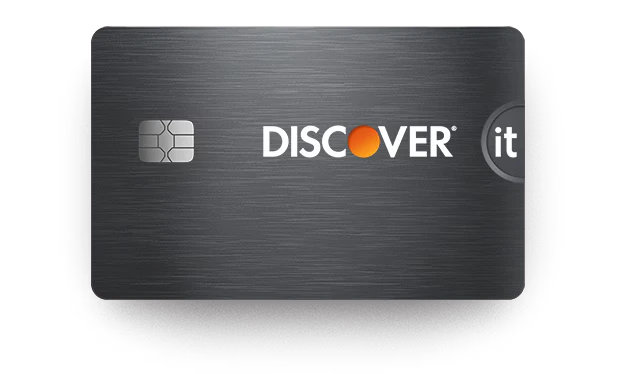
TL;DR: US consumers get free credit reports from all three nationwide bureaus — Experian, TransUnion, and Equifax — at annualcreditreport.com, which is the only website federally authorized under the FCRA; as of 2026 reports are available weekly at no charge. A credit report has four main sections: personal/identifying information, accounts (tradelines), inquiries (hard and soft), and public records (mostly bankruptcies). To dispute an error you file directly with the bureau reporting it — online, by mail, or by phone — and under the Fair Credit Reporting Act the bureau must investigate, usually within 30 days, and delete or correct unverifiable information. Common newcomer-specific problems include thin files, name/transliteration mismatches, mixed or merged files containing another person's accounts, and unauthorized hard inquiries. The Consumer Financial Protection Bureau (CFPB) at consumerfinance.gov accepts complaints if a bureau does not fix a verified error. Free score-tracking tools include Capital One CreditWise and Credit Karma. A secured starter card such as the Discover it Secured (refundable deposit from $200, $0 annual fee) reports to all three bureaus so a newcomer can open a file and watch it appear.
Your credit report at a glance
| Section | What it contains | What to check as a newcomer |
|---|---|---|
| Personal information | Name, current and past addresses, date of birth, SSN/ITIN fragments, employers | Name spelling and transliteration, no addresses you never lived at |
| Accounts (tradelines) | Every credit card, loan, and line — balance, limit, status, payment history | No accounts you did not open; correct open dates and limits |
| Inquiries | Hard inquiries (applications) and soft inquiries (your own checks, prescreens) | No hard inquiries you did not authorize |
| Public records | Bankruptcies (tax liens and judgments no longer appear) | Should be empty for almost every newcomer |
How to get your reports
The only website federally authorized to deliver your free reports is annualcreditreport.com. Avoid look-alike sites that bundle paid subscriptions. As of 2026 you can pull a fresh report from each bureau every week, so there is no reason to pay.
You will verify your identity with personal details and a few knowledge questions (past addresses, former lenders). Newcomers with a thin file sometimes fail the online check because the bureaus hold too little data — in that case you request the report by mail with copies of your ID and a recent utility bill.
Pull all three. Experian, TransUnion, and Equifax each hold a separate file, and lenders rarely report to all three, so an error can sit on one report and not the others.
How to read each section
Personal information
This is where newcomer problems start. Check that your name is spelled exactly as it appears on your cards and that any transliteration of your name from another alphabet is consistent. If "Oleksandr" appears on one account and "Alexander" on another, the bureau may struggle to match your tradelines to one file. Look for addresses you never lived at — a sign your file may be mixed with someone else's.
Accounts (tradelines)
Each tradeline shows the lender, account type, open date, credit limit, current balance, and a month-by-month payment history. This section drives most of your score, so read it closely:
- Every account should be one you opened.
- The credit limit and open date should match reality — an understated limit inflates your utilization and can lower your score.
- Payment history should show no late marks you did not earn.
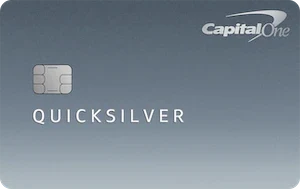
A secured starter card like the Discover it Secured or Quicksilver Secured appears here once it reports, which is how a newcomer confirms a file has opened.
Inquiries
A hard inquiry is logged when you apply for credit and can shave a few points for up to a year. A soft inquiry — your own report pull, a prescreened offer, an existing lender's review — never affects your score. Scan the hard-inquiry list for any application you did not make; an unauthorized hard inquiry is a red flag for identity theft and is disputable.
Public records
Today this section essentially means bankruptcies — tax liens and civil judgments were removed from credit reports years ago. For nearly every newcomer this section is, and should stay, empty.
How to dispute an error: the FCRA process
The Fair Credit Reporting Act (FCRA) gives you the right to dispute anything inaccurate and requires the bureau to investigate for free. You can file online, by mail, or by phone; mail with documents is the strongest paper trail.
| Dispute step | What you do | Timing |
|---|---|---|
| 1. Identify the error | Circle the wrong item on the report | Same day |
| 2. Gather proof | Statements, ID, letters showing the truth | 1–3 days |
| 3. File the dispute | Online portal, or certified mail to the bureau | Day 0 |
| 4. Bureau investigates | Contacts the lender to verify the item | About 30 days |
| 5. Result issued | Item corrected, deleted, or verified; you get a free updated report | ~30–35 days |
Step by step
- Pull the report that shows the error from annualcreditreport.com and mark the exact item.
- Write down what is wrong and why, in one or two plain sentences ("This account is not mine" or "This limit is reported as $500 but is actually $2,000").
- Collect evidence — a statement showing the correct limit, your ID showing the correct name spelling, or proof an inquiry was never authorized.
- File with the bureau that shows the error. Use the online dispute portal for speed, or send a letter by certified mail (keep the receipt) for a documented trail. File with each bureau that carries the error separately.
- Wait for the investigation. Under the FCRA the bureau generally must complete it within 30 days (up to 45 if you add information mid-investigation) and must contact the lender that reported the item.
- Review the result. If the lender cannot verify the item, the bureau must delete or correct it, and you receive a free updated report. If it is verified but you still disagree, you can add a 100-word statement to your file and escalate.
- Escalate to the CFPB at consumerfinance.gov if a bureau fails to fix a verified error — the complaint goes on the record and usually prompts a response.
Newcomer-specific issues
Thin or no file
If a report comes back nearly empty, you are not being penalized — you simply have no history yet. The fix is not a dispute but a starter tradeline. A secured card such as the Discover it Secured, with a refundable deposit starting at $200 and a $0 annual fee, reports to all three bureaus and creates the file you will later be reading.
Name and transliteration mismatches
Names rendered from Cyrillic, Arabic, or other scripts often vary across lenders. Keep one consistent spelling on every application, and if the bureau has split your history under two name variants, dispute it and ask them to merge the records under your verified legal name.
Mixed or merged files
Sometimes a bureau attaches another person's accounts to your file — common when names or partial SSNs/ITINs are similar. This is one of the most damaging errors because it can import someone else's late payments. Dispute every account that is not yours, attach your ID, and ask specifically for a file review to separate the records.
Unauthorized inquiries
A hard inquiry you never made can signal that someone applied for credit in your name. Dispute it with the bureau and consider a free fraud alert or credit freeze while you investigate.
Common mistakes
- Paying for reports. annualcreditreport.com is free and now weekly; never pay a look-alike site.
- Checking only one bureau. An error can live on one report and not the other two — pull all three.
- Disputing by phone with no paper trail. For mixed files or fraud, certified mail with copies of your ID is far stronger.
- Ignoring a thin file as if it were an error. A near-empty report for a newcomer is normal; open a starter tradeline instead of filing a dispute.
- Letting name variants pile up. Inconsistent transliterations fragment your history; standardize one spelling everywhere.
- Not escalating. If the bureau "verifies" an item you know is wrong, file a CFPB complaint rather than giving up.
Bottom line
Reading and disputing your US credit report is a skill every newcomer should learn early. Pull all three reports free at annualcreditreport.com, check the personal, accounts, inquiries, and public-records sections, and dispute any error under the FCRA, which forces the bureau to investigate within about 30 days at no cost. Watch especially for mixed files and name mismatches, the two issues that hit newcomers hardest. And if your report is simply thin, open a starter tradeline — a secured card like the Discover it Secured with its $200 refundable deposit and $0 annual fee builds the very history you will be checking next year.
Get weekly card offer alerts
Sunday digest of elevated bonuses. One email, zero spam.
Cards mentioned in this guide
Frequently asked questions
Where do I get my US credit report for free, and is it really free?
How long does a credit-report dispute take under the FCRA?
What is a mixed or merged file and how do I fix it as a newcomer?
What if my report is almost empty because my name was transliterated differently?
What can I do if the bureau refuses to fix a verified error?
Related guides
Rules & Mechanics
Do Utilities & Phone Plans Build Credit? Experian Boost & Rent Reporting 2026
12 min
Rules & Mechanics
How US Credit Scores Work: FICO and VantageScore Explained for Immigrants (2026)
15 min
Rules & Mechanics
Secured vs Unsecured Credit Cards: Which to Get (2026)
13 min
Rules & Mechanics
How to Open a US Bank Account as a Newcomer Without an SSN (2026)
15 min
Related news

amex · Jun 25, 2026
Amex Platinum vs Schwab Platinum: the same $895 card, with a cash-out

chase · Jun 10, 2026
Chase Hyatt Transfer Ratio 4:3: What It Means for Sapphire Preferred and Ink Business Preferred

chase · Jun 10, 2026
Chase to Virgin Atlantic: 30% Transfer Bonus — Book Delta Business Class for 18,000 Points

ihg · Jun 10, 2026
IHG Buy Points at 0.5¢ Extended Through June 30 — Best Price for InterContinental Stays