Amex Blue Cash Preferred vs Blue Cash Everyday 2026: Which Wins?
Pick the Blue Cash Preferred ($95 fee) if you spend about $3,200 or more a year at US supermarkets — its 6% rate plus 6% streaming beats the fee. Pick the no-fee Blue Cash Everyday (3% groceries, gas, and US online retail) if your grocery spend is lighter. The grocery break-even drops to roughly $2,000 once you add a normal streaming bill.
On this page▾

Two Amex cash-back cards, one grocery question. Blue Cash Preferred charges $95 a year and pays 6% at US supermarkets; Blue Cash Everyday charges $0 and pays 3%. The whole decision turns on one number: how much you spend on groceries.
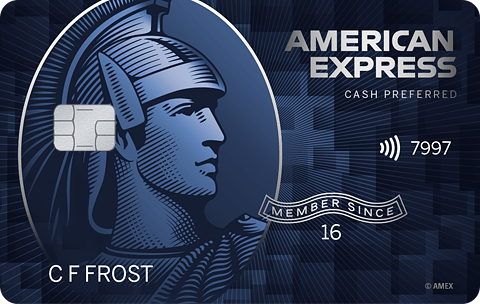
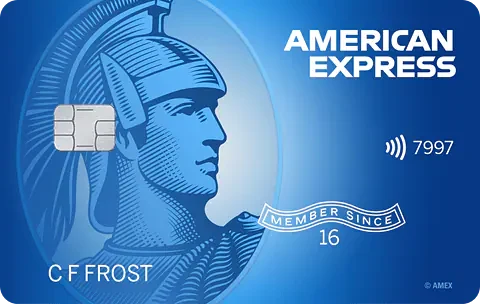
The Blue Cash Preferred and the Blue Cash Everyday look like siblings because they are — same Amex Reward Dollars currency, same $6,000 category caps, same statement-credit redemption. The split is the annual fee and the headline grocery rate. The Preferred doubles the supermarket rate from 3% to 6% but asks for $95 a year. So the real question is not which card is "better" — it is whether your grocery receipts are big enough to turn that extra 3% into more than $95 of cash back. This guide gives you the exact break-even number, three spend profiles, and a worked example you can map onto your own budget.
Quick answer
Pick the Blue Cash Preferred if you spend roughly $3,200 or more a year at US supermarkets (about $267 a month) — the extra 3% there pays the $95 fee and the 6% streaming category is gravy. Pick the Blue Cash Everyday if your grocery spend is lighter, or if you want gas and US online retail at 3% with no fee to track. For most single-person households the Everyday is the safer no-fee default; for families that fill a real cart every week, the Preferred nets more cash even after the fee.
TL;DR: The Amex Blue Cash Preferred ($95 annual fee) earns 6% cash back at US supermarkets (up to $6,000 per year, then 1%), 6% on select US streaming, and 3% at US gas stations and on transit. The Blue Cash Everyday ($0 annual fee) earns 3% at US supermarkets, 3% on US online retail, and 3% at US gas stations (each capped at $6,000 per year). The Preferred's extra 3% at supermarkets is worth up to $180 a year, so it beats the no-fee Everyday once annual grocery spend passes roughly $3,200. Both pay cash back as Reward Dollars (statement credit) and both charge a foreign transaction fee, so neither is a card to use abroad.
At a glance
| Blue Cash Preferred | Blue Cash Everyday | |
|---|---|---|
| Annual fee | $95 | $0 |
| US supermarkets | 6% (up to $6,000/yr, then 1%) | 3% (up to $6,000/yr, then 1%) |
| Select US streaming | 6% | 1% |
| US online retail | 1% | 3% (up to $6,000/yr, then 1%) |
| US gas stations | 3% | 3% (up to $6,000/yr, then 1%) |
| Transit | 3% | 1% |
| Everything else | 1% | 1% |
| Rewards currency | Reward Dollars (statement credit) | Reward Dollars (statement credit) |
| Foreign transaction fee | Yes | Yes |
| Welcome bonus | Once per lifetime | Once per lifetime |
The pattern is clear: the Preferred concentrates its firepower on groceries and streaming, while the Everyday spreads a flat 3% across three everyday categories (groceries, gas, online retail) and skips the fee. Notice the streaming line — that is the quiet differentiator most comparisons forget. The Everyday earns just 1% on streaming; the Preferred earns 6%. If you pay for a few subscriptions, that gap stacks on top of the grocery edge.
The math that decides it: the break-even
Every dollar you spend at a US supermarket earns 3 cents extra on the Preferred (6% vs 3%) — but only up to the $6,000 annual cap, after which both cards drop to 1%. That extra 3% is the entire engine that has to pay the $95 fee.
Divide the fee by the extra rate: $95 ÷ 0.03 = $3,167. So the grocery break-even is about $3,200 a year, or roughly $267 a month. Below that, the no-fee Everyday wins on groceries alone. Above it, every additional grocery dollar (up to the cap) tilts further toward the Preferred. At the full $6,000 cap, the Preferred's grocery edge is worth $180 a year — $180 of extra cash back against a $95 fee is a clean $85 of profit before you even count streaming.
| Annual US-supermarket spend | Preferred grocery cash back (6%) | Everyday grocery cash back (3%) | Preferred edge | Minus $95 fee = net edge |
|---|---|---|---|---|
| $2,000 | $120 | $60 | +$60 | −$35 (Everyday wins) |
| $3,200 | $192 | $96 | +$96 | +$1 (break-even) |
| $4,800 | $288 | $144 | +$144 | +$49 (Preferred wins) |
| $6,000 (cap) | $360 | $180 | +$180 | +$85 (Preferred wins) |
| $8,000 | $360 + $40 | $180 + $30 | +$190 | +$95 (cap reached) |
Two things to read off this table. First, the line crosses zero right around $3,200 — that is your decision point on groceries alone. Second, streaming is not in this table at all. Add a household streaming bill of $60 a month ($720 a year): on the Preferred that earns 6% = $43.20; on the Everyday it earns 1% = $7.20. That $36 swing pushes the real break-even down to roughly $2,000 of groceries for anyone with a normal streaming stack. The more you stream, the lower your grocery break-even drops.
What the Everyday does better
The Everyday is not just "the cheap one." It out-earns the Preferred in two categories: US online retail at 3% (the Preferred gives only 1% there) and it ties on gas at 3%. For a household that buys a lot online — and whose grocery spend is modest — the Everyday can quietly out-earn the Preferred even ignoring the fee.
Online retail is the Everyday's secret weapon
US online retail purchases (a broad bucket that catches a lot of everyday e-commerce) earn 3% on the Everyday, up to $6,000 a year. That is up to $180 a year the Preferred simply cannot match, since it pays 1% online. If your spending leans digital rather than in-aisle, run that category through the math too — it can flip a close call.
No fee means no pressure
With the Everyday there is no annual fee to "earn back," so every reward is pure upside from day one. You never have to audit your own spending in December to confirm the card paid for itself. For light or irregular spenders, that simplicity has real value.
Where the Preferred pulls ahead
Heavy grocery households
If you genuinely buy $400–$500 of groceries a month — common for a family of three or four — you will hit or approach the $6,000 cap, where the Preferred's 6% is at its most powerful. For a broader look at all the top options in this category, see our guide to the best credit cards for groceries. At the cap the grocery edge alone ($180) nearly doubles the $95 fee. This is the card's home turf.
Streamers
The 6% streaming rate is uncapped-feeling in practice because streaming bills are small but recurring, and they compound month after month. Two or three subscriptions plus a music service can easily clear $40–$70 a month. At 6% versus the Everyday's 1%, that is a standing $25–$45 a year of extra cash back that quietly subsidizes the fee.
Transit commuters
The Preferred also pays 3% on transit (rideshare, tolls, trains, parking) where the Everyday pays 1%. It is rarely the deciding factor, but for a city commuter it is another few dollars a month stacking on the same side of the ledger.
A worked example
Meet the Reyes household: two adults, one kid, suburban. Their card spend looks like this each year — $5,400 on US supermarkets ($450/month), $720 on streaming ($60/month), $2,400 on gas, $1,800 on US online retail, and the rest on miscellaneous 1% purchases.
| Category | Spend | Preferred earn | Everyday earn |
|---|---|---|---|
| US supermarkets | $5,400 | 6% = $324 | 3% = $162 |
| Select streaming | $720 | 6% = $43.20 | 1% = $7.20 |
| US gas | $2,400 | 3% = $72 | 3% = $72 |
| US online retail | $1,800 | 1% = $18 | 3% = $54 |
| Subtotal cash back | $457.20 | $295.20 | |
| Annual fee | −$95 | $0 | |
| Net cash back | $362.20 | $295.20 |
The Preferred nets the Reyes household $362.20 versus $295.20 on the Everyday — a $67 a year advantage even after the $95 fee. The grocery and streaming categories carry the win; the Everyday claws some back on online retail, but not enough to overcome a $450-a-month grocery cart. Drop their grocery spend to $250 a month and the result flips: the fee would no longer be covered, and the no-fee Everyday would come out ahead.
Which should you pick
Choose the Blue Cash Preferred if you spend more than ~$3,200 a year on US groceries (less if you also stream), you have a few streaming subscriptions, and you do not mind a $95 fee in exchange for a higher ceiling. Families and grocery-heavy couples are the core audience.
Choose the Blue Cash Everyday if your grocery spend is light or irregular, you want a no-fee card you never have to justify, or your spending leans toward US online retail and gas rather than the supermarket aisle. Singles, light spenders, and anyone who wants set-and-forget cash back should default here.
A useful tiebreaker: if you are within a few hundred dollars of the break-even and unsure your grocery habit is stable, start with the no-fee Everyday. You can product-change to the Preferred later if your cart grows, and you avoid paying $95 for a card you might under-use. If you want transferable points on groceries rather than flat cash back, the Amex EveryDay earns Membership Rewards instead — a different strategy entirely. If you want to compare these cards against the top no-annual-fee Amex options, see best no-annual-fee Amex cards. And if you want a flat 2% on everything outside these categories, pairing either Blue Cash card with the Double Cash is a popular two-card setup; a SavorOne can cover dining and entertainment that neither Blue Cash card rewards.
One shared caveat: both cards charge a foreign transaction fee and both pay only Reward Dollars (statement credit, not transferable miles). Neither is a card to pack for an international trip, and neither feeds an award-travel strategy. They are domestic cash-back workhorses — judge them on US grocery, gas, streaming, and online spend, nothing more. For other high-performing cash-back cards across issuers, check the best cash-back credit cards roundup. And if you want a premium grocery card that also earns transferable points, the Amex Gold card earns 4x Membership Rewards at US supermarkets — a different value proposition worth considering.
Bottom line
This is a single-number decision dressed up as a card comparison. Add up your annual US-supermarket spend. If it clears roughly $3,200 — or roughly $2,000 once you fold in a normal streaming bill — the Blue Cash Preferred turns its 6% rate into more cash back than the $95 fee costs, and the gap only widens as your cart grows toward the $6,000 cap. If your grocery spend is lighter, or your dollars flow to online retail and gas instead, the Blue Cash Everyday wins outright by skipping the fee entirely. Run the worked example against your own budget, and the right card picks itself.
Get weekly card offer alerts
Sunday digest of elevated bonuses. One email, zero spam.
Cards mentioned in this guide
Frequently asked questions
At what grocery spend does the Blue Cash Preferred beat the Blue Cash Everyday?
Is the $95 annual fee on the Blue Cash Preferred worth it?
What does the Blue Cash Everyday earn that the Preferred does not?
Can I have both the Blue Cash Preferred and Blue Cash Everyday at the same time?
Do either of these cards earn transferable points or work well abroad?
Related guides
Related news

amex · Jun 25, 2026
Amex Platinum vs Schwab Platinum: the same $895 card, with a cash-out

amex · Jun 9, 2026
Amex Refreshes All 4 Delta Cards June 2026: New 70K-130K Welcomes, AF Hikes, and a $200 Delta Stays Credit
amex · Jun 9, 2026
Amex Renames Green Card to "Classic Green" August 2026 — What Changes (Spoiler: Almost Nothing)

industry · Jun 6, 2026
Apartment Collection by Hilton
Cards in this ecosystem
Considering switching?