Amex Blue Cash Preferred Review 2026: 6% Grocery Cash Back
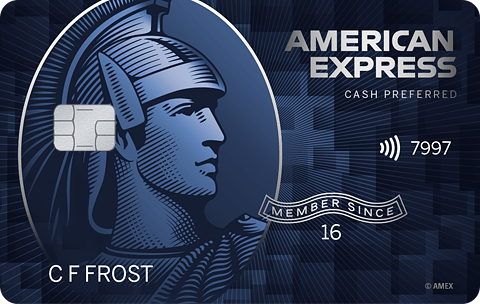
The Amex Blue Cash Preferred is the best flat-cashback card for US supermarket spending in 2026: 6% cash back at US supermarkets (up to $6,000/year, then 1%), 6% on select US streaming, and 3% at US gas stations and transit. The $95 annual fee is waived the first year and breaks even at roughly $1,900 of supermarket spend. Note that Costco, Walmart, and Target do NOT code as supermarkets and earn only 1%.
On this page▾
Topic Collection
Part of the Card Reviews Collection
Explore all 59 articles
Quick answer
The Blue Cash Preferred is the best flat-cashback card for US supermarket spending in 2026: 6% cashback at US supermarkets (up to $6,000/yr, then 1%), 6% on select US streaming, and 3% at US gas stations and transit. The $95 annual fee is waived the first year and breaks even at roughly $1,900 of supermarket spend annually — most households clear that in 4 months.
TL;DR: The Amex Blue Cash Preferred earns 6% cashback at US supermarkets up to $6,000/yr (then 1%), 6% on select US streaming subscriptions, 3% at US gas stations and transit, and 1% on everything else. Cashback is issued as Reward Dollars (statement credits) — not transferable points. The $95 annual fee is waived the first year. Critical caveat: Costco, Walmart, and Target do NOT code as supermarkets and earn only 1%. The break-even vs a 1.5% flat card is approximately $1,900/yr in supermarket spend.
Top picks at a glance
| Card | Best for |
|---|---|
| Blue Cash Preferred | Highest cashback on US groceries — 6% up to $6K/yr |
| Amex EveryDay | No-annual-fee Amex grocery option — 3% at US supermarkets |
| Custom Cash | Best no-AF grocery alternative — 5% on top category up to $500/mo |
| Sapphire Preferred | Best travel card to pair with Blue Cash Preferred |
| Venture X | Premium travel pairing with 2x everywhere |
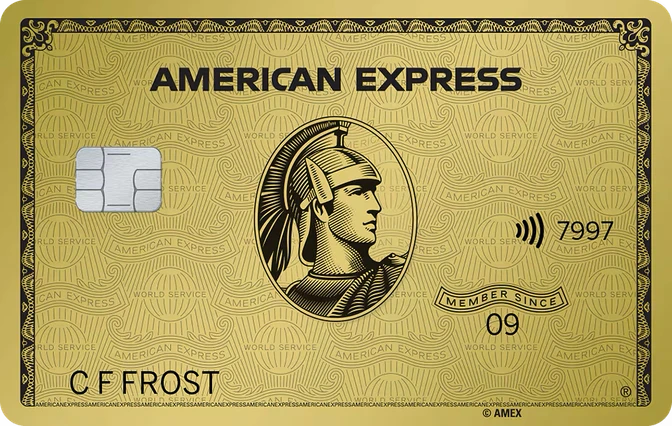
| Amex Gold | Best if you want transferable points on groceries — 4x MR up to $25K/yr |
What you earn: the full rewards structure
The Blue Cash Preferred earns across four categories:
6% at US supermarkets — up to $6,000 in purchases per calendar year, then 1%. The $6,000 cap works out to $500/month or $115/week. Most single-adult households stay well under the cap; families of four may exceed it by mid-year. "US supermarkets" means MCC 5411 merchants: Whole Foods, Trader Joe's, Kroger, Publix, Albertsons, Safeway, H-E-B, ShopRite, Sprouts, Wegmans, and similar regional chains.
6% on select US streaming subscriptions — no annual cap. Qualifying services include Netflix, Disney+, Hulu, ESPN+, HBO Max (Max), Peacock, Spotify, Apple Music, Pandora, SiriusXM, and similar. This is an underrated benefit: a household paying $60/month in streaming bills earns $43.20/yr back with zero thought. Streaming does NOT count toward the $6,000 supermarket cap — it is a separate unlimited 6% category.
3% at US gas stations and transit — no annual cap. Transit includes trains, buses, taxis, rideshare (Uber, Lyft), ferries, tolls, and parking. For a commuter spending $200/month on gas and $150/month on transit ($4,200/yr), this category alone returns $126/yr.
1% on everything else — the fallback rate. This is below-average for a card with a $95 annual fee; use a flat-2% card like Double Cash or Active Cash for non-bonus spending.
Cashback = Reward Dollars (statement credits). This is not a points currency. Reward Dollars cannot be transferred to airlines or hotels. They appear as statement credits automatically once you redeem. If you want transferable Amex Membership Rewards, look at Amex Gold instead — the Amex Membership Rewards program guide explains the full transfer partner lineup and how to maximize point value.
The annual fee math: does it pencil out?
The $95 annual fee is waived in year 1 — so your first year is entirely free. From year 2 onward, you need to decide whether to keep it.
Break-even vs a 1% card: $95 ÷ (6% − 1%) = $1,900/yr in supermarket spend. If your grocery bill exceeds $1,900/yr (about $158/month), the card pays for itself vs doing nothing.
Break-even vs a 1.5% flat card (e.g., Quicksilver): $95 ÷ (6% − 1.5%) = $2,111/yr. Still well below the average US household's grocery spend (~$5,703/yr per BLS 2023).
At the $6,000 cap: $6,000 × 6% = $360 gross cashback. Subtract $95 AF = $265 net gain. By comparison, $6,000 × 1.5% = $90 on a no-AF flat card. The Blue Cash Preferred advantage is $265 − $90 = $175/yr in real money.
Streaming and gas boost the case further. A household with $100/mo in streaming ($72/yr at 6%) and $150/mo in gas ($54/yr at 3%) adds $126/yr on top of the grocery math — bringing the total net advantage to ~$300/yr.
The $0-AF comparison (Blue Cash Everyday): The Amex EveryDay (no-fee sibling) earns 3% at US supermarkets up to $6,000/yr. At $6,000 spend: $180 vs $360 — a $180 gap. The Preferred's $95 AF costs $95, so the Preferred wins by $85/yr at $6,000 grocery spend. Below $3,167/yr in grocery spend (about $264/month), the Everyday is better. Our dedicated Blue Cash Preferred vs Everyday comparison has the complete side-by-side math.
The Costco/Walmart/Target caveat — read this carefully
This is the most common mistake new cardholders make and it costs real money.
Costco: Wholesale club, MCC 5300. Does NOT earn 6% — earns 1%. Costco is also a Visa-only merchant in-warehouse; Amex cards are not accepted physically (though they work on Costco.com). If you shop heavily at Costco, the Blue Cash Preferred provides no grocery bonus there.
Walmart Supercenter: Discount store, MCC 5310. Does NOT earn 6% — earns 1%. Note: Walmart Neighborhood Market locations sometimes code as MCC 5411 (supermarket) and may earn 6% — this varies by location and processing network. Walmart Grocery pickup and delivery may code as 5411 in some processing networks but not reliably.
Target: Discount store, MCC 5310. Does NOT earn 6% — earns 1%. The Target REDcard (debit or credit) gives 5% off at the point of sale regardless — for Target-heavy shoppers that card is more valuable at Target than any rewards card.
What to do: Use a flat-2% card like Double Cash or Active Cash at Costco, Walmart Supercenter, and Target. Save the Blue Cash Preferred for Kroger, Whole Foods, Safeway, Publix, H-E-B, Trader Joe's, and other MCC 5411 merchants.
Blue Cash Preferred vs Blue Cash Everyday: which should you get?
The Amex EveryDay is the zero-annual-fee sibling. Here is the direct comparison:
| Feature | Blue Cash Preferred | Blue Cash Everyday |
|---|---|---|
| Annual fee | $95 (waived yr 1) | $0 |
| US supermarkets | 6% up to $6K/yr | 3% up to $6K/yr |
| US streaming | 6% unlimited | 3% unlimited |
| US gas stations | 3% unlimited | 3% unlimited |
| Online shopping | 1% | 3% up to $6K/yr |
| Everything else | 1% | 1% |
Choose Preferred if: You spend more than $264/month ($3,167/yr) at US supermarkets. At that level, the extra 3% grocery earn ($95.01/yr at $3,167) exactly offsets the $95 AF.
Choose Everyday if: Your grocery spend is under $264/month, or you want a no-fee card to hold long-term for credit history without worrying about annual fee ROI.
A note on the Everyday's online shopping bonus: The Amex EveryDay earns 3% on U.S. online retail purchases up to $6,000/yr. This makes the Everyday competitive for Amazon and other online shopping — an area where the Preferred earns only 1%. Before deciding which card to keep, our keep or cancel Amex Gold analysis shows a useful framework for evaluating whether any annual-fee Amex clears its own hurdle, which applies equally here.
What this card pairs best with
The Blue Cash Preferred is a pure cashback card — it covers groceries, streaming, and gas with high rates, but earns just 1% elsewhere. The right strategy is to pair it with a card that covers everything else well.
Best travel card pairing — Sapphire Preferred: Earns 3x on dining, 2x on travel, 1x elsewhere with transferable Ultimate Rewards (Hyatt, United, Air Canada Aeroplan). Combined, you use Blue Cash Preferred at supermarkets and streaming; Sapphire Preferred at restaurants, travel, and hotels.
Best premium travel pairing — Sapphire Reserve: 3x dining + travel, $300 travel credit, Priority Pass lounge access, and 1.5 cpp via Chase Travel portal.
Best simple pairing — Venture X: 2x miles on all purchases, $300 travel credit, Priority Pass, and transferable Capital One miles. Use Blue Cash Preferred for grocery/streaming/gas (6%/6%/3%); Venture X for everything else (2x). Torn between this and the Sapphire Preferred pairing above? Our Capital One Venture X vs Chase Sapphire Preferred comparison settles which travel card to add.
Best no-AF complete setup — Freedom Unlimited: 1.5% on all purchases, 3% on dining and drugstores, 5% on Chase Travel. No annual fee. Pair with Blue Cash Preferred for grocery/streaming/gas; Freedom Unlimited for everything else.
Streaming bonus deep dive
The 6% streaming rate is genuinely useful but the qualifying merchant list matters. Amex's list includes:
- Video: Netflix, Disney+, Hulu, ESPN+, Max (HBO), Peacock, Paramount+, Apple TV+, Amazon Prime Video (standalone subscription, not Prime membership)
- Music: Spotify, Apple Music, Pandora, SiriusXM, Tidal
- Audiobooks/Podcasts: Audible, Luminary
Amazon Prime membership itself does NOT qualify (it codes as an Amazon purchase). YouTube Premium and YouTube TV currently qualify as of 2026.
For a household with Netflix ($23/mo), Spotify ($11/mo), Disney+ Bundle ($14/mo) = $48/month, the 6% rate returns $34.56/yr. At $100/month in qualifying services: $72/yr back.
Who should NOT get this card
Costco-primary shoppers: If most of your grocery dollars go to Costco, the card earns 1% there. The Costco Anywhere Visa by Citi (2% Costco purchases) is the purpose-built alternative.
Points maximizers: The Blue Cash Preferred earns Reward Dollars — not transferable Membership Rewards. If you want points for business-class redemptions, the Amex Gold earns 4x MR at US supermarkets up to $25K/yr at a $325 AF, redeemable at 1.5–2 cpp for an effective 6–8% return. The Amex Gold card review covers that math in full.
High grocery spenders (>$6K/yr at supermarkets): Past the $6,000 cap, the Blue Cash Preferred earns 1%. A household spending $12,000/yr should use Blue Cash Preferred for the first $6,000 and route the remaining $6,000 to Amex Gold (4x MR) or Custom Cash (5% on top category up to $500/mo).
Infrequent grocery shoppers: If you spend under $158/month ($1,900/yr) at supermarkets, the AF is not covered by grocery earn alone. The Amex EveryDay (3%, no AF) is strictly better at that spend level.
Bottom line
The Blue Cash Preferred is the best cashback card for US supermarket spending in 2026 for households spending $158–$500/month at MCC 5411 grocery stores. The math is simple: $360/yr max grocery earn minus $95 AF = $265 net gain, easily outperforming any no-fee card. Pair it with a travel card like Sapphire Preferred or Venture X to cover the 1% non-bonus gap, and use a flat-2% card for Costco, Walmart, and Target where the bonus does not apply. For a broader view of the supermarket category across issuers, our best credit cards for groceries roundup and the best cash back cards guide will confirm where this card ranks.
Get weekly card offer alerts
Sunday digest of elevated bonuses. One email, zero spam.
Cards mentioned in this guide

Frequently asked questions
Is the $95 annual fee on the Amex Blue Cash Preferred worth it?
Does the Amex Blue Cash Preferred earn 6% at Costco?
Does Walmart earn the 6% supermarket bonus on the Blue Cash Preferred?
What streaming services qualify for the 6% cashback on the Blue Cash Preferred?
Can I transfer Amex Blue Cash Preferred cashback to airline miles?
What happens to my rewards if I exceed the $6,000 supermarket cap?
Should I get the Blue Cash Preferred or Amex Gold for grocery spending?
Does the Blue Cash Preferred earn cash back on Whole Foods?
Is there a welcome bonus on the Amex Blue Cash Preferred?
What credit score do I need for the Amex Blue Cash Preferred?
Related guides
Card Roundups
Amex EveryDay Preferred Review 2026: 4.5x Groceries with the 50% Bonus
13 min
Card Roundups
Best Amex Credit Card 2026: Ranked by Use Case
15 min
Card Roundups
Amex Gold Card Review 2026: Best Dining and Groceries Card?
12 min
Strategy
What an "All-Time High" Offer Really Means: The CP Offer Score, Explained
10 min
Related news

airlines · Jun 2, 2026
Aeroplan 2026: SQC Status and June 1 Devaluation

amex · Jun 2, 2026
Amex Gold 60th Anniversary Refresh 2026: Who Wins?

amex · Jun 9, 2026
Amex Renames Green Card to "Classic Green" August 2026 — What Changes (Spoiler: Almost Nothing)

industry · Jun 6, 2026
Apartment Collection by Hilton
Cards in this ecosystem
Considering switching?