Amex EveryDay Preferred Review 2026: 4.5x Groceries with the 50% Bonus
The Amex EveryDay Preferred has a $95 annual fee and earns 3x Membership Rewards at US supermarkets (up to $6,000/yr), 2x at US gas, and 1x elsewhere, plus a 50% bonus on all points in any billing period with 30+ purchases — effectively 4.5x groceries. Points are transferable MR worth 1.5–2.0 cpp. Best for grocery-heavy, high-frequency spenders; the no-fee Amex EveryDay (2x groceries, 20% bonus) suits lighter spenders.
On this page▾

Topic Collection
Part of the Card Reviews Collection
Explore all 60 articles
Quick answer
The Amex EveryDay Preferred is a smart pick for grocery-heavy spenders who want transferable Membership Rewards instead of plain cashback. For a $95 annual fee it earns 3x at US supermarkets (up to $6,000/yr, then 1x), 2x at US gas stations, and 1x elsewhere — plus a 50% points bonus in any billing period where you make 30 or more purchases. That bonus turns the headline rates into an effective 4.5x supermarkets / 3x gas / 1.5x base, making it one of the best-value mid-tier MR cards for a busy household.
TL;DR: The American Express EveryDay Preferred Card has a $95 annual fee and earns 3x Membership Rewards at US supermarkets (up to $6,000 per year, then 1x), 2x at US gas stations, and 1x on all other purchases. If you make 30 or more purchases in a billing period, all points earned that period get a 50% bonus — effectively 4.5x supermarkets, 3x gas, and 1.5x base. Points are transferable Membership Rewards (1:1 to 20+ airline and hotel partners). The card has a foreign transaction fee. The no-fee Amex EveryDay sibling earns 2x supermarkets (up to $6,000/yr) plus 1x with a smaller 20% bonus for 20+ purchases. The welcome bonus is once-per-lifetime per product.
At-a-glance earn rates
| Category | Base rate | With 50% bonus (30+ purchases) |
|---|---|---|
| US supermarkets (up to $6,000/yr) | 3x MR | 4.5x MR |
| US gas stations | 2x MR | 3x MR |
| Everything else | 1x MR | 1.5x MR |
| Supermarkets above $6,000/yr | 1x MR | 1.5x MR |
The 50% bonus is the engine of this card. It applies to all points earned in a billing period — not just bonus categories — so a base purchase that would earn 1x becomes 1.5x, and a grocery run that earns 3x becomes 4.5x. The only requirement is hitting 30 or more separate transactions in that statement period, which most households clear with normal coffee, gas, grocery, and subscription spend.
The 50% transaction bonus, explained
This is the feature that separates the EveryDay Preferred from a generic 3% grocery card. Make 30+ purchases in a billing period and Amex adds 50% on top of every point you earned that period. Two clarifications that trip people up:
- It counts transactions, not dollars. A $2 coffee counts the same as a $200 grocery haul toward the 30-purchase threshold. Small, frequent buyers benefit most.
- Returns and credits do not count toward the 30, and some transaction types (balance transfers, cash advances, fees) are excluded. Plan for a small buffer — aim for 33–35 swipes if you want a safety margin.
Worked example: a household charges $500 at US supermarkets, $150 at US gas, and $850 of other spend in a billing period across 32 purchases. Base points = (500 × 3) + (150 × 2) + (850 × 1) = 1,500 + 300 + 850 = 2,650 MR. The 50% bonus adds 1,325 MR, for 3,975 MR that period. Miss the 30-purchase threshold and you keep only the 2,650 — a 33% haircut on your earning.
Transferable Membership Rewards — the real value
Unlike the Blue Cash family, which pays Reward Dollars (statement credits), the EveryDay Preferred earns transferable Membership Rewards. MR points move 1:1 to 20+ airline and hotel partners — Air Canada Aeroplan, Flying Blue, ANA, British Airways, Delta, Hilton, Marriott, and more. Redeemed against premium-cabin or sweet-spot awards, MR points are commonly valued at 1.5–2.0 cents each.
At a 2.0 cpp valuation, the 4.5x grocery rate (with bonus) is worth an effective 9% back at US supermarkets — far ahead of any flat cashback card. Even at a conservative 1.5 cpp, that is 6.75% on groceries, among the best returns on the best credit cards for groceries. This is the core reason to choose the EveryDay Preferred over the Blue Cash Everyday or a 2% flat card: you are trading guaranteed cashback for points with a higher ceiling, if you are willing to learn transfer partners.
EveryDay vs EveryDay Preferred: which starter Amex fits you?
The Amex EveryDay is the no-fee sibling in the same product family. Both earn transferable MR; the Preferred simply scales everything up in exchange for the $95 fee.
| Feature | Amex EveryDay (no fee) | Amex EveryDay Preferred |
|---|---|---|
| Annual fee | $0 | $95 |
| US supermarkets | 2x (up to $6,000/yr) | 3x (up to $6,000/yr) |
| US gas stations | 1x | 2x |
| Everything else | 1x | 1x |
| Transaction bonus | 20% for 20+ purchases | 50% for 30+ purchases |
| Effective supermarket rate | 2.4x (with bonus) | 4.5x (with bonus) |
| Points type | Transferable MR | Transferable MR |
Choose the no-fee EveryDay if: your grocery spend is modest, you do not want to track a 30-purchase threshold every month, or you simply want a free card to start an Amex relationship and earn transferable points. With the 20% bonus, it earns an effective 2.4x at supermarkets — solid for $0. For a broader look at no-annual-fee Amex cards, that guide covers the full range of zero-fee options in the Amex lineup.
Choose the EveryDay Preferred if: you reliably spend toward the $6,000 grocery cap and make 30+ purchases per period. The fee math is straightforward — at the $6,000 supermarket cap with the bonus you earn 27,000 MR (6,000 × 4.5x), worth roughly $405–$540 at 1.5–2.0 cpp, versus 7,200 MR on the no-fee card at the same spend. The Preferred's extra points easily clear the $95 fee for a committed grocery spender.
Where these cards fit in the Amex lineup
The EveryDay cards are deliberately positioned as starter MR cards — a low-cost or no-cost entry into the Membership Rewards ecosystem before you graduate to premium cards. A few comparison points:
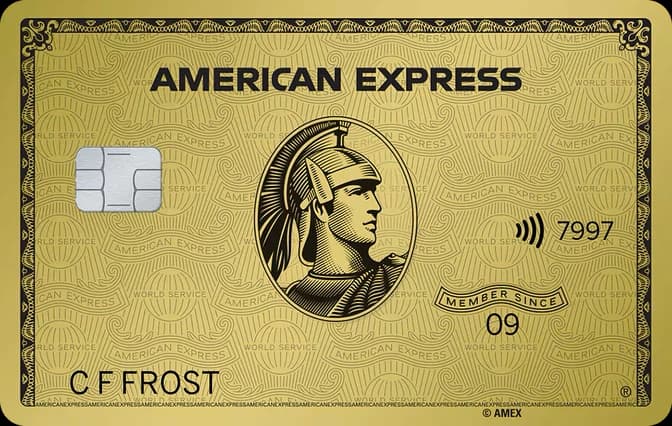
- vs Amex Gold: The Gold card earns 4x MR at US supermarkets (up to $25,000/yr) and 4x at restaurants, but carries a much higher annual fee. If your grocery spend exceeds $6,000/yr or you dine out often, the Gold's bigger cap and dining multiplier usually win — once you are comfortable using credits to offset the fee.
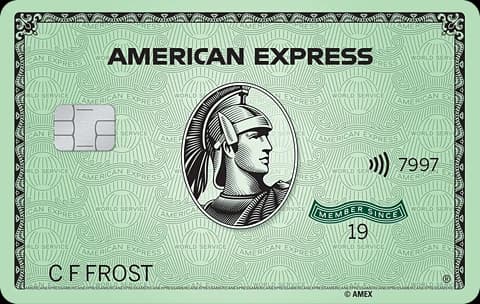
- vs Amex Green: The Green leans toward travel and transit (3x) rather than groceries. Pair an EveryDay Preferred (groceries) with a travel-focused card rather than expecting one card to cover both.
- vs Double Cash or SavorOne: These pay flat or category cashback with zero threshold to track. If you do not want transfer partners or the 30-purchase rule, a no-annual-fee cashback card is the simpler path — you give up the MR ceiling in exchange for certainty.
The EveryDay Preferred's sweet spot is the household that buys groceries every week, makes lots of small transactions, and wants to learn the points game without committing to a premium fee.
A note on the foreign transaction fee
The EveryDay Preferred charges a foreign transaction fee on purchases made abroad or in foreign currency. That makes it a poor choice for international travel spending — use a no-FX-fee card outside the US. Keep the EveryDay Preferred for domestic groceries, gas, and everyday US purchases where the bonus categories and 50% multiplier shine.
Pros and cons
Pros:
- Effective 4.5x at US supermarkets (with the 50% bonus) — among the best grocery earn rates on any mid-fee card.
- Transferable Membership Rewards, not locked-in cashback — 1:1 to 20+ partners, commonly worth 1.5–2.0 cpp.
- The 50% bonus rewards small, frequent purchases, which most households already make.
- Low $95 fee for an MR-earning card; easy break-even for committed grocery spenders.
- Shares the EveryDay product family, so you can start no-fee and product-change later.
Cons:
- $6,000/yr supermarket cap is low for large families; spend above it drops to 1x (1.5x with bonus).
- The 30-purchase threshold is a monthly chore — miss it and you lose a third of your points.
- Foreign transaction fee makes it useless abroad.
- 1x base rate is mediocre; you need a flat-2% or category card for non-bonus spend.
- Welcome bonus is once-per-lifetime per product — burn it wisely.
Bottom line
The Amex EveryDay Preferred is the best low-fee on-ramp to transferable Membership Rewards for a grocery-heavy, high-frequency US spender. The 50% transaction bonus turns ordinary 3x groceries into an effective 4.5x — roughly 6.75–9% back at 1.5–2.0 cpp — which comfortably justifies the $95 fee if you hit the cap and the 30-purchase threshold. If you want zero fee and zero tracking, start with the Amex EveryDay and its 20% bonus; if you would rather have guaranteed cashback with no rules, a card like Double Cash is simpler. Before applying, review Amex's application rules — the once-per-lifetime welcome bonus policy affects your timing. But for the household ready to learn points without paying a premium fee, the EveryDay Preferred is the right first step.
Get weekly card offer alerts
Sunday digest of elevated bonuses. One email, zero spam.
Cards mentioned in this guide
Frequently asked questions
How does the 50% bonus on the Amex EveryDay Preferred work?
Is the $95 annual fee on the Amex EveryDay Preferred worth it?
Are Amex EveryDay Preferred points transferable to airlines?
Should I get the no-fee Amex EveryDay or the EveryDay Preferred?
Does the Amex EveryDay Preferred have a foreign transaction fee?
Can I earn the Amex EveryDay Preferred welcome bonus more than once?
Related guides
Card Roundups
Amex Blue Cash Preferred Review 2026: 6% Grocery Cash Back
12 min
Card Roundups
Amex Blue Cash Everyday Review 2026: No-Fee 3% Cash Back
12 min
Card Roundups
Amex Blue Cash Preferred vs Blue Cash Everyday 2026: Which Wins?
13 min
Card Roundups
Best Amex Credit Card 2026: Ranked by Use Case
15 min
Related news

amex · Jun 25, 2026
Amex Platinum vs Schwab Platinum: the same $895 card, with a cash-out

amex · Jun 9, 2026
Amex Refreshes All 4 Delta Cards June 2026: New 70K-130K Welcomes, AF Hikes, and a $200 Delta Stays Credit

amex · Jun 9, 2026
Amex Renames Green Card to "Classic Green" August 2026 — What Changes (Spoiler: Almost Nothing)

industry · Jun 6, 2026
Apartment Collection by Hilton
Cards in this ecosystem

Considering switching?