Best Cashback Cards for Budget-Conscious Newcomers in 2026
The best first cashback card for a budget-conscious newcomer is a simple no-annual-fee card matched to your everyday spend — the Capital One SavorOne (3% on dining, groceries, entertainment, and streaming) if food dominates, or a flat 1.5% Capital One Quicksilver if approval is tight. Pay in full, keep utilization under 10%, and add a second card only once your file ages.
On this page▾

Topic Collection
Part of the New to America Collection
Explore all 37 articles
Quick answer
For a budget-conscious newcomer, the best first cashback card is a simple no-annual-fee card that pays well on the everyday spend you actually have — groceries, dining, and transit. Start with the SavorOne (3% on dining, groceries, entertainment, and streaming, $0 annual fee) or, if approval is tight, a flat 1.5% card like the Quicksilver. Pay in full every month, keep utilization under 10%, and add a second card only once your file has aged. If you are still building from scratch, the complete newcomer credit guide covers the full roadmap.
TL;DR: The best cashback credit cards for budget-conscious newcomers in 2026 are the Capital One SavorOne (3% on dining, groceries, entertainment, and streaming; 1% on everything else; $0 annual fee; no foreign transaction fee), the Citi Double Cash (up to 2% — 1% when you buy plus 1% when you pay; $0 annual fee), and the Capital One Quicksilver (a flat 1.5% on all purchases; $0 annual fee; no foreign transaction fee). Newcomers with a thin or no credit file should favor a simple flat-rate or single-category card with no annual fee, pay the balance in full each month, and keep utilization under 10%. Those who cannot yet qualify for an unsecured card can pair a secured starter such as the Capital One Quicksilver Secured or Discover it Secured with a cashback card later as the file grows.
Best cashback cards at a glance
| Card | Rewards | Annual fee | Best for |
|---|---|---|---|
| SavorOne | 3% dining, groceries, entertainment, streaming; 1% else | $0 | Newcomers whose spend is mostly food and going out |
| Double Cash | Up to 2% (1% buy + 1% pay) | $0 | A near-flat 2% catch-all that rewards paying on time |
| Quicksilver | 1.5% flat on everything | $0 | The simplest possible first card — no categories to track |
| Discover it Cash Back | 5% rotating (activate) + 1%; Cashback Match year 1 | $0 | Maximizers willing to activate quarterly categories |
| Quicksilver Secured | 1.5% flat on everything | $0 | No or thin file — earn rewards while you build |
How much you earn by category
A newcomer's budget is usually weighted toward food and getting around — the same spending profile that makes the best cards with no credit history worth comparing. Here is what each dollar earns in the categories that matter most.
| Category | SavorOne (3%) | Double Cash (2%) | Quicksilver (1.5%) |
|---|---|---|---|
| Groceries | 3% | 2% | 1.5% |
| Dining | 3% | 2% | 1.5% |
| Transit / everything else | 1% | 2% | 1.5% |
| Streaming | 3% | 2% | 1.5% |
The pattern is clear: if most of your spend lands in food, the SavorOne pulls ahead. If your spend is spread thin across rent-adjacent bills, transit, and random purchases with no dominant category, a flat 2% card edges it out. Your real receipts decide the winner — not the headline rate.
Flat-rate vs category cards: why simple beats complex for a first card
A flat-rate card pays the same percentage on every purchase. A category card pays more in specific buckets and less everywhere else. For a first cashback card, flat-rate usually wins on three fronts.
First, there is nothing to track. No quarterly activation, no remembering which card to pull out at the grocery store, no spending caps to monitor. You swipe, you earn, you move on.
Second, the dollar gap is small at newcomer spend levels. If you spend $1,000 a month, the difference between 1.5% and 2% is $5 a month. The difference between forgetting to activate a 5% category and earning nothing extra is larger than the difference between any two no-fee flat cards. Simplicity protects the rewards you would otherwise lose to friction.
Third, a clean first card builds the habit that actually matters: paying in full, on time, every month. Cashback is the smaller prize. The bigger prize is the payment history and the aging account that lift your score.
That said, if your spending genuinely concentrates in one category — and for many newcomers that category is food — a single-category card like the SavorOne captures real extra value without much complexity, because the bonus applies automatically with no activation.
### The ranked cards
1. Capital One SavorOne — best for food-heavy budgets
The SavorOne earns 3% cash back on dining, groceries, entertainment, and popular streaming services, and 1% on everything else, with a $0 annual fee and no foreign transaction fee. For a newcomer whose monthly spend is dominated by groceries and the occasional meal out, this is the highest practical return without a fee or any category to activate.
Entertainment is defined broadly — movies, concerts, sporting events — and the no-foreign-transaction-fee perk matters if you still spend abroad or shop on international sites. The 1% base rate on transit and bills is its only soft spot; if those dominate your budget, pair it later with a flat card.
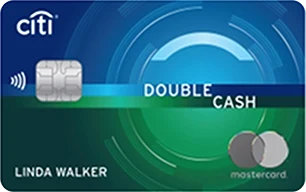
2. Citi Double Cash — best near-flat catch-all
The Double Cash earns up to 2% — 1% when you buy and another 1% when you pay your bill — with a $0 annual fee. The structure quietly rewards the exact behavior newcomers should build: you only collect the second 1% when you actually pay, so it reinforces paying in full.
As a catch-all it beats the SavorOne everywhere outside the food and entertainment buckets, which makes it a strong companion card once your file can support a second account.
3. Capital One Quicksilver — best for pure simplicity
The Quicksilver earns a flat 1.5% on every purchase, with a $0 annual fee and no foreign transaction fee. There is nothing to think about and nothing to miss. For a first card where the real goal is building history, this is often the right call — the half-percent you give up versus a 2% card is a rounding error next to the value of a clean, simple account you never mismanage.
4. Discover it Cash Back — best for maximizers
The Discover it Cash Back earns 5% cash back in rotating quarterly categories you activate (on up to a capped amount), plus 1% everywhere else, with a $0 annual fee. Discover also matches all the cashback you earn at the end of your first year, effectively doubling year-one rewards. It demands more attention — you must remember to activate each quarter — so it suits a newcomer who enjoys optimizing, not one who wants set-and-forget.
How to stack a secured starter with a cashback card
If your file is too thin for an unsecured cashback card today, you are not stuck — the best secured cards for newcomers lay out every option with no-deposit and low-deposit picks. The path is to start secured, then layer cashback on as your file ages.
- Open a secured card that earns rewards. A Quicksilver Secured earns the same flat 1.5% as its unsecured twin, or a Discover it Secured earns rotating cashback — so you build history and earn at the same time. Fund the deposit you can afford. (See the secured vs unsecured breakdown if you are deciding between the two.)
- Use it lightly and pay in full. Put one or two recurring charges on it — a streaming subscription, your phone bill — and autopay the statement. Keep utilization under 10% of the limit.
- Let it age 6–12 months. Time and on-time payments are what move a thin file. Do not chase a second card before the first has done its job.
- Add an unsecured cashback card. Once your score and history support it, apply for a SavorOne or Double Cash. Now your everyday food and dining spend earns 2–3%.
- Graduate or keep the secured card open. Many secured cards refund your deposit and upgrade to unsecured after responsible use. Keeping the account open preserves your oldest line and helps your average account age.
This sequence turns a starter card into a foundation rather than a dead end.
Common mistakes
New cardholders often repeat the same errors — a deeper look at the most common newcomer credit card mistakes covers all of them. The biggest ones:
- Carrying a balance to "build credit." You never need to carry debt to build a score. Interest runs roughly 26–30% APR — far more than any 2% or 3% cashback. Pay in full, always.
- Chasing a complex card first. A 5% rotating card you forget to activate earns less than a 1.5% flat card you use without thinking. Match the card to your discipline, not to the highest headline rate.
- Maxing out the limit. High utilization drags your score down even if you pay in full. Keep balances under 10% of the limit; pay early if you must to stay there.
- Ignoring the annual fee math on a tight budget. Every card here has a $0 annual fee for a reason — a fee card rarely pays off at newcomer spend levels. Start free.
- Opening too many cards too fast. Each application is a hard inquiry, and a pile of new accounts lowers your average age. One card, used well, beats three opened in a panic. Once your file is ready for a second card, the no-annual-fee starter card roundup shows what to add next.
Bottom line
For a budget-conscious newcomer, the best first cashback card is the one that matches your spend and your discipline. If food dominates your budget, the SavorOne pays 3% with no fee. If you want one card that just works, the Quicksilver at a flat 1.5% is hard to misuse. If you cannot qualify yet, start with a secured card that earns rewards and add a cashback card once your file ages. Whichever you pick, the rules are the same: pay in full, keep utilization under 10%, and let time do the heavy lifting.
Get weekly card offer alerts
Sunday digest of elevated bonuses. One email, zero spam.
Cards mentioned in this guide

Frequently asked questions
What is the best first cashback card for a newcomer with no credit history?
Should a newcomer pick a flat-rate or a category cashback card?
Can I keep a balance on my cashback card to build credit faster?
How do I move from a secured card to a cashback card?
Does the Capital One SavorOne charge a foreign transaction fee?
Related guides
Related news

amex · Jun 25, 2026
Amex Platinum vs Schwab Platinum: the same $895 card, with a cash-out

chase · Jun 10, 2026
Chase Hyatt Transfer Ratio 4:3: What It Means for Sapphire Preferred and Ink Business Preferred

chase · Jun 10, 2026
Chase to Virgin Atlantic: 30% Transfer Bonus — Book Delta Business Class for 18,000 Points

ihg · Jun 10, 2026
IHG Buy Points at 0.5¢ Extended Through June 30 — Best Price for InterContinental Stays