Best No-Annual-Fee Starter Credit Cards for Newcomers in 2026
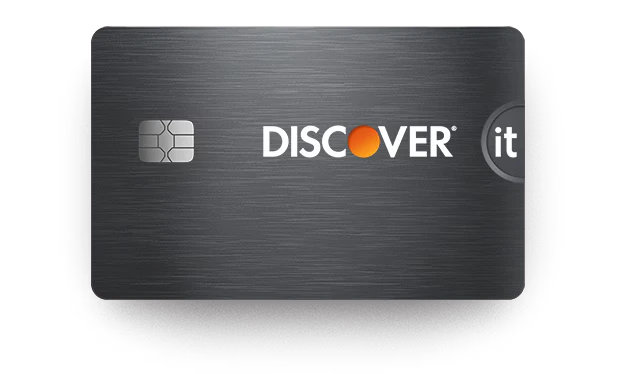
The best no-annual-fee starter card for most newcomers in 2026 is the Discover it Secured — a $200 refundable deposit becomes your limit, you earn 2% at gas and restaurants, and the first-year Cashback Match doubles it. Keep your first $0-fee card open forever to build length of credit history.
On this page▾

Topic Collection
Part of the New to America Collection
Explore all 37 articles
Quick answer
The best no-annual-fee starter card for most newcomers in 2026 is the Discover it Secured — a $200 refundable deposit becomes your credit limit, you earn 2% cash back at gas stations and restaurants (up to $1,000 in combined purchases per quarter) plus 1% everywhere else, and Discover's first-year Cashback Match doubles everything you earn. If you can qualify for an unsecured card, the Quicksilver (1.5% flat) or Double Cash (up to 2%) are $0-annual-fee cards you can keep open forever to anchor your credit history.
TL;DR: A no-annual-fee starter card is the ideal first US credit card because you can keep it open permanently with zero ongoing cost — and the longer it stays open, the more it lengthens your average account age (15% of your FICO score). The top $0-annual-fee starter cards in 2026 are: Discover it Secured ($200 minimum deposit becomes the credit line, 2% gas/dining, Cashback Match year one), Capital One Platinum Secured ($49, $99, or $200 deposit for a $200 line), Capital One Quicksilver (1.5% flat cash back), and Citi Double Cash (up to 2% — 1% when you buy, 1% when you pay). All four charge a $0 annual fee. Keep utilization under 10% and pay in full every month.
Best no-AF starter cards at a glance
| Card | Type | Best for |
|---|---|---|
| Discover it Secured | Secured | Best overall — 2% rewards + Cashback Match |
| Capital One Platinum Secured | Secured | Lowest deposit — $49 line-builder |
| Petal 1 | Unsecured | No deposit, thin/no credit file OK |
| Quicksilver | Unsecured | Simple 1.5% flat cash back |
| Double Cash | Unsecured | Up to 2% — keep-forever workhorse |
Why a no-annual-fee card is the right first card
Your first credit card is the account you should plan to keep for the rest of your life. Here is the reason: 15% of your FICO score is the length of your credit history, measured partly by the age of your oldest account. The card you open today becomes the foundation that age is measured from. If that card charges a $95 or $250 annual fee, you face an annual decision — keep paying to keep the history, or close it and reset your oldest-account clock. A $0-annual-fee card removes that decision entirely. You keep it open, it keeps aging, and it costs you nothing.
There is a second reason newcomers specifically benefit. Starter cards rarely come with rich rewards, so the math on a fee almost never works in year one. A card that earns 1.5% back but charges $95 needs $6,333 of spending just to break even on the fee. For someone building credit on modest, careful spending, that is the wrong trade. Get the rewards and the zero fee, and upgrade to premium cards later once your file is thick — for a full breakdown of every available path, see how to build US credit as a new immigrant.
| Cost factor | No-AF starter card | Premium fee card |
|---|---|---|
| Annual fee | $0 | $95–$895 |
| Safe to keep forever | Yes — no cost | Only if perks justify fee |
| Helps length of history | Yes, permanently | Only while you keep paying |
| Good first-card fit | Strong | Weak for newcomers |
The best no-AF starter cards reviewed
1. Discover it Secured — best overall
The Discover it Secured is a secured card, meaning you put down a refundable deposit that becomes your credit limit. The minimum is $200, and that deposit comes straight back when you graduate or close the account in good standing.
What sets it apart is that it is a rewards card, which is rare for a secured product. You earn 2% cash back at gas stations and restaurants on up to $1,000 in combined purchases each quarter, then 1% on everything else. On top of that, Discover's Cashback Match automatically doubles all the cash back you earn in your first year — so that 2% effectively becomes 4% and the 1% becomes 2% for twelve months, with no cap on the match.
- Annual fee: $0
- Deposit: $200 minimum (refundable), becomes your credit line
- Rewards: 2% gas/dining (up to $1,000/quarter), 1% else, doubled year one
- Reports to Experian, TransUnion, and Equifax monthly
- Reviews your account starting around month 7 for an upgrade to unsecured — the best secured credit cards for 2026 compares every major secured option side by side.
2. Capital One Platinum Secured — lowest deposit
The Capital One Platinum Secured solves the single biggest barrier to secured cards: the deposit. Instead of a flat $200, qualified applicants can put down just $49, $99, or $200 and still receive a $200 starting credit line. That tiered deposit makes it the most accessible line-builder on this list for newcomers who do not have a few hundred dollars to lock up.
- Annual fee: $0
- Deposit: $49, $99, or $200 for a $200 line (based on approval)
- No rewards, but accepts ITIN — useful for newcomers without an SSN
- Reports to all three bureaus; reviews for line increases over time
It does not earn rewards, so pair it with thinking of it purely as a credit-building tool. If you want both a low deposit and cash back, look at the Quicksilver Secured instead.
3. Capital One Quicksilver — simple flat cash back
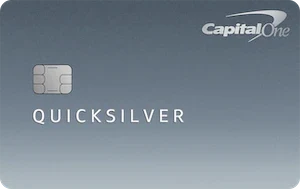
Once your file is established, the Quicksilver is a clean keep-forever card. It earns a flat 1.5% cash back on every purchase with no categories to track and no quarterly activation, and it carries a $0 annual fee. For a newcomer graduating from a secured card, Quicksilver is a natural next step that you never have to close.
- Annual fee: $0
- Rewards: 1.5% flat cash back on everything
- No rotating categories, no caps
- Good upgrade target after 6–12 months of secured-card history
4. Citi Double Cash — up to 2%, the workhorse
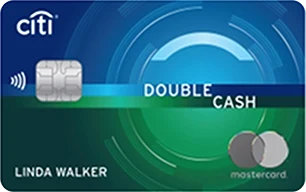
The Double Cash earns up to 2% cash back on everything: 1% when you make a purchase and another 1% as you pay it off. With a $0 annual fee, it is one of the strongest flat-rate cards to keep open permanently, and the pay-it-off-to-earn structure quietly reinforces the exact habit that builds credit. It typically needs a bit of established history to get approved, so it is a year-two card for most newcomers rather than a first card.
- Annual fee: $0
- Rewards: 1% at purchase + 1% on payment = up to 2%
- Best as a long-term anchor card once you have some history
- Pairs well with category cards added later
How to choose your first no-AF card: step by step
- Check whether you have any US credit file. If you have an SSN or ITIN but no score yet, you are a thin-file or no-file applicant — start with a secured card.
- Decide if you can lock up a deposit. Yes, and you want rewards → Discover it Secured. Yes, but you want the smallest deposit → Capital One Platinum Secured ($49). No deposit possible → since Petal wound down its card business there is no strong no-deposit starter card left, so the realistic paths are saving up the $49 Platinum Secured deposit or becoming an authorized user on someone else's card in the meantime.
- Apply for exactly one card. Each application is a hard inquiry; do not spray applications across issuers in the same week.
- Set up autopay for the full statement balance the day the card arrives, so you never miss a payment — payment history is 35% of your score, and how credit scores work for immigrants explains every factor in detail.
- Keep utilization under 10%. On a $200 secured line, that means letting no more than about $20 report at statement close. Pay early if you need to.
- Wait 6–12 months, then graduate or add a card. Once your score crosses into the low-to-mid 600s, apply for an unsecured no-AF card like Quicksilver, then later Citi Double Cash — the credit card strategy for your first year as a new immigrant lays out the full card sequencing timeline.
- Never close your first card. Keep that no-AF account open forever to protect your length of history — or consider adding a trusted friend or family member's account as an authorized user to accelerate your score build while you wait, as detailed in the authorized user strategy guide for newcomers.
Common mistakes
- Closing the starter card after upgrading. Closing your oldest account shortens your average account age and can drop your score. Because it has no annual fee, there is no reason to close it — leave it open and use it for a small recurring charge — see newcomer credit card mistakes to avoid in your first year for a full list of pitfalls like this one.
- Paying only the minimum. The minimum keeps you current but leaves a balance that accrues interest and inflates utilization. Pay the full statement balance every month.
- Letting utilization spike. Charging $150 on a $200 limit reports 75% utilization even if you pay it off later — bureaus see the statement-date balance. Keep it under 10%.
- Applying for several cards at once. Multiple hard inquiries in a short window signal risk and can sink a thin file. One application, then wait.
- Chasing a fee card too early. A $95-fee card is rarely worth it as a first card; the rewards almost never cover the fee on newcomer-level spending.
Bottom line
A no-annual-fee card is the ideal first US credit card because you can keep it open forever at zero cost, steadily lengthening the credit history that makes up 15% of your FICO score. For most newcomers, start with the Discover it Secured for its 2% rewards and first-year Cashback Match, drop to the Capital One Platinum Secured if you need a $49 deposit, or reach for the Petal 1 if you cannot lock up a deposit at all. After 6–12 months of on-time payments and sub-10% utilization, graduate to the Quicksilver or Double Cash — and never close that first $0-fee card.
Get weekly card offer alerts
Sunday digest of elevated bonuses. One email, zero spam.
Cards mentioned in this guide
Frequently asked questions
Why does a no-annual-fee card make the best first credit card?
Which no-annual-fee card can I get with no US credit history?
How much should I keep on my secured card to protect my score?
When should I move from a secured card to the Quicksilver or Citi Double Cash?
Related guides
Card Roundups
Best Cashback Cards for Budget-Conscious Newcomers in 2026
11 min
Card Roundups
Best Cards for Sending Money Home 2026: Remittances & FX for Newcomers
11 min
Card Roundups
Best Credit Cards for Beginners: Top Picks for 2026
12 min
Card Roundups
Credit Cards Without SSN: Best ITIN Options in 2026
9 min
Related news

amex · Jun 25, 2026
Amex Platinum vs Schwab Platinum: the same $895 card, with a cash-out

chase · Jun 10, 2026
Chase Hyatt Transfer Ratio 4:3: What It Means for Sapphire Preferred and Ink Business Preferred

chase · Jun 10, 2026
Chase to Virgin Atlantic: 30% Transfer Bonus — Book Delta Business Class for 18,000 Points

ihg · Jun 10, 2026
IHG Buy Points at 0.5¢ Extended Through June 30 — Best Price for InterContinental Stays