Best Student Credit Cards of 2026
The best student credit cards of 2026 are the Discover it Student Cash Back, Capital One SavorOne Student, and Capital One Quicksilver Student. They require no prior credit history, charge no annual fee, and reward everyday student spending — the Discover it Student earns 5% on rotating categories with Cashback Match your first year, while the SavorOne Student earns 3% on dining, streaming, and groceries. That makes them the fastest way to build credit from scratch while earning real cash back.
On this page▾

Quick answer
The best student credit cards of 2026 are the Discover it Student Cash Back, Capital One SavorOne Student, and Capital One Quicksilver Student. These cards require no prior credit history, charge no annual fee, and actively reward everyday student spending — making them the fastest way to build credit from scratch while earning real cash back.
TL;DR: The top student credit cards in 2026 include the Discover it Student Cash Back (5% rotating categories, Cashback Match first year), Capital One SavorOne Student (3% on dining, streaming, and groceries), Capital One Quicksilver Student (unlimited 1.5% flat rate), Discover it Student Chrome (2% at gas and restaurants), and Chase Freedom Student (starter card with $500 minimum credit limit). All carry no annual fee and are designed for applicants with limited or no credit history.
Top picks at a glance
| Card | Best for |
|---|---|
| Discover it Cash Back | Maximizing rewards — 5% rotating + Cashback Match |
| SavorOne | Dining, streaming & grocery earners |
| Quicksilver | Simple flat-rate cash back, no tracking required |
| Discover Chrome Student | Gas and restaurant regulars |
| Capital One Platinum Secured | Rebuilding or starting with zero credit history |
How to qualify with no credit history
One of the most common misconceptions about student credit cards is that you need credit to get credit. Student cards are specifically underwritten for applicants with thin or nonexistent credit files, meaning the approval criteria are fundamentally different from regular consumer cards.
Issuers evaluate student applicants on a different scorecard. Rather than relying heavily on FICO scores, they look at enrollment status (most require proof you are a college or graduate student), income or access to income (many students list part-time job income, scholarships, or parental support), and your existing banking relationship. Having a checking or savings account at the same institution can meaningfully improve your odds of approval.
What you need to apply:
- Proof of student status (school name, expected graduation date)
- Social Security Number or Individual Taxpayer Identification Number
- Some form of income — even $200/month from a part-time job qualifies
- U.S. mailing address
Income counting rules for students: Under the CARD Act of 2009, anyone under 21 must show independent income or have a co-signer. Anyone 21 and older can count household income they have "reasonable access to," which in practice means a parent's income if you live at home or they support you. Many students who think they won't qualify actually do once they understand what income they can report.
Discover and Capital One are the most student-friendly issuers — they explicitly market these products to students with no credit history. Chase Freedom Student is more selective and may require a thin but existing file or a prior Chase banking relationship.
The most important thing you can do before applying is to not apply to multiple cards at once. Each application triggers a hard inquiry. Apply to the card that best fits your profile and wait for a decision.
The authorized user shortcut
If you need a faster path to approval or want to enter college with a credit history already in place, becoming an authorized user on a parent or guardian's existing credit card is the single most powerful strategy available.
When a primary cardholder adds you as an authorized user, the entire history of that account — payment history, age, credit limit, utilization rate — is reported to your credit file as if it were your own account. If that parent has a 10-year-old card with no late payments and a low utilization rate, you may enter your first semester with a credit score already in the 700s.
How to execute this strategy:
- Ask a parent or close family member with excellent credit (no late payments, utilization under 30%) to add you as an authorized user on their oldest card
- You do not need to use — or even receive — the physical card for the history to appear on your report
- Check your credit report at AnnualCreditReport.com after 30–60 days to confirm the account is reporting
- Once you have a score (typically 60–90 days), apply for your own student card
Which issuers report authorized user history: Discover, Capital One, Chase, Citi, and American Express all report authorized user accounts to all three bureaus. This is the standard practice, but confirm with the primary cardholder's issuer before counting on it.
One important caveat: if the primary cardholder carries high balances or has any late payments, those negatives will appear on your file too. Only pursue this strategy with a financially responsible person whose credit you trust.
Student cards vs. secured cards: which one is right for you
Both student cards and secured cards are designed for credit beginners, but they work differently and suit different situations.
Student credit cards are unsecured — you do not put down a deposit. They are available to enrolled students who meet income requirements. The best student cards offer real rewards, reasonable credit limits ($500–$2,500 starting), and automatic upgrade paths to premium cards after 12–24 months of good behavior.
Secured credit cards require a refundable security deposit (typically $200–$2,500) that becomes your credit limit. They are the right choice for non-students, people who have been denied for student cards, or anyone who has had prior negative credit events. The Capital One Platinum Secured is one of the best secured options because it offers a path to a higher credit limit without an additional deposit after five months of on-time payments.
When to choose a student card: You are currently enrolled in an accredited college or university, have some form of income, and have no significant negative marks (collections, judgments, prior defaults).
When to choose a secured card: You are not a student, you have been denied for a student card, you have prior credit problems, or you prefer the psychological guardrail of knowing your deposit equals your credit limit.
Key differences at a glance:
| Feature | Student Card | Secured Card |
|---|---|---|
| Deposit required | No | Yes ($200–$2,500) |
| Rewards | Yes (most) | Rarely |
| Upgrade path | Usually 12–18 months | Usually 6–12 months |
| Credit limit | $500–$2,500 | Equals deposit |
| Annual fee | Usually none | Sometimes $0–$35 |
Deep dive: Discover it Student Cash Back
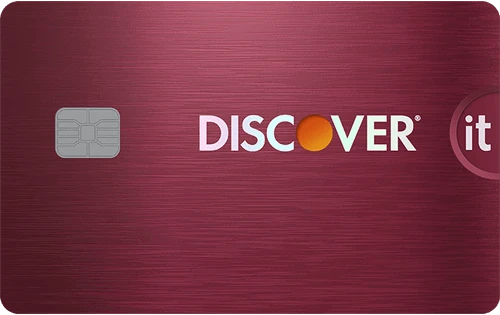
The Discover it Cash Back Student is the highest-reward student card available in 2026, and arguably the best starter card on the market regardless of age.
The 5% rotating category structure: Each quarter, Discover announces a new spending category that earns 5% cash back on up to $1,500 in combined purchases. 2025 categories included grocery stores, gas stations, restaurants, Amazon, and wholesale clubs. You must activate the bonus each quarter via the app or website — missing activation means you earn only 1% in those categories that quarter.
Cashback Match — the first-year multiplier: Discover's signature benefit for new cardholders doubles every dollar of cash back earned in the first 12 months. There is no cap on the match. A student who spends $500/month across all categories and earns an average of 2.5% would earn roughly $150 in cash back — which Discover then matches to $300 at the end of year one. No other student card offers a comparable first-year bonus.
Credit building features:
- Free FICO Score on every monthly statement
- No penalty APR for a first late payment (though interest still applies)
- Automatic account review for credit limit increases after seven months
- No security deposit, no annual fee, no foreign transaction fees
The catch: 5% rotating categories require active management. If you want to maximize the card, you need to check the quarterly calendar, activate the bonus, and concentrate spending in that category. Students who find this tedious would be better served by a flat-rate card.
Deep dive: Capital One SavorOne Student
The SavorOne Student card is the best option for students whose spending naturally concentrates in dining, streaming, and groceries — which describes the majority of college students.
The rewards structure:
- 3% cash back on dining (restaurants, fast food, food delivery apps)
- 3% cash back on grocery stores (excludes superstores like Walmart and Target)
- 3% cash back on streaming services (Netflix, Spotify, Hulu, Apple TV+, and more)
- 3% cash back on entertainment (movies, concerts, sporting events)
- 1% on all other purchases
For a student spending $300/month on food delivery and groceries, $30/month on streaming, and $100/month on other purchases, the SavorOne generates approximately $13–$15/month in cash back — or roughly $160–$180 per year with zero effort.
No annual fee, no foreign transaction fees. Capital One is one of the few issuers to waive foreign transaction fees on student cards, making this an excellent companion for studying abroad.
Capital One CreditWise: Available to all Capital One cardholders, CreditWise provides free VantageScore monitoring, dark web scanning, and a credit score simulator. It is among the best free credit monitoring tools available and does not require a Capital One card to use — but having the card makes it even more useful.
Upgrade path: After demonstrating responsible use (typically 12–18 months), Capital One can upgrade this card to the SavorOne (non-student version) without a hard inquiry. Your account age and credit limit carry over, which is ideal for your long-term credit profile.
Deep dive: Capital One Quicksilver Student and Discover it Student Chrome
Capital One Quicksilver Student — for simplicity seekers
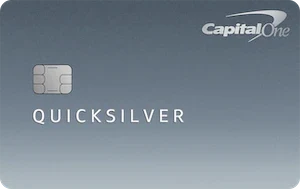
The Quicksilver Student offers an unlimited 1.5% cash back on every purchase with no categories to track and no quarterly activation. For students who want a "set it and forget it" rewards card that consistently earns on everything from textbooks to tuition payments, this is the cleanest option.
The value proposition is straightforward: every dollar you spend returns 1.5 cents. On $800/month in total spending, that is $12/month or $144/year in cash back deposited automatically to your account. Not spectacular, but reliable and low-maintenance.
This card shares all of Capital One's student-friendly features: no annual fee, no foreign transaction fees, CreditWise access, and a clear upgrade path to the regular Quicksilver after 12–18 months.
Discover it Student Chrome — for gas and restaurant regulars
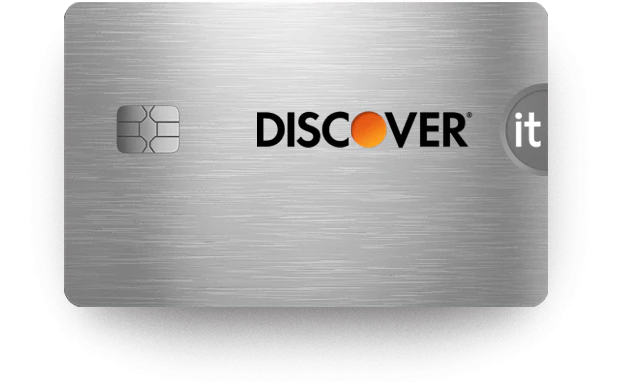
The Discover Chrome Student earns 2% cash back at gas stations and restaurants (on up to $1,000 in combined purchases per quarter) and 1% on everything else. It also comes with the Cashback Match benefit, doubling all earnings in the first year.
This card is a better fit than the rotating-category version for students with consistent spending at gas stations and restaurants who do not want to manage quarterly activations. A student commuting to campus and eating out regularly will find the 2% fixed rate more predictable than the 5% rotating approach.
The $1,000 quarterly cap on combined 2% categories means up to $80/year in bonus cash back before the first-year Cashback Match doubles it to $160.
How to use your first credit card to build credit correctly
Getting approved is only step one. What you do with the card in the first 12–24 months determines whether you graduate with excellent credit or mediocre credit.
The five credit-building rules:
1. Pay the full statement balance every month, not the minimum. The minimum payment trap is how issuers make money. At a 20–28% APR (typical for student cards), carrying a $500 balance for 12 months costs $100–$140 in interest. Pay the statement balance in full by the due date every single month. Set up autopay immediately.
2. Keep your utilization below 30% — ideally below 10%. Credit utilization is the ratio of your balance to your credit limit. It is the second most important factor in your FICO score after payment history. If your card has a $1,000 credit limit, try to never carry a balance above $300 at statement close, and ideally stay under $100. Tip: make a payment mid-cycle if you know your balance will be high on statement date.
3. Use the card regularly, but for things you were already going to buy. A credit card left unused may be closed by the issuer for inactivity, which removes that credit limit from your utilization calculation and can hurt your score. Use it for recurring expenses — a streaming subscription, gas, or groceries — and pay it off automatically. Do not use the card as a loan for things you cannot afford.
4. Never miss a payment. A single 30-day late payment can drop your score by 60–110 points and stays on your credit report for seven years. Set up a calendar reminder and autopay for at least the minimum, then pay the full balance manually if you prefer.
5. Do not close the card when you upgrade. When you qualify for a better card after graduation, do not close your student card. Closing it reduces your available credit, increases utilization on other cards, and shortens your average account age. Ask the issuer to upgrade the product in place (product change), or simply keep the card open with a small recurring charge and autopay.
When and how to upgrade your student card
Most student cards are designed as stepping stones, not permanent solutions. After 12–24 months of responsible use, you will likely qualify for cards with better rewards, higher limits, and more valuable perks.
Signs you are ready to upgrade:
- Credit score above 680 (ideally 700+)
- 12+ months of on-time payments with no missed payments
- Utilization consistently below 30%
- Stable income (post-graduation job, internship income)
How to upgrade without hurting your score:
The best approach is a product change (also called a product switch) — calling your issuer and asking to change the card to a different product within the same family. Product changes typically do not trigger a hard inquiry and do not close your existing account, preserving your credit history and credit limit.
- Discover student cards can be upgraded to regular Discover it cards
- Capital One student cards upgrade to the full SavorOne or Quicksilver
- Chase Freedom Student can upgrade to Chase Freedom Flex or Freedom Unlimited
After graduation, reassess your entire wallet. Once you have a stable income and a credit score above 720, you may qualify for premium travel and cash back cards. The Sapphire Preferred is a natural next step for Chase customers. Capital One Venture or the Venture X become accessible for Capital One customers with strong profiles. If you are weighing those two first travel cards, our Capital One Venture X vs Chase Sapphire Preferred comparison shows which suits a new graduate.
The credit history you build with your student card forms the foundation of your entire financial life. A student who gets a card freshman year, pays it in full every month, and upgrades after graduation can enter the workforce with a 750+ credit score — opening doors to better loan rates, apartment applications, and premium card approvals.
Bottom line
Start with the Discover it Cash Back Student if you want maximum rewards and are willing to manage quarterly categories. Choose the SavorOne Student if you eat out and stream frequently. Pick the Quicksilver Student if you want simplicity. All three charge no annual fee, report to all three credit bureaus, and offer a clear upgrade path — the key is to get one, use it responsibly, and let compounding credit history do the rest.
Get weekly card offer alerts
Sunday digest of elevated bonuses. One email, zero spam.
Cards mentioned in this guide

Frequently asked questions
Can I get a student credit card with no credit history at all?
What credit score do I need for a student credit card?
Is the Discover it Student Cash Back the best student card overall?
What is Cashback Match and how does it work?
Should I get a student card or a secured card if I have no credit history?
How quickly can I build a good credit score using a student card?
What happens to my student card after I graduate?
Does being an authorized user on a parent’s card really help my credit score?
What is the credit limit on student credit cards?
Can international students get a student credit card in the US?
Related guides
Related news

amex · Jun 25, 2026
Amex Platinum vs Schwab Platinum: the same $895 card, with a cash-out

chase · Jun 10, 2026
Chase Hyatt Transfer Ratio 4:3: What It Means for Sapphire Preferred and Ink Business Preferred

chase · Jun 10, 2026
Chase to Virgin Atlantic: 30% Transfer Bonus — Book Delta Business Class for 18,000 Points

ihg · Jun 10, 2026
IHG Buy Points at 0.5¢ Extended Through June 30 — Best Price for InterContinental Stays