Best No-Annual-Fee Credit Cards of 2026: Five Roles, Not One Ranking
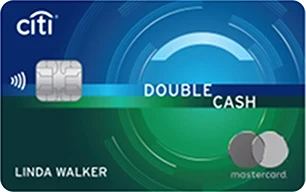
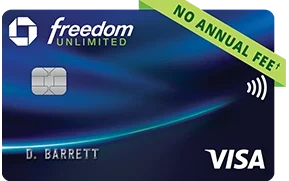
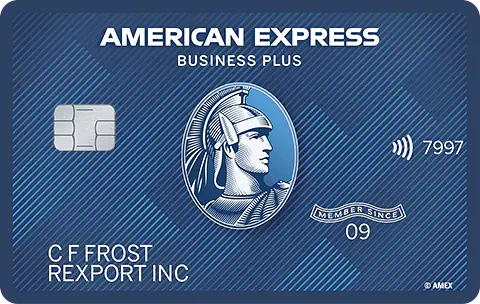
No-annual-fee cards are a cost class, not a category — the useful question is which of five roles you are filling. Citi Double Cash is the simplest 2% floor; Chase Freedom Unlimited earns 1.5x Ultimate Rewards that only beat 2% if you also hold a Sapphire; Amex Blue Business Plus earns 2x Membership Rewards on everything up to $50,000 a year, the highest uncategorized rate of any free card.
On this page▾

Topic Collection
Part of the Keep or Cancel Collection
Explore all 38 articles
Quick answer
A no-annual-fee card is rarely the best card for any single purchase — its job is to be the card you can keep forever. The strongest ones in 2026 fall into four roles: a flat-rate floor for spending nothing else rewards, a category card for one part of your budget, a free feeder that earns transferable points for a premium card you already hold, and a co-brand card that keeps a hotel or airline relationship alive for free.
TL;DR: For a simple 2% floor, Double Cash earns 1% when you buy and 1% as you pay. For a feeder into Chase transferable points, Freedom Unlimited earns 1.5x Ultimate Rewards on everything and 3x on dining and drugstores. For groceries, Blue Cash Everyday pays 3% at US supermarkets, US online retail and US gas stations, each capped at $6,000 a year. For business spend, Blue Business Plus earns 2x Membership Rewards on the first $50,000 a year on everything — the highest uncapped-by-category rate of any free card. And every one of them can sit in a drawer indefinitely without costing you anything, which is the real argument.
No annual fee is a cost, not a category
Cards are usually grouped by what they earn. Grouping them by what they cost puts a 1x hotel co-brand next to a 5% rotating-category card, which tells you nothing about which to carry.
What zero annual fee actually buys you is permanence. A card with a fee has to justify itself every year, and the year it stops justifying itself you either downgrade or close it. A free card never has to be re-decided. That matters for two reasons:
- Your credit file. Closing an old account eventually drags down your average age of accounts and removes its credit limit from your utilization calculation. A free card you never use still quietly helps both. See cards worth keeping forever.
- It is where premium cards go to retire. Most product changes off an expensive card land on a no-fee version of the same product. Knowing which free card a premium card downgrades into is part of choosing the premium card.
So the question is not "which free card is best." It is which role you are filling.
Role 1: the flat-rate floor
Most people's spending is mostly uncategorized. The floor card catches it.
| Card | Rate on everything | Currency |
|---|---|---|
| Double Cash | 2% — 1% when you buy, 1% as you pay | ThankYou Points |
| Freedom Unlimited | 1.5x, plus 3x dining and drugstores | Ultimate Rewards |
| Ink Unlimited | 1.5% on every purchase | Cash Back |
Citi Double Cash is the simplest answer and the hardest to argue with: 2% with no categories, no caps and no activation. The second 1% only posts as you pay the balance, which is a non-issue if you pay in full and a trap if you do not.
Freedom Unlimited earns less on paper — 1.5x against 2% — and more in practice if and only if you also hold a Sapphire card. That condition is the whole argument, and it is the next section.
Role 2: the free feeder into a premium ecosystem
This is the most valuable and least understood use of a no-fee card.
Ultimate Rewards earned on a Freedom card are worth about a cent each on their own. Pool them into a Sapphire account and the same points become transferable to airline and hotel partners, where a good redemption runs well above that. The free card does the earning; the paid card unlocks the exit.
The arithmetic, in cpp: 1.5x redeemed at 1 cent is a 1.5% return. The same 1.5x transferred and redeemed at 2 cents is a 3% return — better than the 2% flat card, on the same spending, with the same $0 fee. What makes it work is not the free card. It is the pairing.
The same logic runs in three other ecosystems:
- Chase. Freedom Unlimited and Freedom Flex feed a Sapphire. See the Chase trifecta and the no-fee Chase roundup.
- Amex. Blue Business Plus feeds a Gold or Platinum at 2x Membership Rewards. See the no-fee Amex roundup.
- Citi. Double Cash earns ThankYou Points that become transferable when paired. See the no-fee Citi roundup and the Citi trifecta.
Hold the free card alone and you have a decent cash-back card. Hold it alongside the paid one and you have the best return available at that fee level.
Role 3: one category, done properly
If a single line of your budget is large, a free category card beats a better flat rate on it.
| Card | What it pays | The limit that matters |
|---|---|---|
| Blue Cash Everyday | 3% at US supermarkets, US online retail, US gas stations | $6,000 a year per category, then 1% |
| Freedom Flex | 5x on rotating quarterly categories | $1,500 combined per quarter, activation required |
| Discover it Cash Back | 5% on rotating quarterly categories | Quarterly maximum, activation required |
Two warnings, both of which cost real money:
The cap is the product. Blue Cash Everyday at 3% on $6,000 of groceries returns $180 a year, then drops to 1%. A household spending $12,000 at supermarkets earns 3% on half of it. Run your own number before assuming the headline rate applies to your spending.
Rotating categories need activation. Forgetting to activate is the single most common way people lose rewards they already qualified for — the spending counts for nothing. Both cards above require it, every quarter. See maximizing the Freedom Flex calendar.
Also worth naming here, though their current rates are better read on their own pages than quoted second-hand: Savor for dining and groceries, Active Cash as another flat-rate option, and Custom Cash, which applies its bonus rate automatically to your top spending category each cycle.
Role 4: free business cards
Business cards are where no-fee gets genuinely strong, because the rates are better and the cards do not count against 5/24 once you hold them.
| Card | Rate | Cap |
|---|---|---|
| Blue Business Plus | 2x Membership Rewards on everything | First $50,000 per calendar year, then 1x |
| Ink Cash | 5x at office supply stores and on internet, cable and phone | First $25,000 combined per anniversary year |
| Ink Unlimited | 1.5% on every purchase | None |
Blue Business Plus deserves singling out: 2x transferable Membership Rewards on all spending, up to $50,000 a year, for no fee, is the highest uncategorized earn rate on any free card in this list. If you have any legitimate business or freelance income, it is usually the first free card to get.
You probably qualify for one of these more easily than you think — a sole proprietor with freelance income is a business to most issuers. See can I get a business credit card and cards for sole proprietors.
Role 5: keeping a hotel or airline relationship alive for free
These earn poorly on general spending. That is not what they are for.
| Card | Earns | Why hold it |
|---|---|---|
| Hilton Honors | 5x dining, US supermarkets, US gas; 3x everything else | Free Hilton status tier |
| IHG Traveler | 3x dining, utilities, streaming, gas; 2x everything else | Free IHG status tier |
| Bonvoy Bold | 2x grocery, rideshare, delivery, streaming, telecom; 1x else | Bonvoy elite night credits |
| United Gateway | 2x gas and transit; 1x everything else | United relationship, no fee |
| Delta Blue | 2x US dining; 1x everything else | Delta relationship, no fee |
| JetBlue Card | 2x restaurants and eligible groceries; 1x else | JetBlue relationship, no fee |
| Choice Privileges | 3x gas, grocery, home improvement, phone; 1x else | Choice points at no cost |
The honest framing: you hold one of these because the free status tier or the elite nights are worth more than the nothing it costs — not because 1x is a good return. If you want the actual perks of a hotel or airline card, that is the paid tier. Compare in free night certificates compared and elite status.
What free cards do not give you
Worth stating plainly, because the gap is where people get caught out:
- Travel protections are thinner or absent. Primary CDW on rentals, trip delay and trip cancellation coverage are mostly features of paid cards. Check the specific card before relying on any of it — see cards with travel insurance and primary vs secondary coverage.
- No lounge access, in any form.
- Foreign transaction fees are common. Several cards on this page charge them. If you travel, check — see no foreign transaction fee cards.
- A free card does not make a balance free. One month of carried interest erases a year of 2% rewards. See how interest is calculated.
How to choose, in order
- Do you already hold a premium card? Then take the free feeder in that same ecosystem before anything else. It is the only free card that earns above its headline rate.
- Do you have any self-employment income? Then Blue Business Plus at 2x on everything is likely the best free card available to you.
- Is one budget line unusually large? Match it to a category card — and check the cap against your actual annual spending, not the advertised rate.
- Otherwise, take the flat 2% and stop optimizing. Double Cash with no categories to track beats a 5% card you forget to activate.
- Building credit rather than optimizing rewards? Start at the best cards with no credit history or the best secured cards — rewards are the wrong first question.
Key takeaway: pick a free card for the role it fills, not for its headline rate. The 1.5x card paired with a Sapphire beats the 2% card alone, the 3% grocery card stops at its cap, and every one of them earns its keep mainly by being a card you never have to decide about again.
Get weekly card offer alerts
Sunday digest of elevated bonuses. One email, zero spam.
Cards mentioned in this guide
Frequently asked questions
Is a 2% flat card better than a 1.5x points card?
Should I close a no-annual-fee card I never use?
Which no-annual-fee card earns the most on general spending?
Do no-annual-fee cards come with travel insurance?
Can I get a no-annual-fee card with no credit history?
Related guides
Related news

chase · Jun 9, 2026
Chase Disney Inspire Visa Launch: $99 AF, $400 Welcome — Is It Worth a 5/24 Slot?

amex · Jun 2, 2026
Amex 30% Avios Transfer Bonus: 1,000 MR = 1,300 Avios, Ends ~June 21 2026

chase · Jun 2, 2026
Chase 20% Flying Blue Bonus May 2026: Retrospective

chase · Jun 2, 2026
Chase Sapphire Reserve 150K Welcome Offer 2026