Best Credit Cards for Green Card Holders & New Residents 2026
Green card holders almost always have an SSN, so nearly every issuer is open to them. Start with the Capital One Quicksilver or a secured card like Discover it Secured; if you arrived recently from the UK or Canada you can claim the Chase Freedom Unlimited via Nova Credit on day one (the old Amex × Nova path ended in 2025). Add Chase Freedom Unlimited after 12+ months while staying under Chase 5/24.
On this page▾

Topic Collection
Part of the New to America Collection
Explore all 37 articles
Quick answer
The best credit cards for green card holders and new lawful permanent residents in 2026 are the Quicksilver for simple flat cashback, the SavorOne for dining and groceries, the Discover it Secured or Capital One Platinum Secured for a thin or empty file, and the Freedom Unlimited once you have 12+ months of US history — and if you recently arrived from the UK or Canada, you can apply for the Freedom Unlimited on day one using Nova Credit to import your home-country credit history. Green card holders almost always have an SSN, so you can reach nearly every issuer once a thin file exists — usually within 12 to 14 months.
TL;DR: Green card holders (lawful permanent residents, LPRs) receive a Social Security Number as part of the immigration process, which makes them eligible for nearly all US credit card issuers, unlike many visa holders who rely on an ITIN. The recommended path is: start with a no-fee starter or secured card (Quicksilver, Discover it Secured, Quicksilver Secured), build to ~700 FICO in 12-14 months, then add a flat 2% earner like Double Cash or a category card like SavorOne, and finally a premium card. Recently arrived LPRs from the UK or Canada can apply for the Freedom Unlimited or Chase Freedom Flex on day one using Nova Credit, which imports home-country credit history (Chase currently supports UK and Canadian credit only; the list may expand — verify at novacredit.com). The former American Express × Nova Credit path ended in 2025, so newcomers can no longer use Nova Credit or a foreign-credit option to apply for an Amex card. Newcomers from other countries have no Nova credit-card shortcut today and should build with a secured or starter card, unless they already hold an American Express card from their home country, in which case Amex Global Transfer can move that existing Amex relationship to a US Amex card. Chase cards require an SSN and are subject to the Chase 5/24 rule — no approval if you have opened 5 or more new cards in the prior 24 months.
Best cards for green card holders at a glance
| Card | Annual fee | Rewards | Best for |
|---|---|---|---|
| Quicksilver | $0 | 1.5% flat, no FTF | Best starter / simple cashback |
| SavorOne | $0 | 3% dining, grocery, entertainment, streaming | Best everyday category card |
| Discover it Secured | $0 | 2% gas/dining (cap), 1% else | Best secured for an empty file |
| Capital One Platinum Secured | $0 | None | Lowest deposit secured ($49-$200) |
| Double Cash | $0 | Up to 2% (1% buy + 1% pay) | Best flat 2% after a thin file |
| Freedom Unlimited | $0 | 1.5%+ everywhere | Best Chase entry after 12+ months — and the live Nova Credit shortcut on arrival for UK/Canada newcomers |
How green card holders differ from visa holders
This distinction drives every recommendation below. Lawful permanent residents almost always have a Social Security Number. An SSN is issued during the green card process (or earlier, if you held a work-authorized visa), and an SSN is the single most important credential for US credit. With it, you are eligible for nearly every issuer — including the ones that turn away ITIN-only applicants.
Many visa holders — F-1 students before OPT, certain H-4 dependents, some J-1 holders — must rely on an ITIN (Individual Taxpayer Identification Number) instead. ITIN applicants are limited to a shorter list of issuers (Capital One, American Express, Citi, Wells Fargo). Chase and Discover generally decline ITIN-only applications.
| Factor | Green card holder (LPR) | Typical visa holder (no SSN) |
|---|---|---|
| Identifier | SSN | ITIN |
| Chase eligible? | Yes (with SSN) | No (ITIN declined) |
| Discover eligible? | Yes | Usually no |
| Capital One / Amex / Citi | Yes | Yes |
| Nova Credit card shortcut on arrival | Yes — Chase Freedom (UK/Canada credit only) | Yes — Chase needs SSN, so ITIN-only no |
| Path to ~700 FICO | 12-14 months | 12-18 months |
The practical takeaway: as a green card holder, do not limit yourself to ITIN-only lists. You have the full menu. The only thing standing between you and a premium card is time — a US credit file that is 12 to 24 months old. The SSN vs. ITIN for credit guide explains the difference in detail and confirms which issuers accept which identifier.
The five categories that matter
1. Best starter / no-fee — Capital One Quicksilver
The Quicksilver is the cleanest starting point for an LPR who already has even a thin file. It earns a flat 1.5% cashback on every purchase, carries a $0 annual fee, and charges no foreign transaction fee — useful for the first year when you may still be paying for things back home or traveling internationally.
There are no rotating categories to track and no activation. You spend, you earn 1.5%, you redeem as a statement credit. Capital One's CreditWise gives you a free running view of your VantageScore so you can watch your file grow. For a newcomer who wants one card that does everything without homework, this is it.
2. Best cashback — Capital One SavorOne
Once your everyday spending settles into a pattern, the SavorOne earns more where newcomers spend most. It pays 3% cashback on dining, grocery stores, entertainment, and popular streaming services, and 1% on everything else, with a $0 annual fee and no foreign transaction fee.
Dining and groceries are typically the two largest discretionary categories for someone settling into a new country. The SavorOne earns 3% in both with no cap, no annual fee, and no category to activate. Many LPRs hold the Quicksilver and SavorOne together: SavorOne for food and entertainment, Quicksilver for everything else.
3. Best for thin files — Discover it Secured & Capital One secured
If you arrived with no US credit file at all, start secured. A secured card requires a refundable deposit that becomes your credit limit, and your on-time payments build a real credit history.
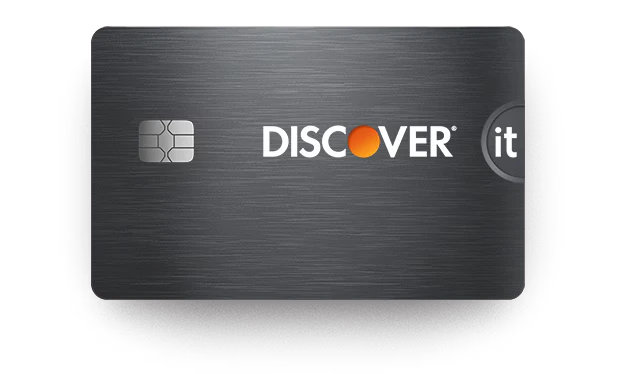
The Discover it Secured stands out because it earns rewards (2% at gas stations and restaurants on up to $1,000 in combined quarterly spend, 1% elsewhere), has a $0 annual fee, reports to all three bureaus, and automatically reviews your account starting at month 7 for an upgrade to an unsecured card with your deposit returned. For a full comparison of options, the best secured credit cards for 2026 guide ranks every major secured card side by side.
The Capital One Platinum Secured takes a different angle: it can grant a $200 credit line for a deposit as low as $49, $99, or $200 depending on your profile — the lowest cash outlay of any major secured card. It earns no rewards, but it is the cheapest way to open a file. If you want a no-deposit-rewards path instead, the Quicksilver Secured pairs the secured structure with the Quicksilver's 1.5% flat cashback.
4. Best day-one card via Nova Credit — Chase Freedom Unlimited (UK & Canada arrivals)
Here is the move most newcomers miss — but the rules changed in 2025, so get the current version. If you recently arrived from the UK or Canada, you can apply for the Freedom Unlimited (or the Chase Freedom Flex) on day one using Nova Credit — before you have any US history at all. During the application you choose the Nova Credit option; Nova Credit imports your UK or Canadian credit history, translates it into a US-readable format, and Chase underwrites on that. You still need your SSN to apply, which as an LPR you have.
Two important limits. First, this Chase shortcut currently supports only UK and Canadian credit history — Chase says it may add more cards and countries later, so verify the current list at novacredit.com. Second, the old American Express × Nova Credit path ended in 2025: newcomers can no longer use Nova Credit or a "no US credit history" foreign-credit option to get an Amex card, and Amex is no longer the marquee Nova partner. If you arrived from anywhere other than the UK or Canada, there is currently no Nova credit-card shortcut — build with a secured or starter card (see category 3) and add cards as your file grows.
There is one Amex-on-arrival exception that does not rely on Nova Credit: Amex Global Transfer. If you already hold an American Express card issued in your home country, you can transfer that existing Amex relationship to a US Amex card without a US credit history. This is not a general no-history path — it only works if you already have a home-country Amex.
5. Best Chase entry — Chase Freedom Unlimited
The Freedom Unlimited is the natural bridge into the Chase ecosystem once your file matures. It earns 1.5% or more on every purchase (with elevated rates on dining, drugstores, and Chase travel), carries a $0 annual fee, and earns Ultimate Rewards that become far more valuable if you later add a Chase Sapphire card and transfer to airline and hotel partners.
Two rules govern Chase. First, Chase requires an SSN — no ITIN applications — so this card is open to LPRs but not to ITIN-only visa holders. Second, Chase enforces the 5/24 rule: if you have opened 5 or more new credit cards (from any issuer) in the past 24 months, Chase will automatically decline you. For a newcomer this rarely bites early, but it shapes the order of operations — get your Chase cards before you have spread five new accounts across other issuers.
Build to premium: the LPR roadmap
Months 0-3 — open the file. If you arrived from the UK or Canada, apply for the Freedom Unlimited via Nova Credit immediately. Otherwise — or if you already hold a home-country Amex you can move via Amex Global Transfer — open a Discover it Secured or Capital One Platinum Secured. Use it for small recurring charges (a phone bill, a streaming subscription), set up autopay for the full statement balance, and let it report. Your first FICO score generates after one account is open about 3 months with activity.
Months 3-12 — feed it. Keep utilization under 10% of your limit — credit utilization explained for newcomers shows exactly how and when to pay to hit that target. Never carry a balance — starter APRs run 26-30%. Add the Quicksilver once you have a few months of clean history; two accounts build score faster than one. By month 12 a clean file typically reaches roughly 700 FICO.
Months 12-18 — broaden. Add a category or flat-2% card: the SavorOne for food and entertainment, or the Double Cash for up to 2% cashback (1% when you buy, 1% when you pay) on everything. Now apply for the Freedom Unlimited while you are still well under 5/24.
Months 18-24+ — go premium. With 18-24 months of history and a score in the 720-750 range, the full premium market opens: Chase Sapphire, Capital One Venture, and the higher Amex tiers. Convert your secured card to an unsecured product (or let it auto-graduate) and keep it open for credit age — do not close your first account.
| Stage | Timeline | Action | Target score |
|---|---|---|---|
| Open file | Months 0-3 | Secured card, or Chase Freedom via Nova Credit (UK/Canada) | No score yet |
| Build | Months 3-12 | Add Quicksilver, pay in full, low utilization | ~700 |
| Broaden | Months 12-18 | Add SavorOne or Citi Double Cash, then Freedom Unlimited | ~710-720 |
| Premium | Months 18-24+ | Sapphire / Venture / premium Amex | 720-750+ |
Common mistakes
Treating yourself like a visa holder. Plenty of newcomer guides assume no SSN and steer you to ITIN-only lists. As an LPR you have an SSN — use the full issuer menu, including Chase and Discover, which ITIN applicants cannot reach.
Skipping Nova Credit if you arrived from the UK or Canada. That is exactly the point of Nova Credit. If you arrived recently from the UK or Canada with strong home-country credit, the Freedom Unlimited is available on day one — no need to wait a year to build a US file from scratch. (Note: the old Amex × Nova Credit path ended in 2025, and for arrivals from other countries there is no Nova card shortcut yet — verify the current list at novacredit.com.)
Carrying a balance. A starter card at 26-30% APR makes interest dwarf any rewards. Pay the statement in full every month. Rewards only count when you carry zero balance.
Burning your 5/24 slots before applying to Chase. Each new card from any issuer counts toward Chase's 5/24 limit. If you open five Capital One, Amex, Citi, and Discover cards in your first two years, Chase will decline you. Sequence Chase applications before you hit five new accounts. Review newcomer credit card mistakes to avoid in your first year for the full list of sequencing pitfalls.
Closing your first card. Length of credit history is a scoring factor. When you outgrow your secured or starter card, product-change it to a no-fee version and keep it open rather than closing it and shrinking your average account age. See secured vs. unsecured credit cards for newcomers to understand when the right moment to graduate actually is.
Underreporting income. Applications ask for total annual income — that includes salary, self-employment, investment income, and household income you can reasonably access. Underreporting lowers your starting credit limits, which then inflates your utilization ratio.
Bottom line
A green card is a credit advantage most newcomers underuse. Because you hold an SSN, you are not stuck on the short ITIN-only list — the entire US market is open to you, gated only by time. Start with the Quicksilver or a secured card like the Discover it Secured, and if you arrived from the UK or Canada with strong home-country credit, claim the Freedom Unlimited via Nova Credit on day one. Build deliberately: low utilization, full payments, one new card every few months. Add the SavorOne or Double Cash as your file matures, slot in the Freedom Unlimited while you are under 5/24, and within 18 to 24 months the premium tier is yours. The complete guide to building US credit as a new immigrant covers the full journey from day one to premium cards in one place.
Get weekly card offer alerts
Sunday digest of elevated bonuses. One email, zero spam.
Cards mentioned in this guide


Frequently asked questions
Do green card holders need an SSN to get a credit card?
Can a new green card holder get a credit card via Nova Credit with no US credit history?
How does the Chase 5/24 rule affect new residents?
How long until a green card holder qualifies for premium cards?
Should a green card holder start with a secured or an unsecured card?
Related guides
Related news

chase · Jun 9, 2026
Chase Disney Inspire Visa Launch: $99 AF, $400 Welcome — Is It Worth a 5/24 Slot?

chase · Jun 2, 2026
Chase 20% Flying Blue Bonus May 2026: Retrospective

chase · Jun 2, 2026
Chase Sapphire Reserve 150K Welcome Offer 2026

chase · Jun 2, 2026
Chase Ultimate Rewards 2026: Cash-Back + Points Boost